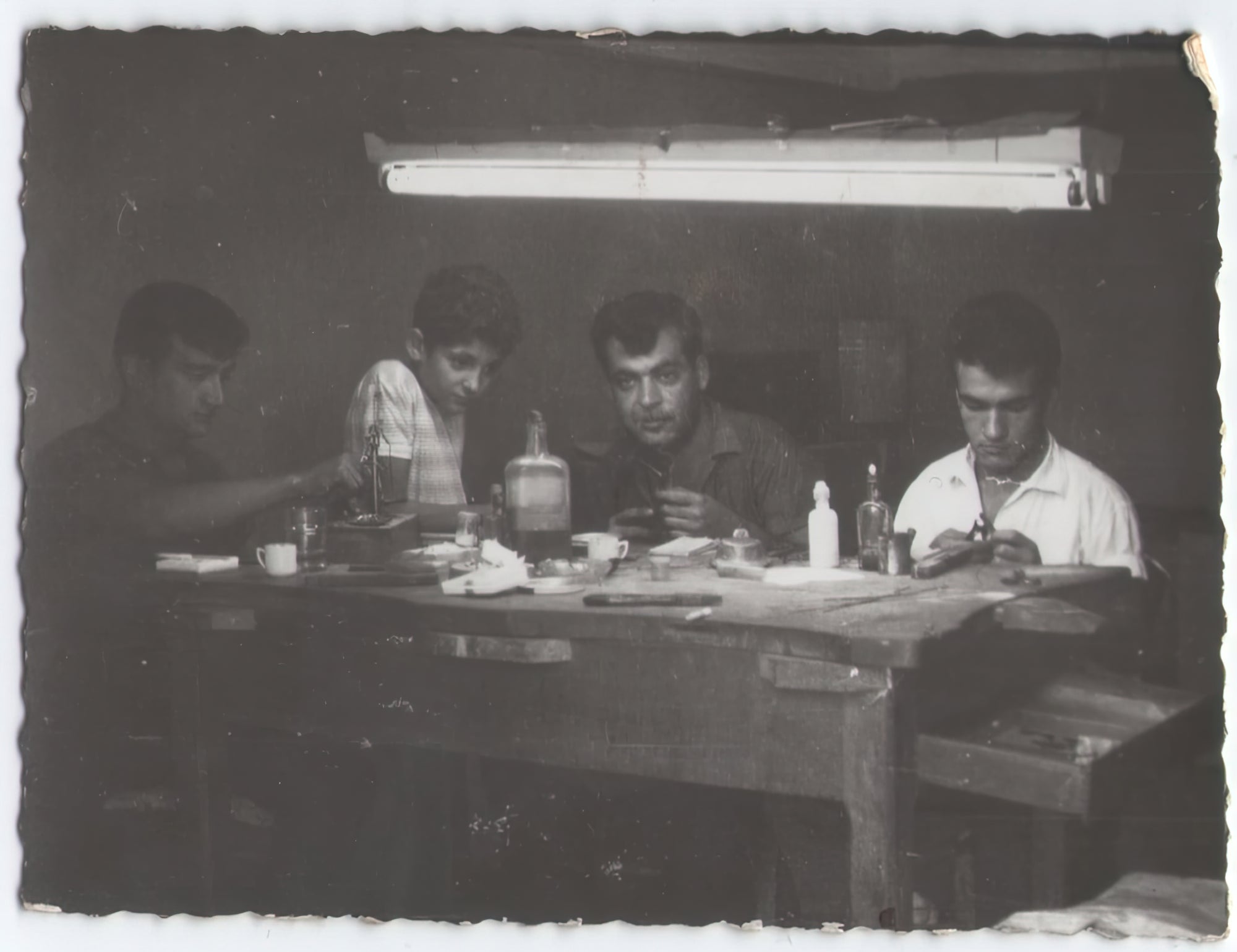
















I spend most of my mornings at the bench with a loupe in one hand and a pair of setting pliers in the other. Diamonds have been part of my daily routine since I was old enough to sit next to my grandfather in our Athens workshop without getting in the way. That was maybe age twelve or thirteen. Now I run the workshop myself, third generation, and the question I hear more than any other from customers shopping online is some version of: what's the difference between all these diamond necklace styles?
Solitaire, station, floating, pendant. The names get thrown around on every jewelry website, and they all start to blur together after a while. But the differences are real and they matter, especially if you're about to spend real money on a piece you plan to wear for years to come. So let me walk you through each one the way I'd explain it if you were standing across the counter from me.
The Solitaire Diamond Necklace
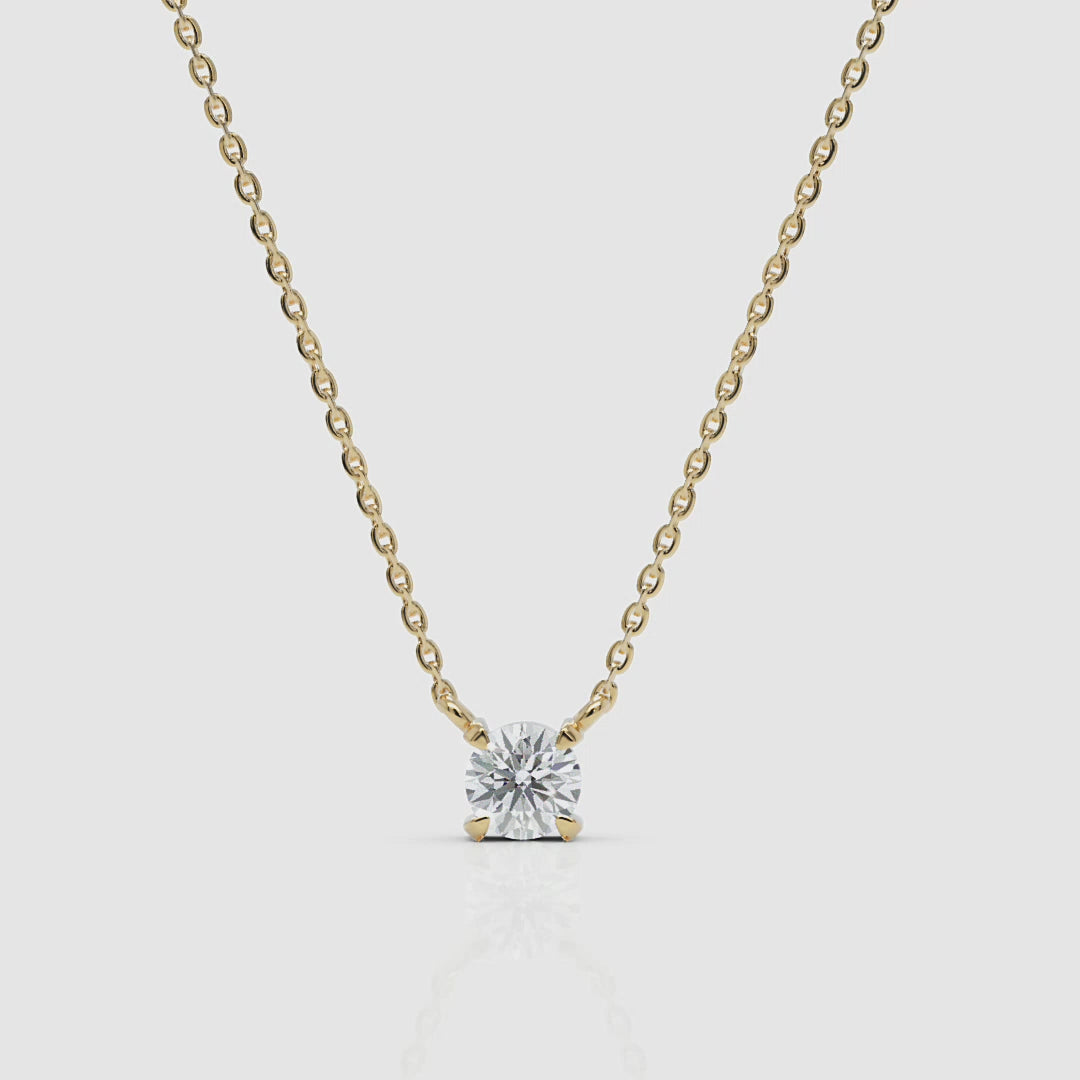
Single stone, single chain. That's it. The solitaire diamond necklace is probably the piece I've made more of than anything else in my career and I still don't get tired of it. There's something about watching a freshly set diamond catch the light for the first time on a finished chain that never loses its magic. Even after thousands of them.
Why does the solitaire outsell everything else? Because it doesn't belong to any era. My grandmother Morfoula wore one in Athens in the 1960s. Your daughter will wear one in 2050. The design has zero trend dependency. A single brilliant diamond hanging from a fine gold chain is about as timeless as jewelry gets.
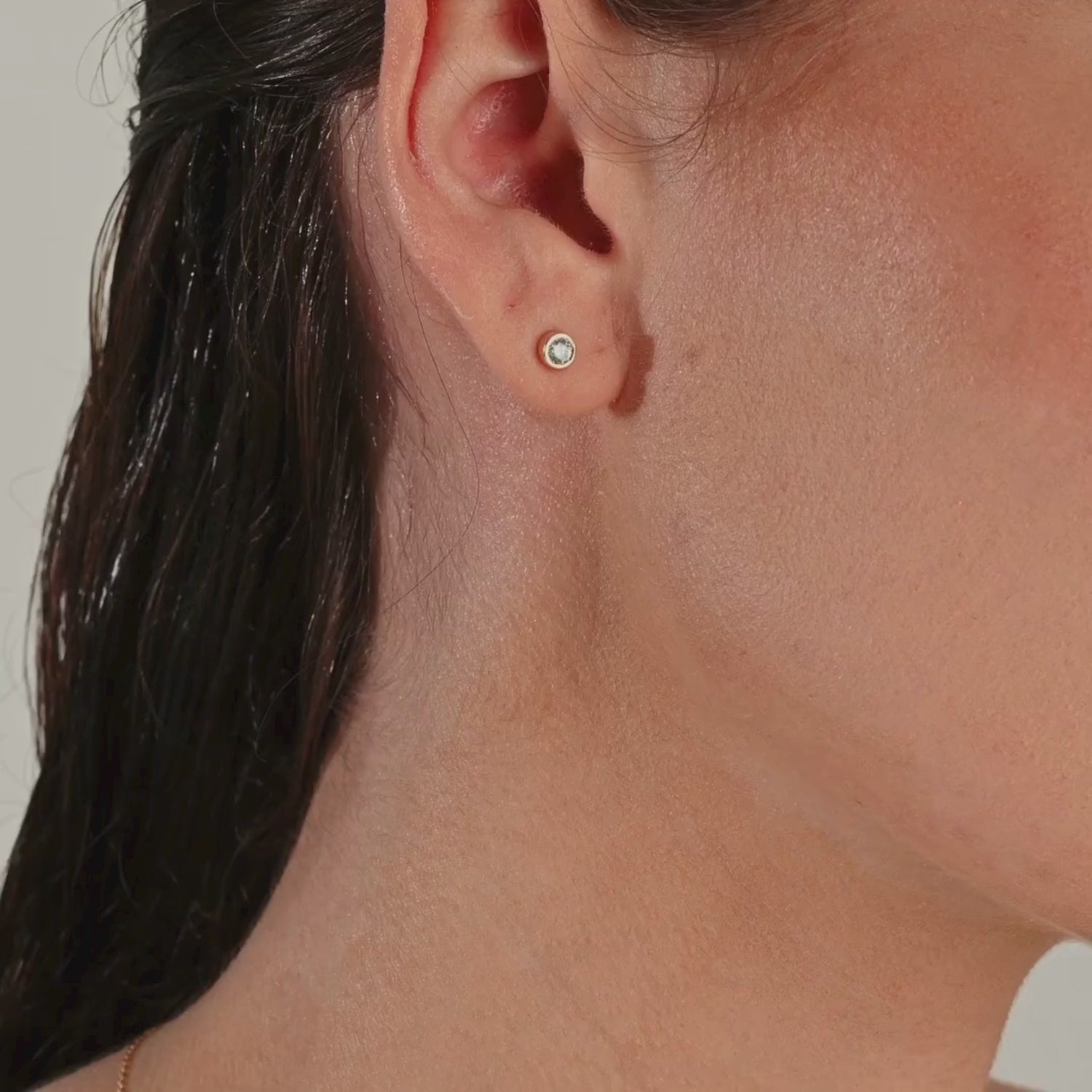
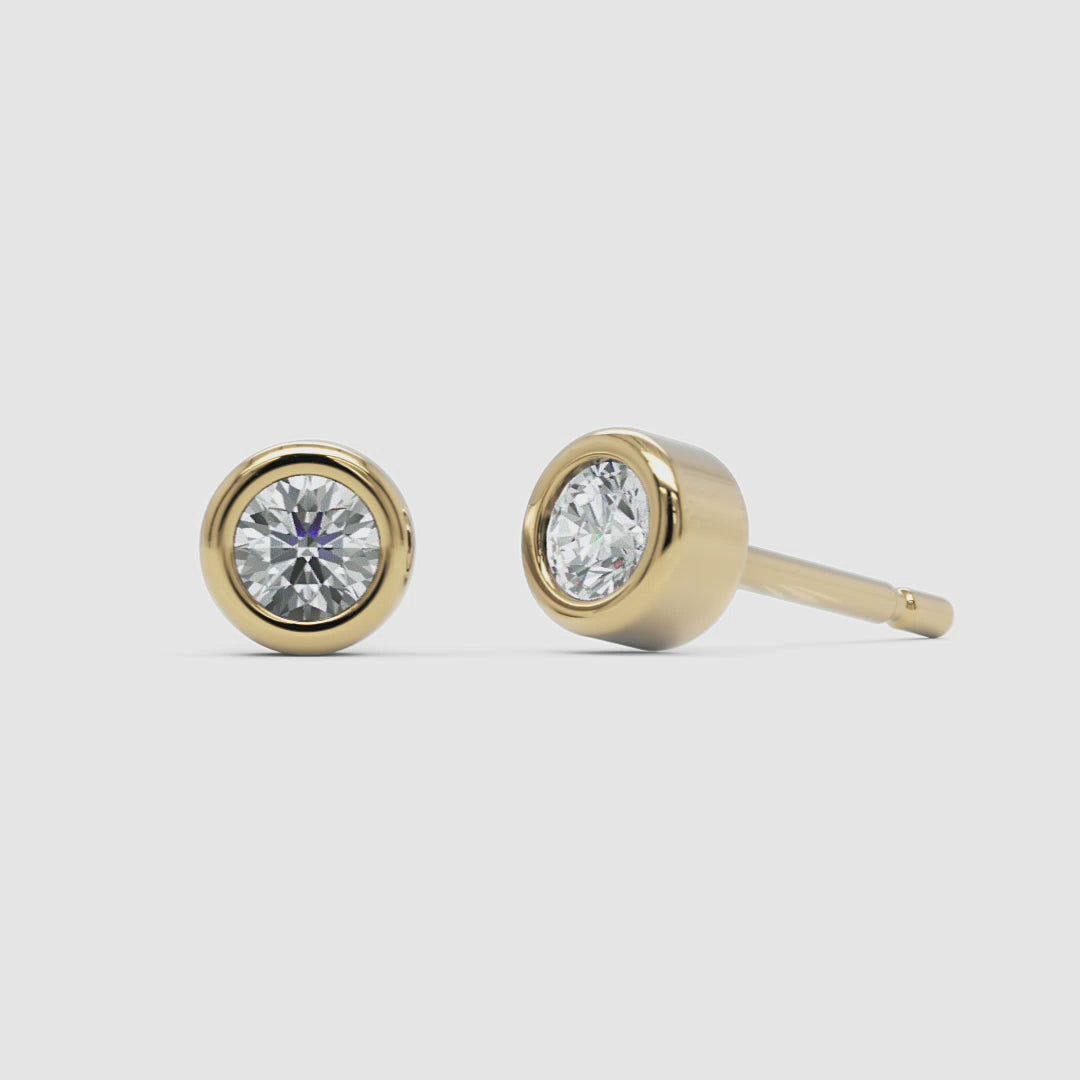
Now, the part most people overlook is the setting and it makes a bigger difference than the diamond itself in terms of how the necklace actually wears. Prong settings (the little metal claws that grip the stone) lift the diamond off your chest. More air around the stone means more light gets in, which means more sparkle. The tradeoff? The pendant spins. You'll look down sometimes and see the side profile of the setting instead of the face of your diamond. It happens. A bezel setting solves that because the gold wraps all the way around the edge of the stone, locking it flat against your skin. It won't spin. It sits perfectly every single time. But you lose a tiny bit of that fire because the light can only enter from the top.
My honest recommendation for a first diamond necklace? A solitaire diamond necklace in 14k gold with a bezel setting. You'll wear it every day without thinking about it. Then everything else you add later just layers around it.
The Station Diamond Necklace
Station necklaces took me a while to appreciate fully, I'll admit that. When I first started making jewelry I thought the solitaire was the only real diamond necklace and everything else was just a variation. I was wrong. The station necklace does something completely different and once you see it on someone's neck you understand immediately.
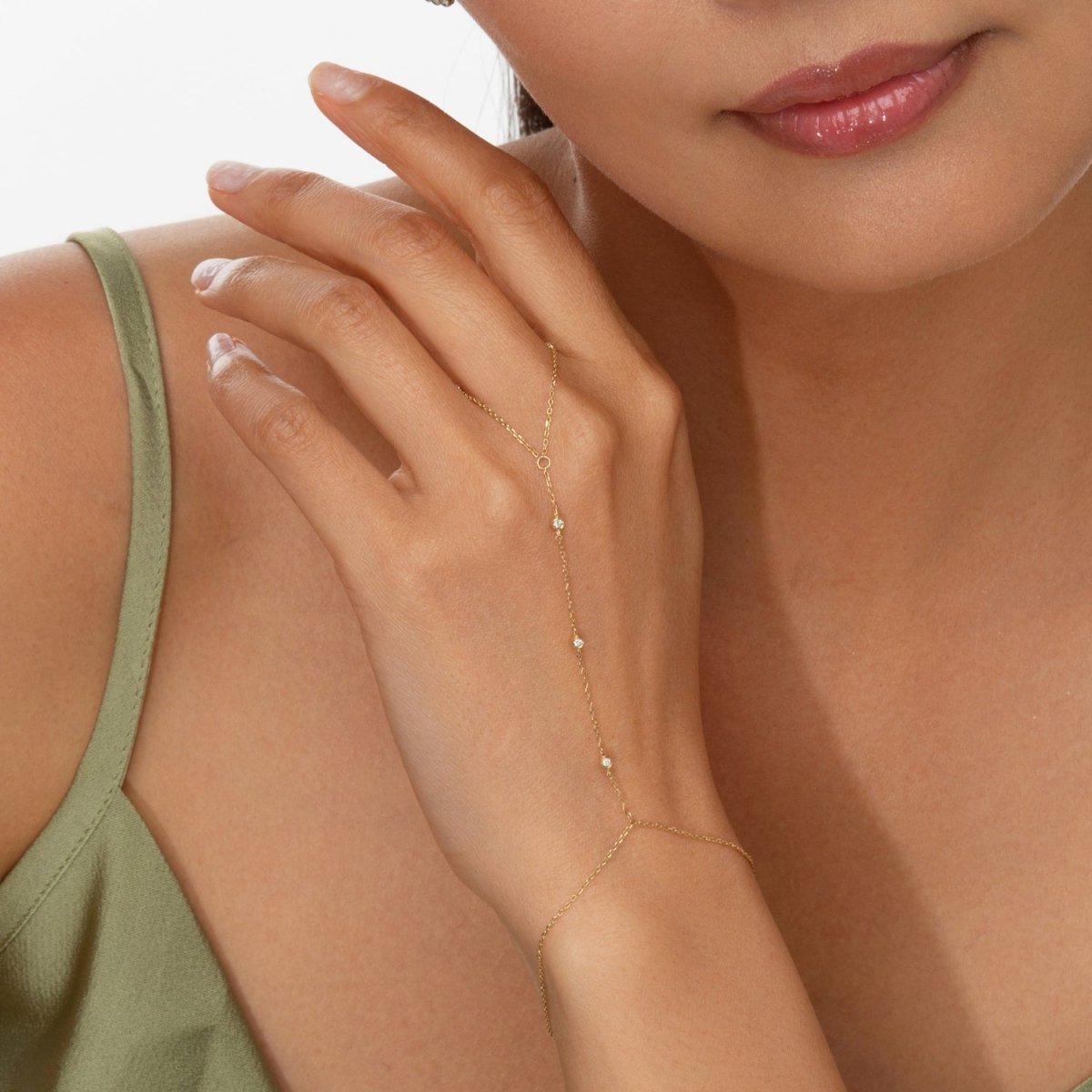
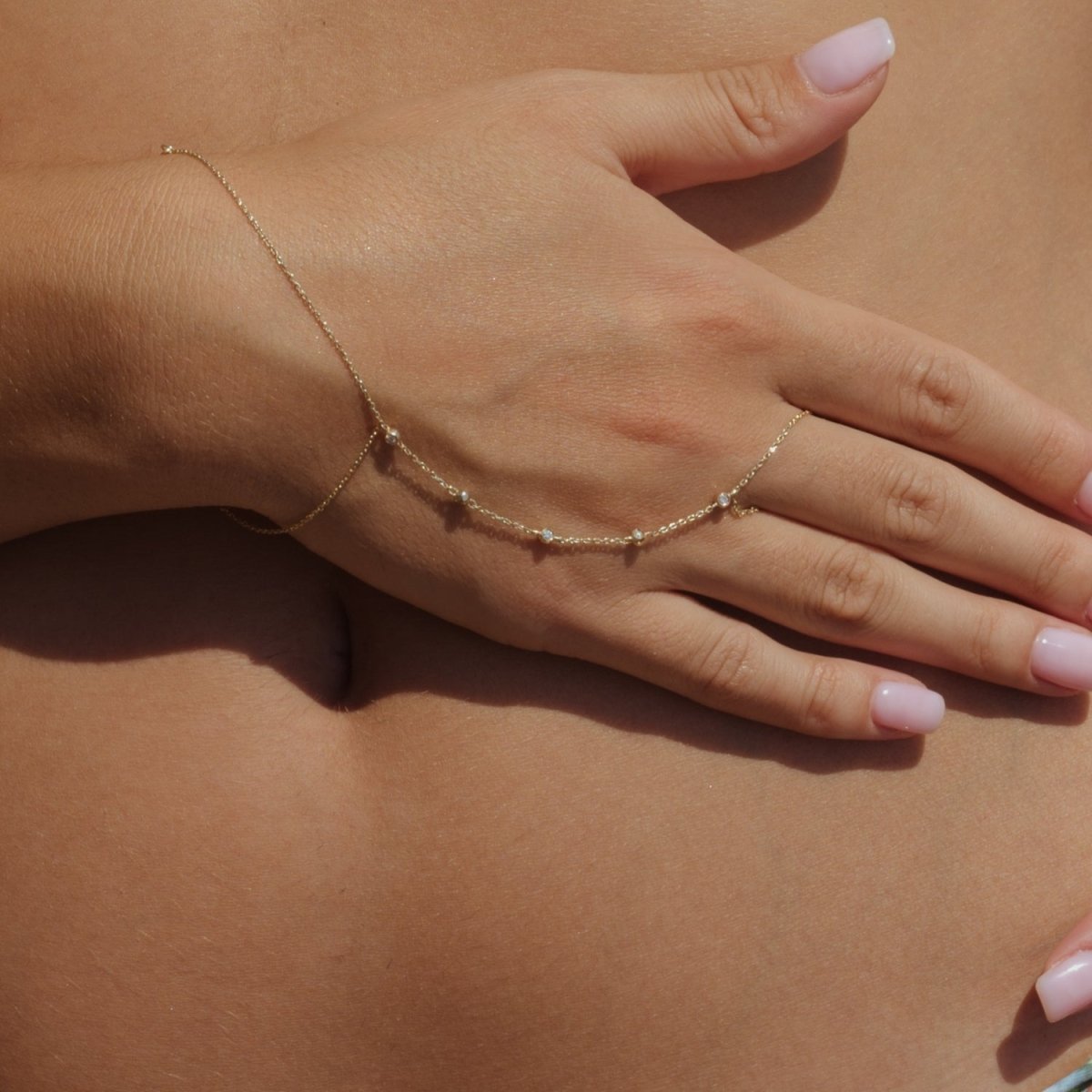
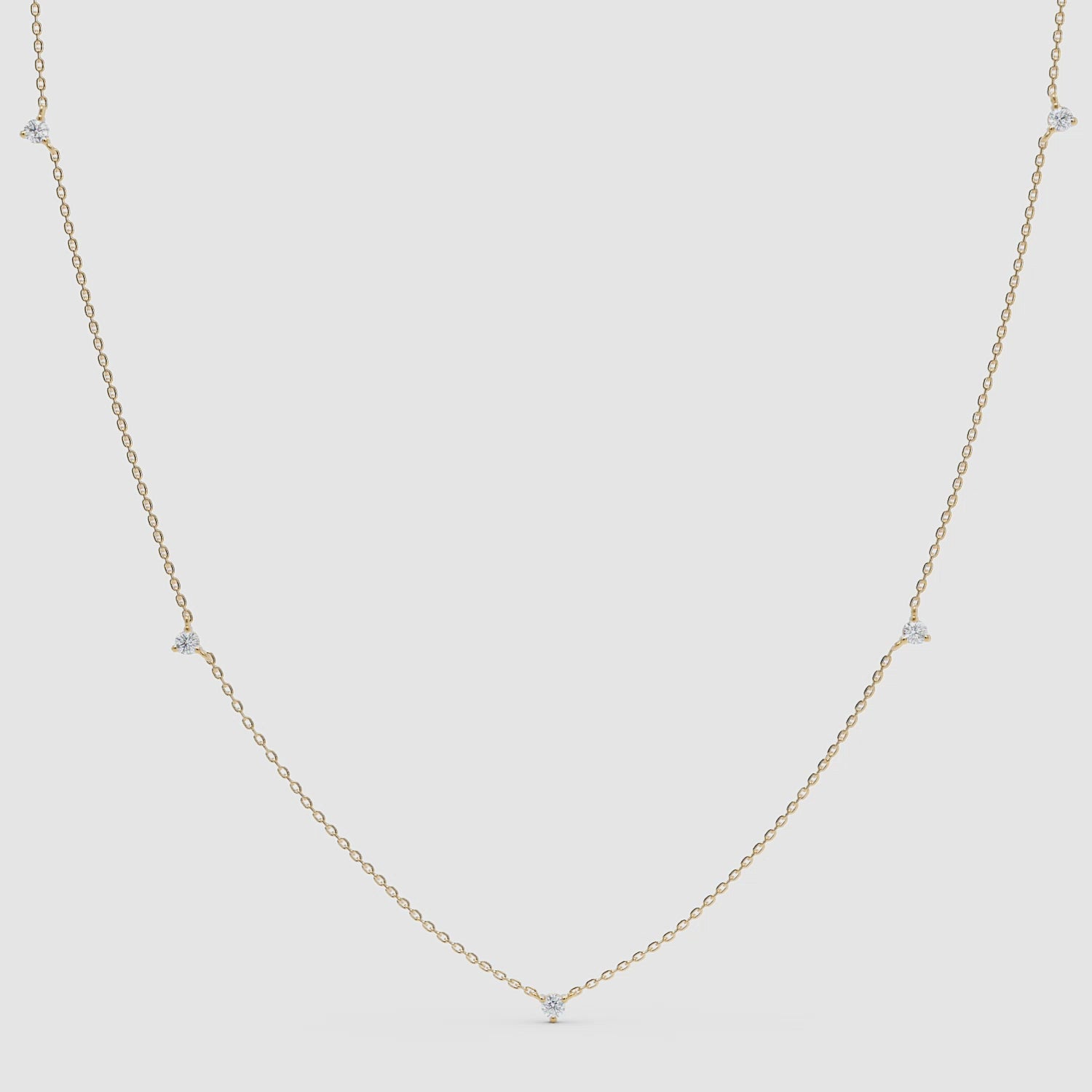
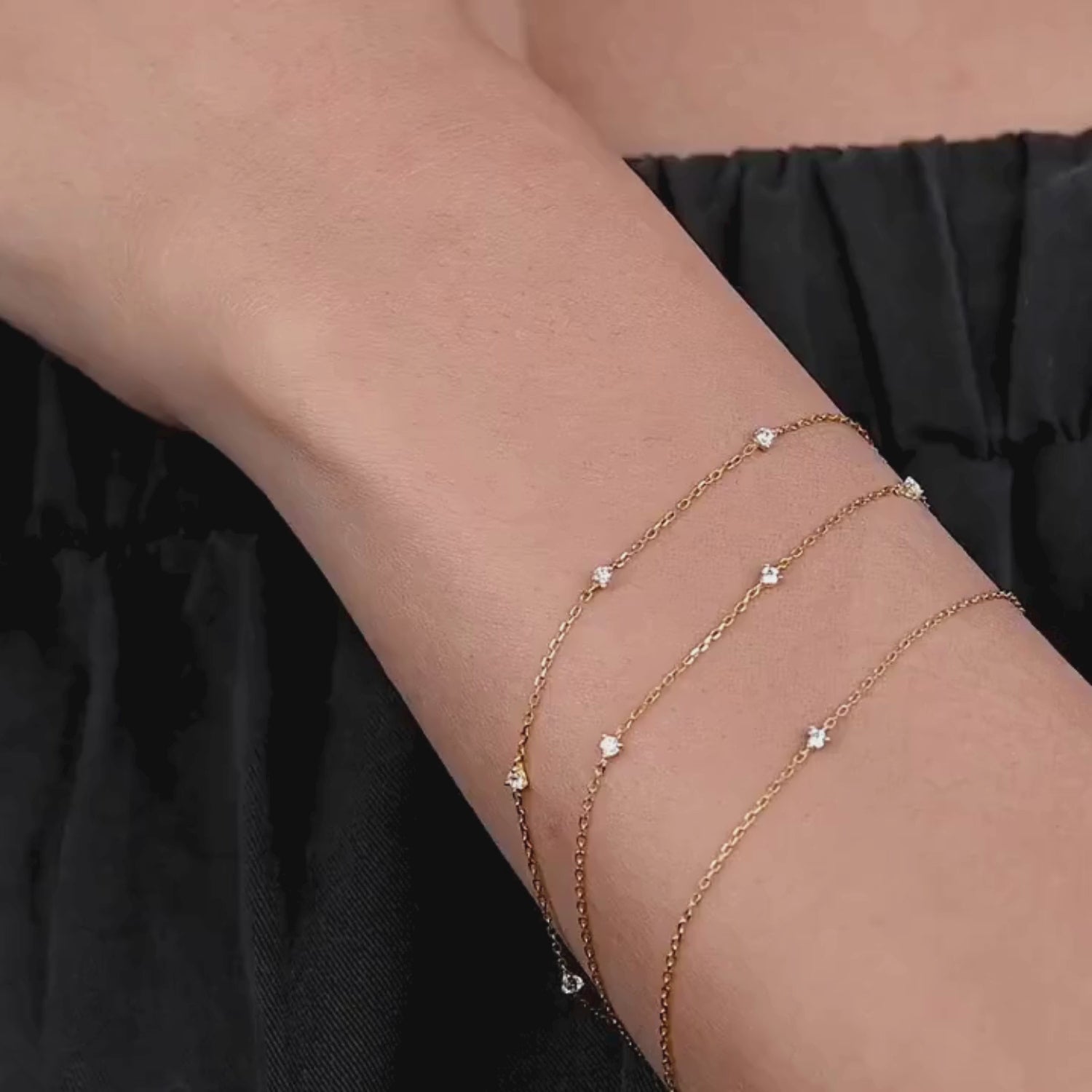
Instead of one diamond at the center of your chest, a station necklace spaces out multiple smaller diamonds along the length of the chain, evenly, like little checkpoints. Some people call them "diamonds by the yard" which is a term that goes back to the seventies. The effect is scattered light. You don't get one bright spot, you get this shimmer that runs across the whole neckline and moves with you. Turn your head and different stones catch the light at different moments. It's subtle but it's the kind of thing people notice without being able to explain why you look put together.
Where station necklaces really shine though (and I wrote about this in more detail in our layering guide) is as a layering piece. Put a diamond station necklace at 16 inches and a solitaire at 18 inches. The stations handle the collarbone, the solitaire anchors the chest. Two necklaces, one composition. I've seen this combination on customers who wear almost nothing else and it works beautifully every time.
The Floating Diamond Necklace
This one is for the minimalists and I mean the real ones. Not the people who say they like minimalism but still want a visible setting and a chunky bail. The floating diamond necklace hides the mechanics entirely. The chain threads through a tiny tube or loop on the stone so it looks like the diamond is just sitting on your skin with nothing holding it there.
I remember the first time a customer described what she wanted and I realized she was asking for this style without knowing the name. She said "I want the diamond but I don't want to see the jewelry part." That's the floating necklace in one sentence.
There's a practical limit though. This style works best with smaller stones, typically under half a carat. Once you go bigger than that you need more metal to hold the diamond securely and keep it centered, and at that point you start to see the setting which defeats the whole purpose. If you want a larger stone with minimal visibility, a thin bezel solitaire is probably a better fit. But for that delicate, barely there look with a smaller diamond? Nothing else comes close.
The Diamond Pendant Necklace
People mix up "pendant" and "solitaire" all the time and I get it, the words seem interchangeable. But they're not. A solitaire is specifically one stone and nothing else. A pendant is any decorative piece hanging from a chain. So a diamond pendant necklace could be a heart with diamonds in it, a gold disc with a diamond center, a cross, an initial letter, a cluster of tiny stones arranged in a flower shape. The diamond is part of a design rather than being the entire design.
Why does that distinction matter practically? Because pendants let you say something beyond "I'm wearing a diamond." A heart says love. A cross says faith. An initial says identity. The diamond adds brilliance to whatever message the shape carries. And honestly, when someone comes to me looking for a gift but they're not sure about the recipient's taste, I almost always push them toward a pendant over a solitaire. The design element gives the piece character even if the stone is on the smaller side.
The Dainty Diamond Necklace
Dainty isn't a category the way solitaire or station is. It's more of a scale. You take any of the styles above, shrink the stone down to maybe 0.15 or 0.20 carats, put it on a thinner chain, and now it's dainty. The necklace practically disappears against your skin. You forget it's there until someone squints and says "is that a diamond?"
I've watched the demand for this shift dramatically in the last five or six years. People used to come to us wanting their diamond necklace to be noticed across the room. Now more and more customers want the opposite. They want something they can sleep in, shower in (though I'd recommend taking it off), work out in, wear under a button down without it catching on anything. A small diamond necklace that just lives on their neck permanently. It becomes part of who they are.
The key to making this work long term is the chain. A thin chain in 14k solid gold can handle daily wear without breaking because the alloy is strong enough to take the abuse. We covered the whole 10k versus 14k decision in a separate guide if you want to go deeper on that. But the short version: for a dainty diamond necklace you plan to never take off, 14k is the right call.
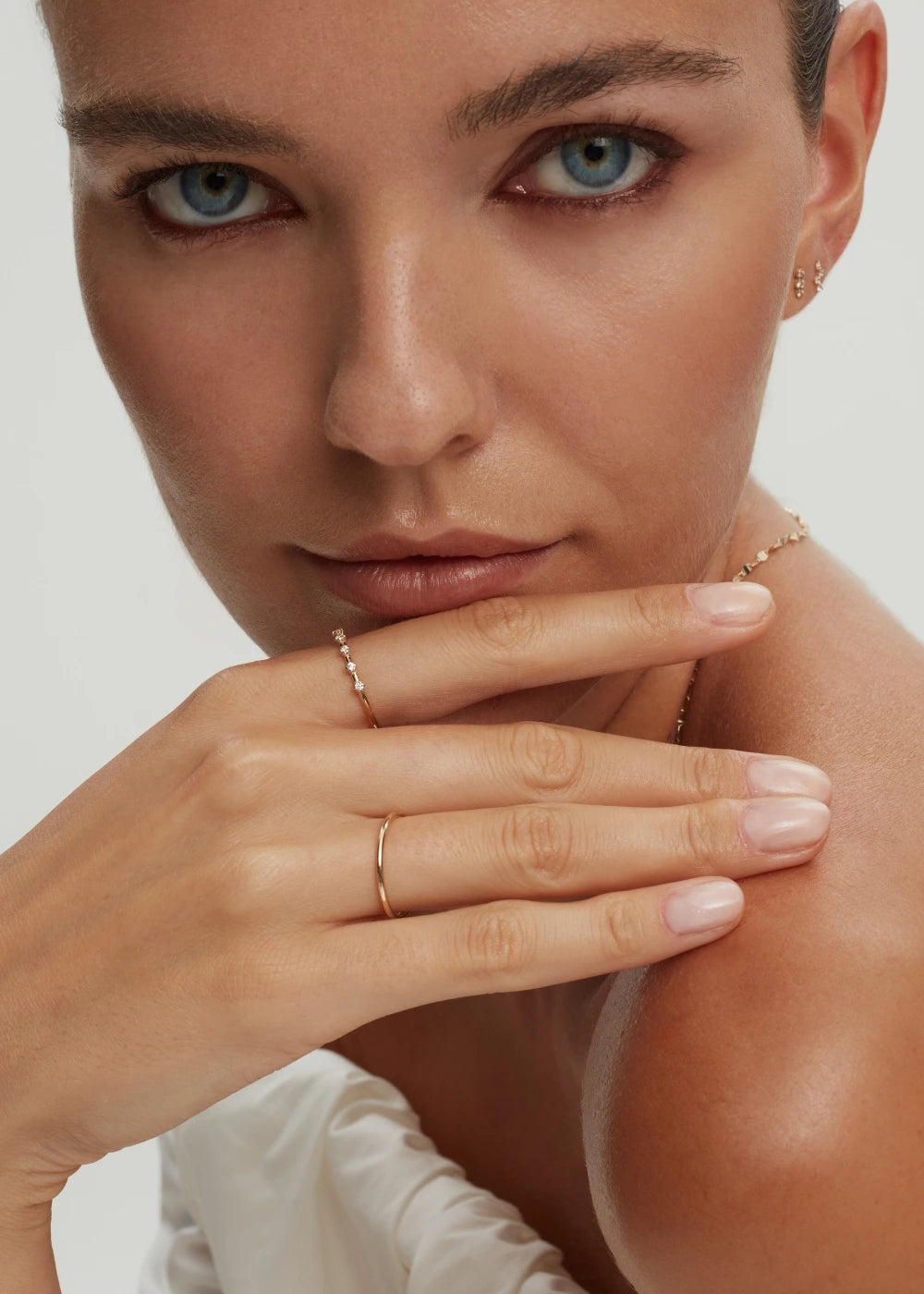
Layer three or four dainty gold necklaces at different lengths and you have a look that appears completely effortless even though every piece was chosen deliberately. That contrast between intention and ease is what makes dainty jewelry so appealing right now.
The Diamond Heart Necklace
I'll be direct about this one. Nobody buys a diamond heart because they admire the geometry of the shape. They buy it because of what it means. A diamond heart necklace is a declaration. I love you. I'm thinking of you. You matter to me. It's maybe the only piece of jewelry where the emotional message is completely unambiguous and that's exactly why the heart shape has survived a century of changing trends without ever falling out of favor.
What I will say from the making side is that heart shaped diamonds are the most difficult cut to get right. A good heart has perfectly symmetrical lobes, a clean defined cleft at the top, and a sharp point at the bottom. When it's done well it's gorgeous. When it's done badly it looks like a blob with a dent in it and no amount of beautiful gold around it fixes that. So if you're buying a heart pendant, spend time looking at the stone. The cut quality matters more here than in almost any other shape.
We make our diamond hearts in prong and bezel settings across our full diamond necklace collection. Both work well. Prongs give the heart more definition. Bezel gives it a smoother, more modern frame.
Lab Grown or Natural Diamonds for Necklaces?
People ask me this every single day so let me just be blunt. For necklaces? Lab grown. Almost always.
A necklace is not an engagement ring. Nobody is going to ask you for a grading report while you're wearing it to dinner. Nobody is pulling out a loupe at the office. A lab grown diamond is the same crystal, same hardness, same optical properties as a natural diamond. The only difference is one came out of the ground and one was grown in a chamber. On your neck, at conversational distance? Identical.
What lab grown changes is what becomes possible. That 0.75ct solitaire you were eyeing suddenly doesn't require a discussion about the household budget. You can go for a better cut, a bigger stone, or honestly just buy two pieces for the cost of one natural diamond necklace. That's not a compromise. That's just being smart.
We went deep on this in our lab grown diamond necklace guide for 2026 but my bottom line hasn't changed since I wrote it. For necklaces, go lab grown and put the difference toward better gold or a second piece to layer with. Our lab grown diamond necklace collection exists because of that exact philosophy.
So Which Style Should You Actually Buy?
After fifteen years of watching people make this choice, here's what I've noticed. The customer who wants one diamond necklace to handle everything buys a solitaire. Always. The customer who already owns a solitaire and wants to build on it adds a station necklace because layering those two together creates something neither piece does alone. The customer who doesn't want to see metal, who wants the diamond and nothing else, goes floating. And the customer shopping for someone they love picks a heart or a meaningful pendant because the shape carries the emotion better than a standalone stone.
One more thing. Metal color changes everything. Yellow gold gives a diamond warmth. White gold makes it cooler and more contemporary. Rose gold adds a softness that photographs really well (brides have figured this out already). Try the same diamond in all three metals before you decide. We make every style in yellow, white, and rose for exactly that reason.
And whatever you end up with, make sure the gold is solid. Not plated, not filled, not vermeil. Plated jewelry is a few microns of gold over brass and it will wear through. A solid gold diamond necklace bought today looks exactly the same in thirty years. I know because I've repaired pieces my grandfather made in the 1960s and the gold hasn't changed at all. That permanence is the whole point.
Frequently Asked Questions
What is the most popular diamond necklace style?
The solitaire and it's not even close. One diamond, one chain, works with literally everything. It's the first diamond necklace most people buy and usually the one they end up wearing the most even after building out a full collection. Great for layering too.
What is a station necklace?
Multiple small diamonds spaced evenly along the chain. Think of each diamond as a stop along a route. The old name for it is "diamonds by the yard." It spreads light across the neckline instead of concentrating it in one spot. Incredible for layering with other pieces.
Are diamond necklaces worth it?
In solid gold, absolutely. The diamond won't degrade and the gold won't tarnish, fade, or discolor your skin. A 14k solid gold diamond necklace is genuinely a lifetime purchase. Where people get burned is buying plated or filled pieces that look great for three months and then start showing the base metal underneath.
What diamond shape looks best on a necklace?
Round brilliant is the safe bet because it throws light from every angle which matters a lot on a pendant that moves around all day. Oval and pear shapes read larger per carat if size matters to you. Hearts carry sentimental weight. There's no wrong answer, just different priorities.
Can I wear a diamond necklace every single day?
You can and I think you should. Diamond is a 10 on the Mohs hardness scale, nothing you encounter in daily life will scratch it. The chain is the part you need to think about, which is why I keep coming back to solid 14k gold. It's hard enough for daily wear and it won't change color no matter how many years pass.
What length diamond necklace should I get?
16 inches sits right at the collarbone and 18 inches falls just below it. Most women go with one of those two. If you're planning to layer eventually, start at 16 or 18 and then make your next necklace 2 inches longer. Keep the spacing even between layers, that's what makes a layered stack look intentional.
Laki Tasatzis, Founder, ENEA Studio