

















My grandmother wore the same pair of gold hoop earrings for forty three years. Not the same style. The same actual pair. I remember them on her when I was five years old, sitting on her lap in the kitchen while she rolled phyllo dough, and I remember them on her at my wedding. Forty three years of cooking, sleeping, bathing, gardening, traveling, living. The hoops had that soft patina that only real gold develops over decades, and she never once took them off except to clean them in warm water with a drop of dish soap every few months.
That image stuck with me. When I started making earrings at our bench in Athens, I kept thinking about those hoops. How they had to be light enough that she forgot she was wearing them but strong enough that four decades of daily life could not break them. That is the standard I hold every pair of gold hoop earrings to before it leaves our workshop.
I am a third generation goldsmith. My grandfather Thanasis opened our workshop in Athens over seventy years ago. My father learned from him, I learned from both of them, and now our small team of four continues the same work at the same bench. Everything I am going to tell you about gold hoop earrings comes from that lineage, from handling gold every single day for twenty years and from watching my grandfather and father handle it for twenty years before that.
What Makes a Good Gold Hoop Earring
People ask me this all the time, and I always give the same answer. Three things separate a gold hoop earring that falls apart in three years from one you will still be wearing in thirty. The karat of the gold. The thickness of the wire or tube. And the clasp, which honestly is where most cheap hoops fail first. Shape, size, diamonds or no diamonds, those are personal choices. But karat, gauge, and clasp? That is pure engineering, and you either get it right or you do not.
We work almost exclusively in 14k solid gold for our hoops. For anyone unfamiliar, that is 58.3% pure gold blended with alloy metals for strength. I landed on 14k after years of experimentation. Here is what happened: a customer in 2019 ordered a custom pair in 18k because she wanted the richest possible color. Beautiful hoops. But within eight months she told me the clasp felt loose. The gold was simply too soft at that gauge for something she opened and closed every single morning. Lesson learned. At hoop earring dimensions, 14k gives you the warm color, the tarnish resistance, the decades of wear, and enough structural integrity that the mechanism does not fatigue.
Then there is tube versus wire gauge. Our Classic Tube Hoop Earrings use a hollow tube profile instead of solid wire. Why? Because a solid wire hoop at the diameter most women want would be unnecessarily heavy. And a heavy earring dragging on your lobe all day is not luxurious. It is just bad design. Kostas, who has been at our bench for years, literally weighs every single pair on a jeweler's scale before shipping. If it comes in heavy for its size, back to the bench it goes. No exceptions.
The Different Styles of Gold Hoop Earrings (And When Each One Works)
Here is something I have learned from watching thousands of women try on earrings over the years: every woman has a hoop size that looks like it was made specifically for her face. Not the size she thinks she wants. The size that actually works. Most of the time, it is slightly smaller than what she came in looking for.
Classic Tube Hoops
The workhorse. A hollow tube bent into a circle with a click shut mechanism. We make these in small, medium, and large. The small sits close to the earlobe and almost disappears into the ear. The medium is the most versatile, visible enough to be a statement but subtle enough for a work meeting. The large is for when you want people to notice your ears before they notice anything else, and there is absolutely a time and place for that.
My mother wears the medium every day. Has for years. She showers in them, sleeps in them, does everything in them. The click mechanism still works perfectly because the tube gauge we use at that diameter creates just enough spring tension to keep the closure secure without wearing out the hinge.
Teardrop Hoops
This is where hoops start getting interesting. A teardrop hoop is elongated vertically instead of being a perfect circle. The effect is subtle but it changes the way the earring relates to your face. A round hoop echoes the roundness of the ear. A teardrop hoop creates a slight vertical line that elongates the look of the neck. Women with rounder face shapes tend to gravitate toward these once they try both side by side.
We also make a large teardrop hoop and a tapered teardrop that narrows toward the bottom. Each one catches light differently because the curve changes the angle at which the gold surface reflects. My wife prefers the tapered version. She says it looks more intentional, which is a word I have noticed women use about jewelry when something feels designed rather than just manufactured.
Thin Hoops
Our Large Thin Hoop Earrings are for the woman who wants a larger hoop without the visual weight. The wire gauge is finer, so the hoop reads as delicate even at a bigger diameter. This is the style I see most often on women who layer their ear jewelry, because a thin hoop in the first hole leaves visual room for studs or smaller hoops in the upper piercings. If you are building an earring stack, this is usually where I suggest starting.
Diamond Hoops
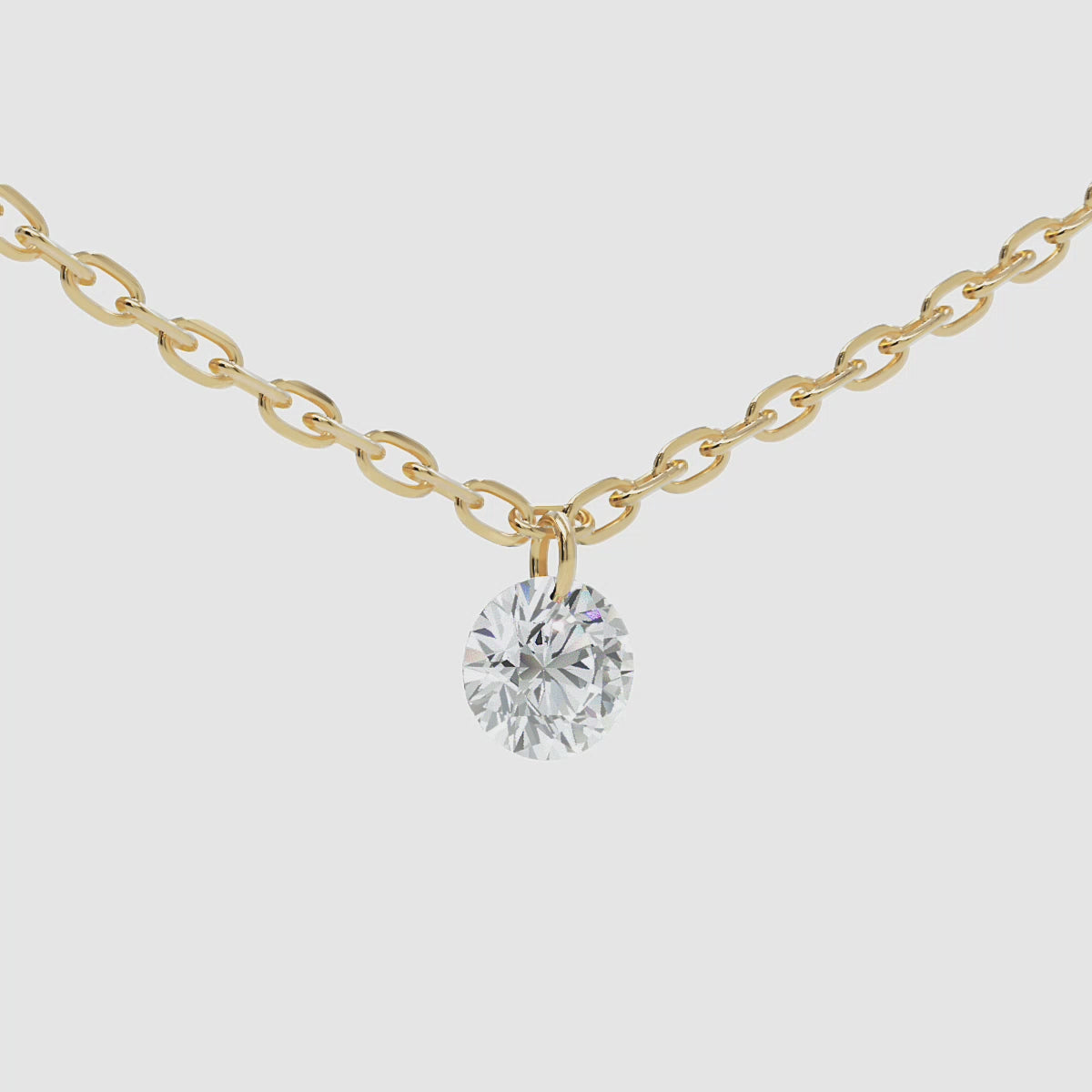
A completely different category in terms of both look and construction. Our Pavé Diamond Teardrop Hoop Earrings have diamonds set along the front face of the hoop in a pavé pattern, meaning each stone is held in place by tiny beads of gold rather than individual prongs. The effect is a continuous line of sparkle that follows the curve of the earring. Our Núde Diamond Hoop Earrings take a different approach: the diamonds dangle freely from the hoop, which creates movement and a softer flash of light as you turn your head.
Setting diamonds into a curved hoop is one of the more demanding tasks at our bench. Eleni, who handles most of our stone setting, spends roughly twice as long on a pair of diamond hoops compared to a plain gold pair. The curve means each stone seat has to be cut at a slightly different angle to maintain a uniform look along the arc. There is no shortcut for this. It is hand work, one stone at a time, one angle at a time.
Huggie Earrings: The Hoop's Quieter Cousin
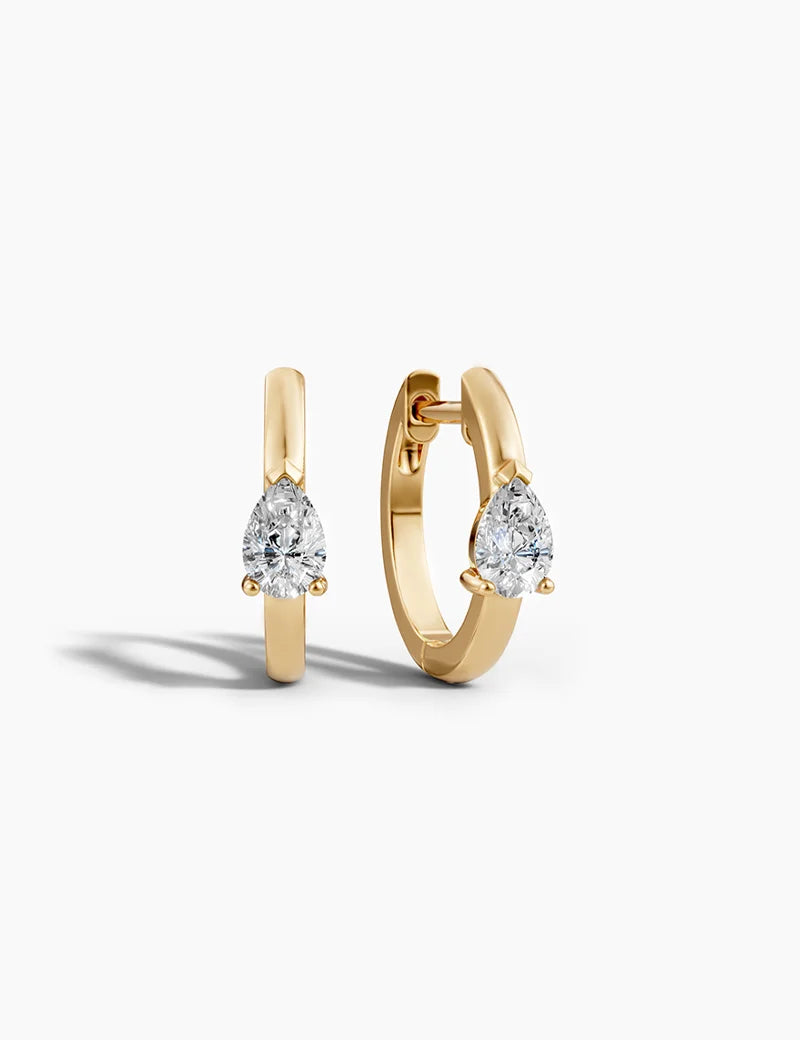
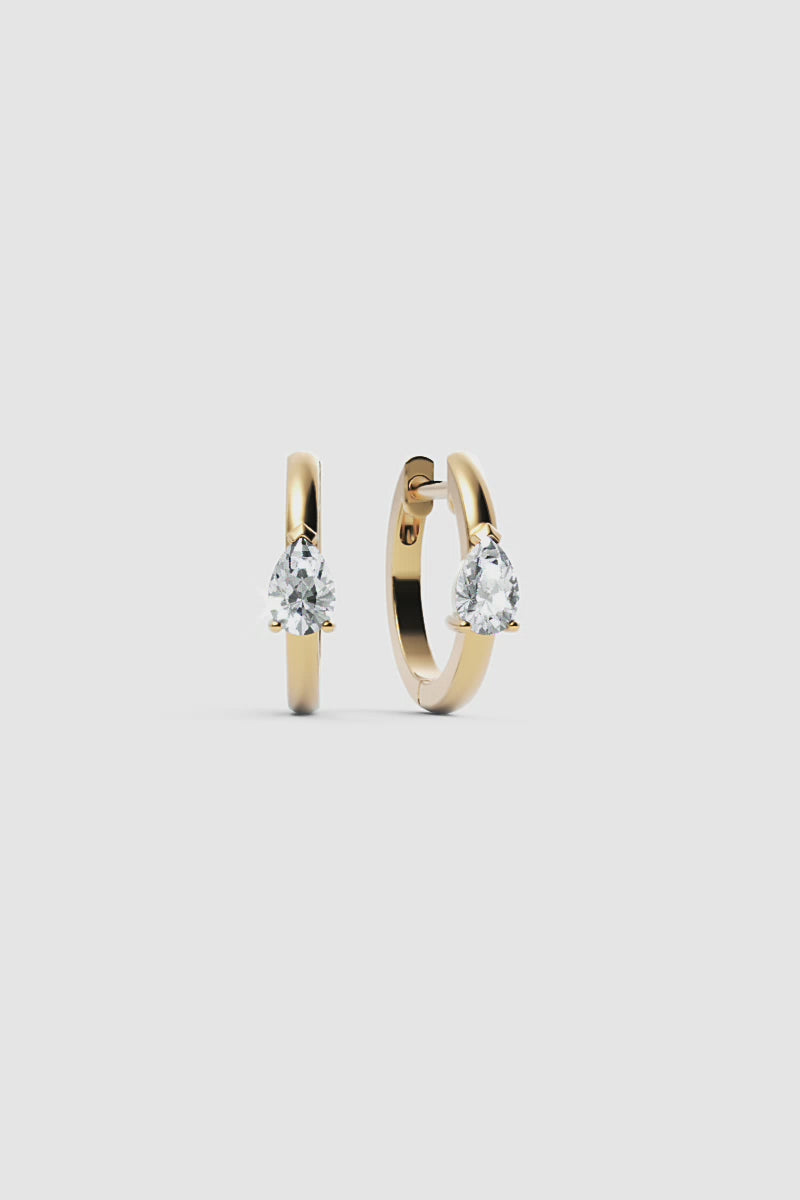
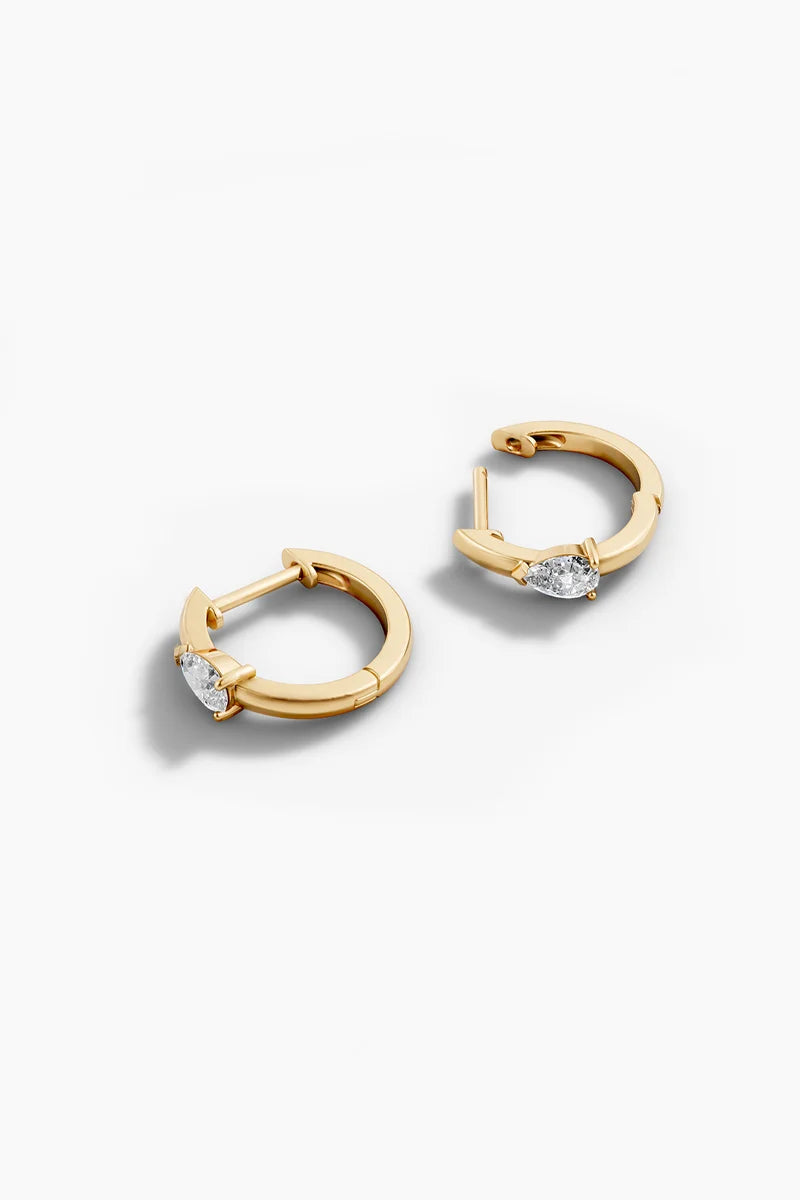
If you have not tried a huggie earring yet, here is what you need to know. It is technically a hoop. Same hinged mechanism, same gold, same everything. But it sits flush against your earlobe instead of hanging below it. The name is self explanatory: it hugs the ear. I have watched these go from a niche request to probably our most asked about category in the last three or four years. Makes sense to me. You get the clean look of a hoop with basically zero movement. Nothing catching on your scarf, nothing tangling in your hair. And if you sleep in your jewelry (which, honestly, most of our customers do), huggies are the ones that will not bother you at all.
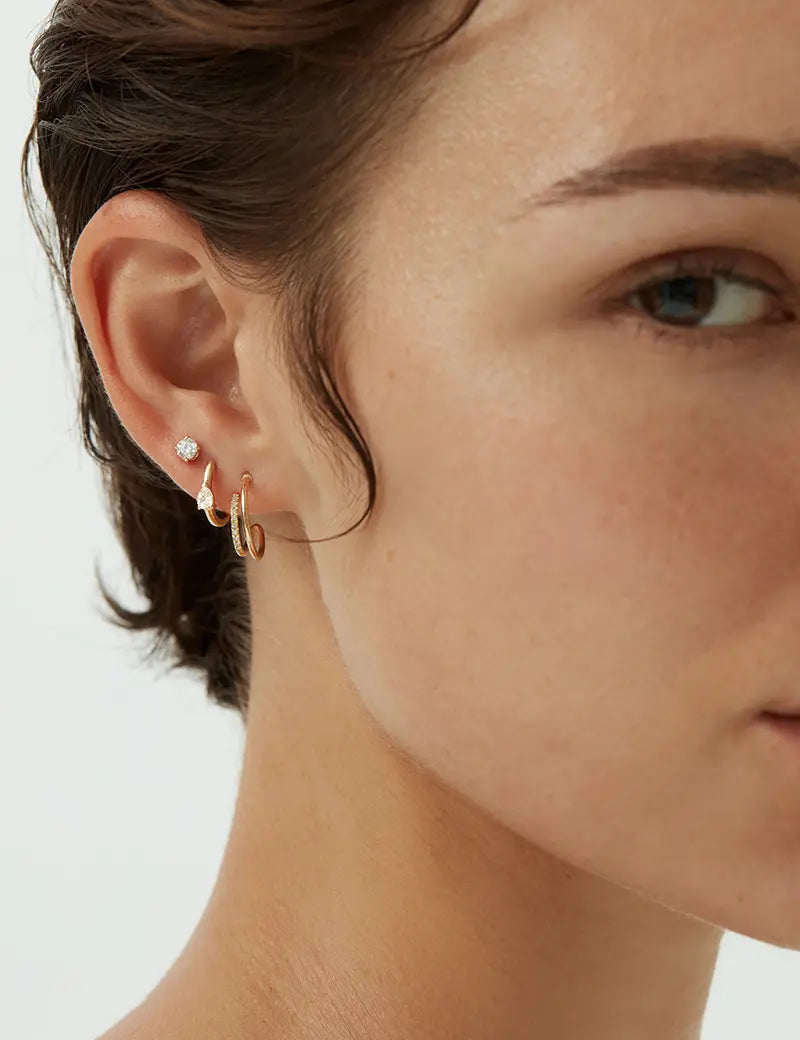
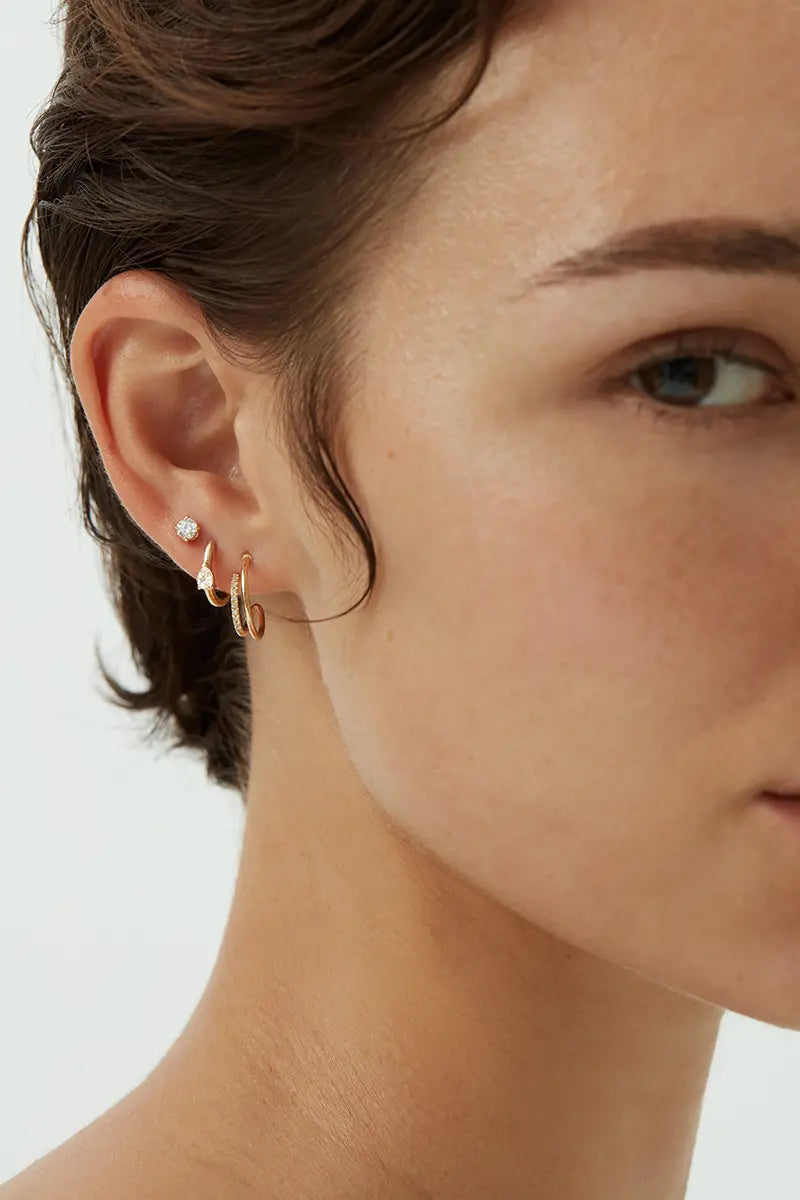
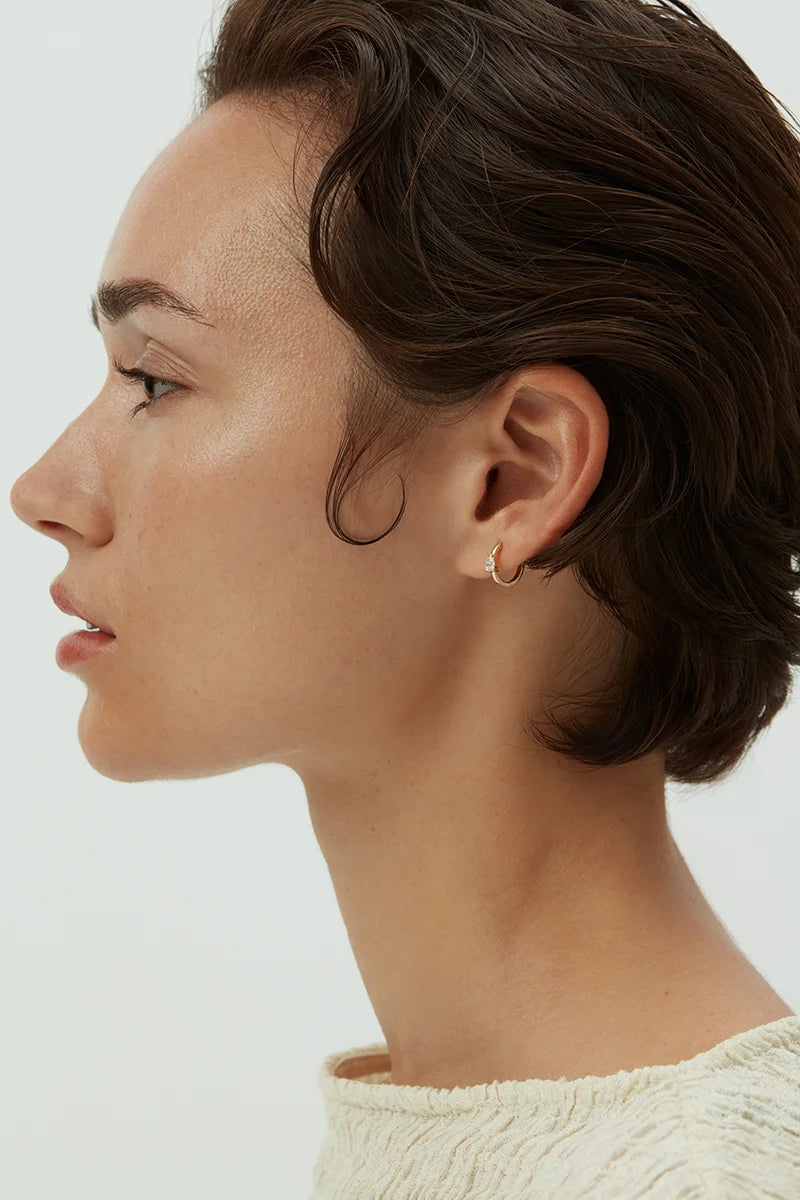
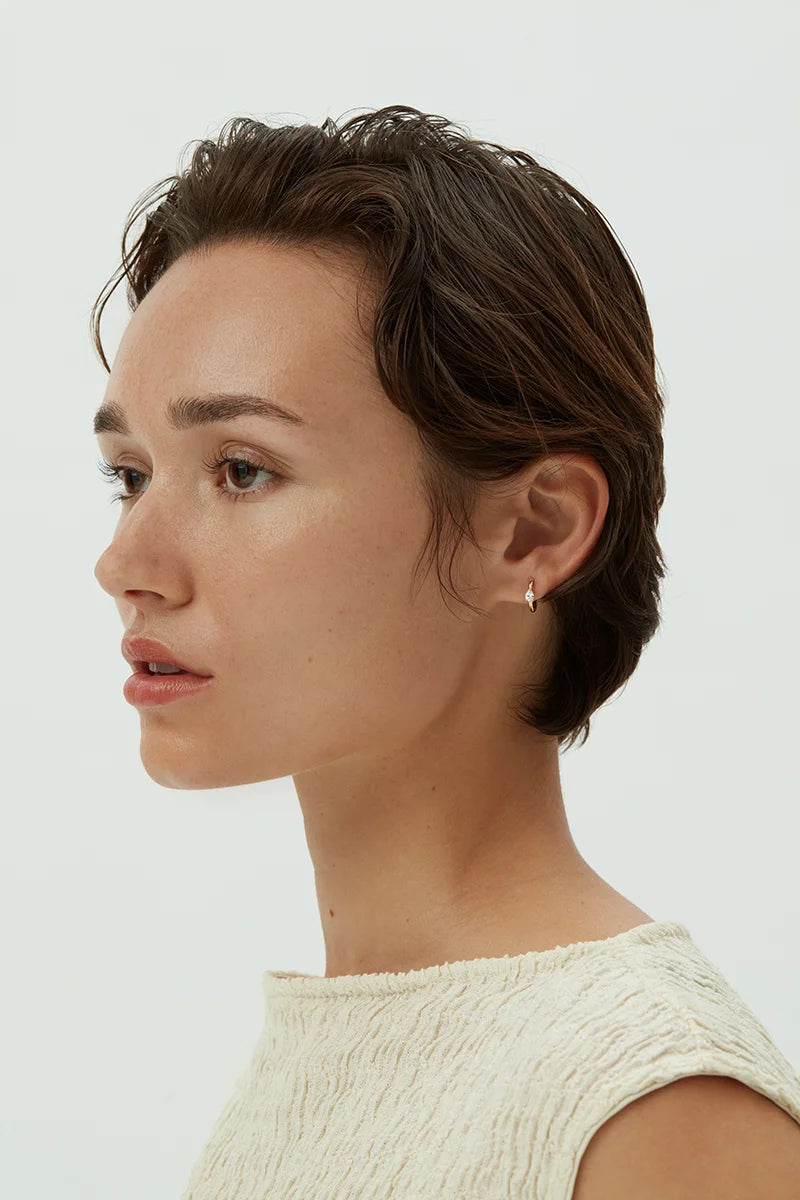
The Pear Diamond Huggie Hoops are a piece I am particularly proud of. A pear shaped diamond sits right at the lowest point of each hoop, at the bottom of the earlobe, which is exactly where light hits when someone is looking at you. That was not luck. I went through three separate prototypes moving that diamond around by fractions of a millimeter until it sat in the spot that caught the most light from the most natural angles.
Gold Stud Earrings: When Less Is Everything
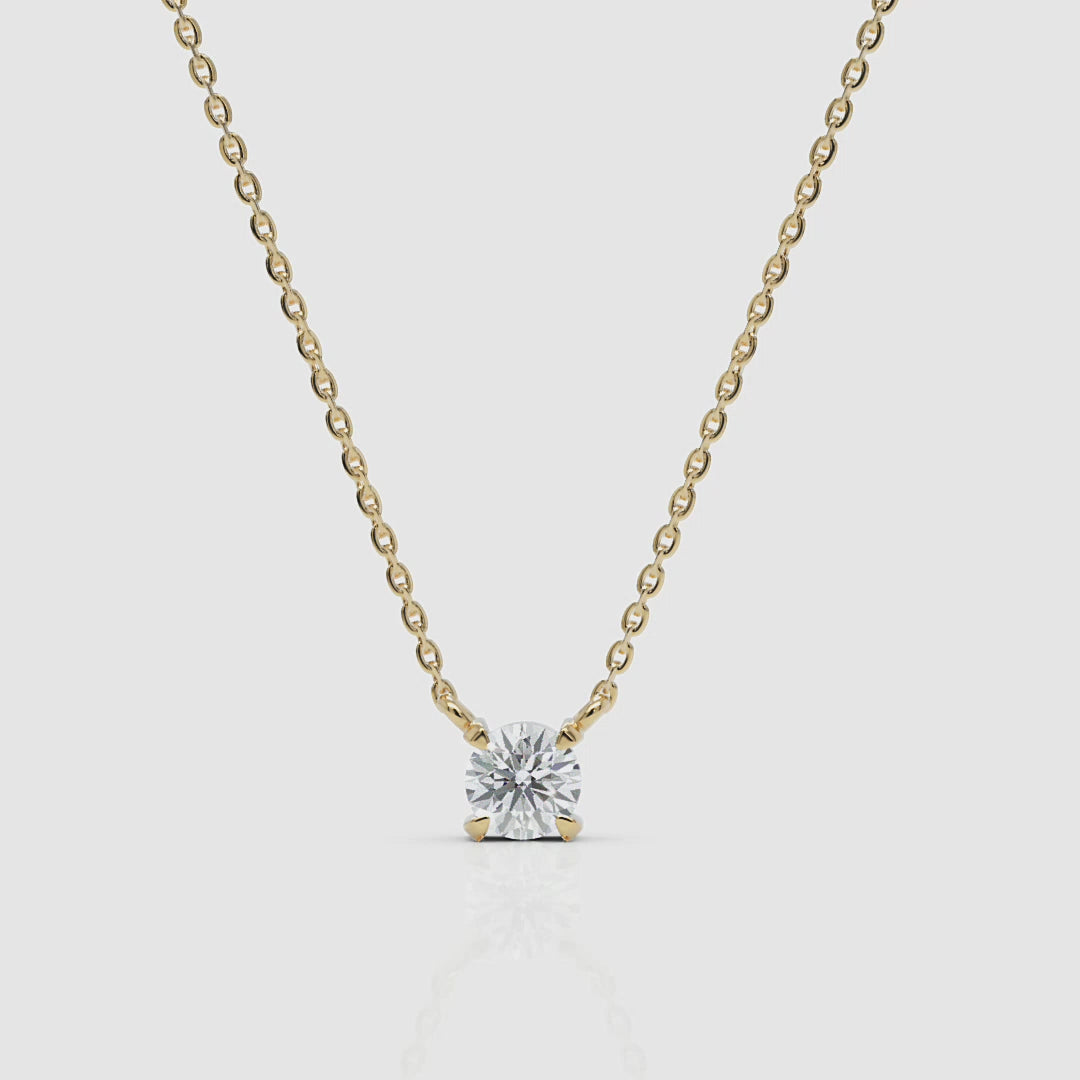
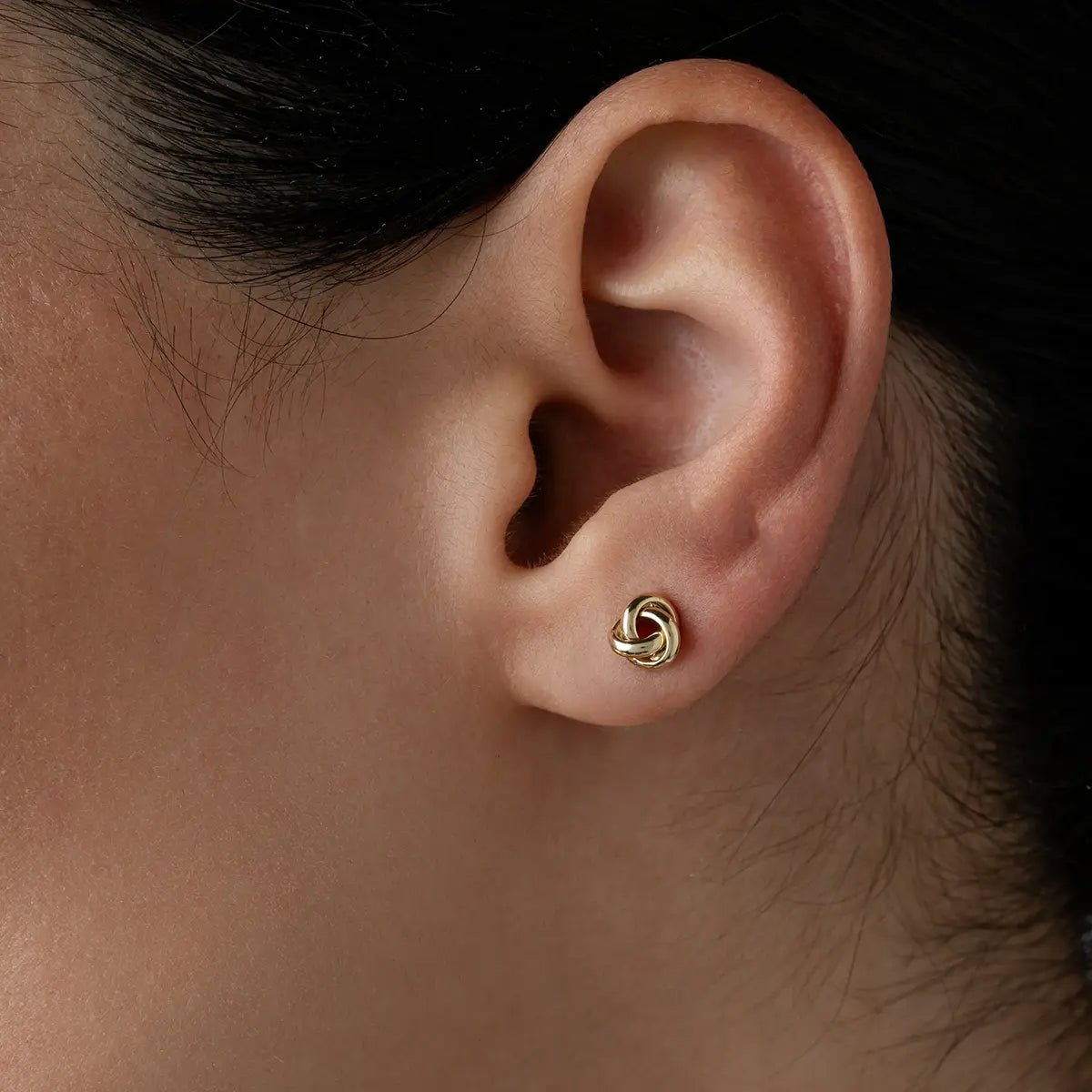
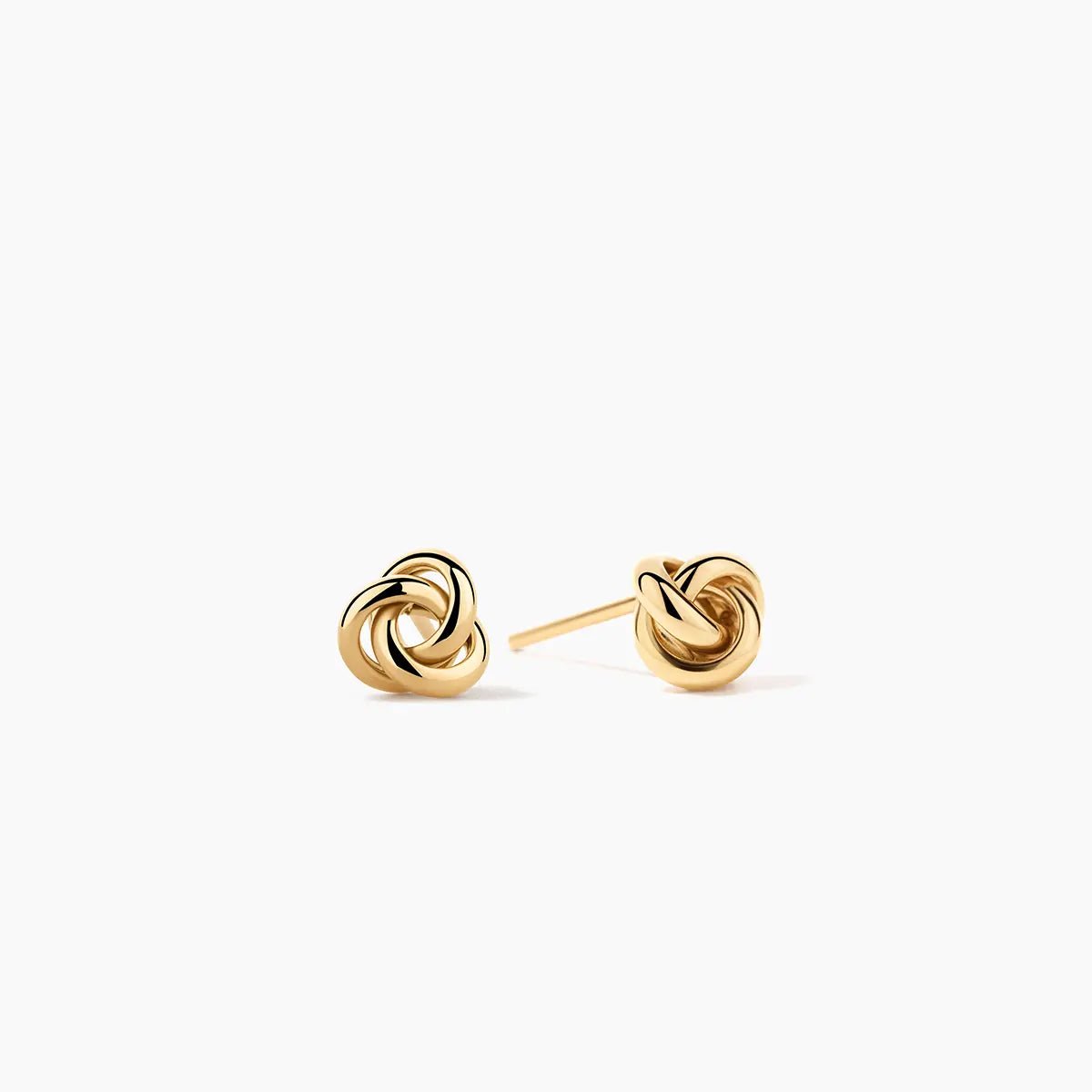
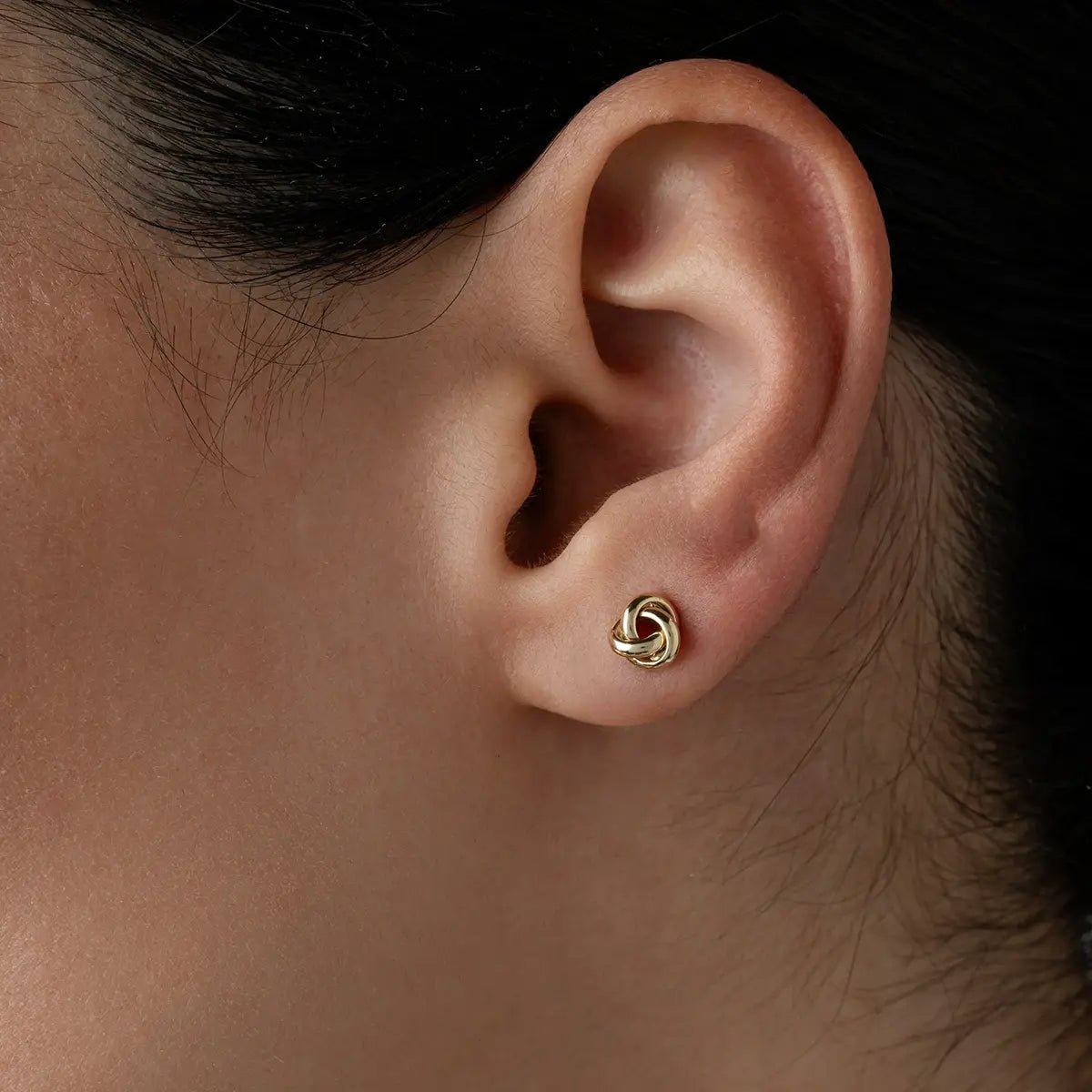
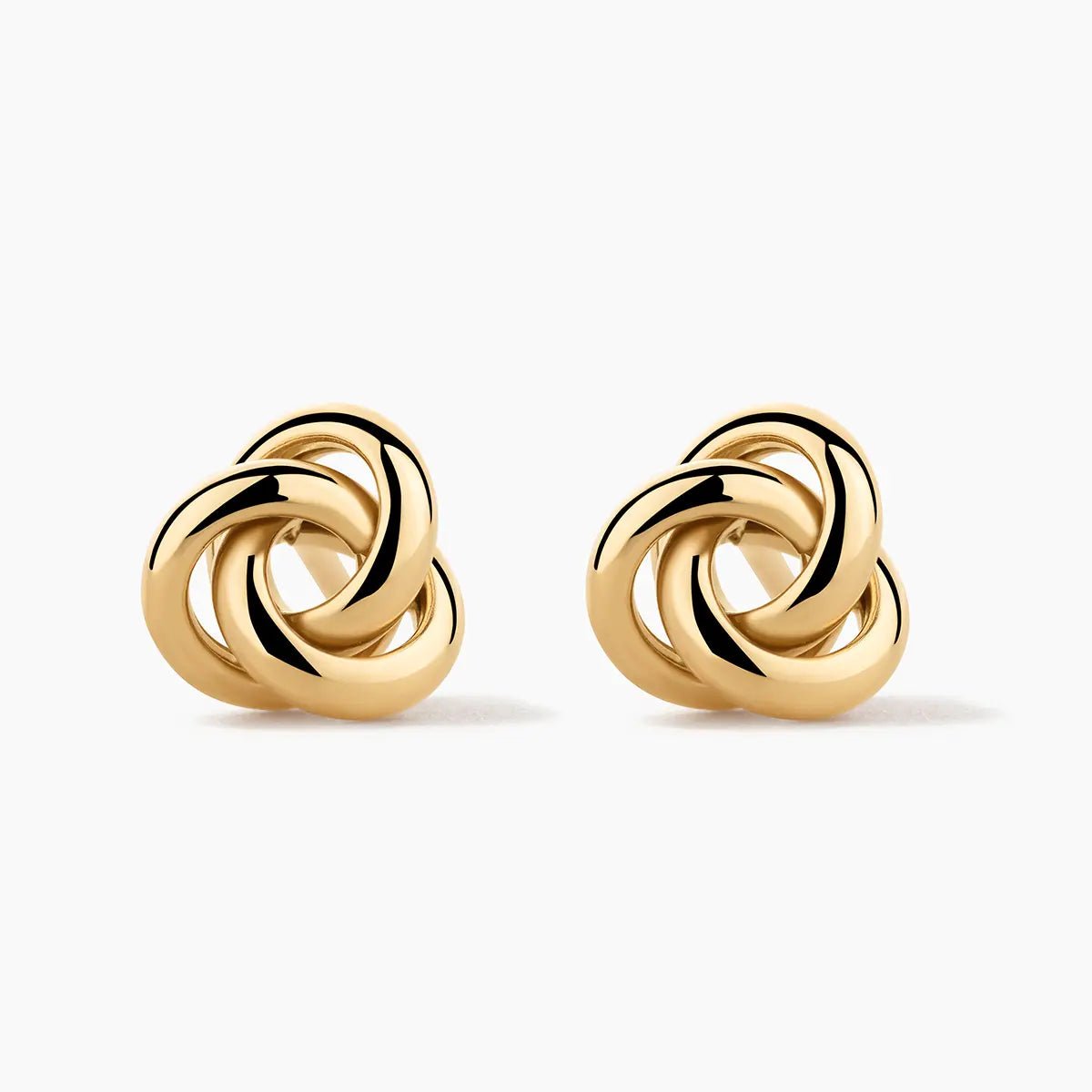
I realize this post is supposed to be about hoops, but bear with me for a moment. You cannot have a real conversation about gold earrings without talking about gold stud earrings. A stud is the foundation. It is the piece that quietly goes with every outfit, every occasion, every other piece of jewelry you own, without ever fighting for attention.
Our Éclat Diamond Bezel Studs outsell everything else in our stud collection, and I think I know why. Single diamond. Bezel setting (meaning the gold wraps all the way around the stone, nothing to snag on anything). Starting at $198. Flat against the ear. What happens, almost without exception, is that women put them in and then just... never take them out. I am not exaggerating. We get messages months later from customers saying they have slept, showered, traveled, worked out in these studs without once removing them.
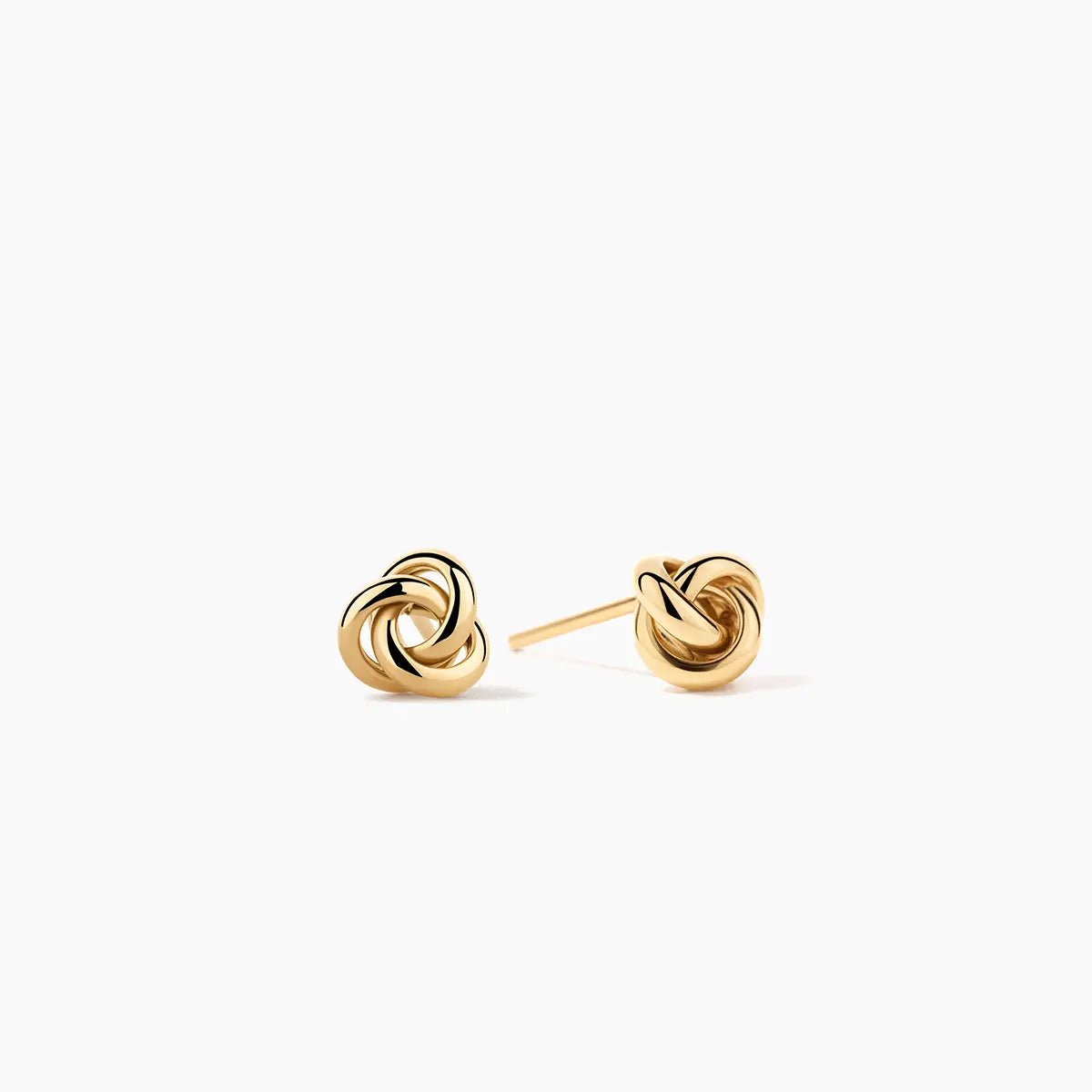
If you want something with a bit more character, look at the Trinity Three Color Stud Earrings. Three gold colors in one pair: yellow, white, and rose, all 14k solid, woven together into a single stud. They are subtle conversation starters. The kind of thing where someone leans in and says "wait, what is that?"
How to Choose the Right Hoop Size for Your Face
I will share the trick I tell every single woman who comes into our workshop with this question. Go home, stand in front of a mirror, and hold a coin next to your ear right where the earring would sit. A US quarter is roughly the same diameter as our small hoops. A half dollar gets you close to the medium. If both look too small, you are a large hoop person. This takes thirty seconds and it works better than any online quiz.
The deeper question, though, is about intention. Where do you want people to look? A small hoop or huggie keeps attention on your eyes and face. A medium hoop does something really nice for the jawline; it frames it without overwhelming it. A large hoop shifts the focal point down to your neck and shoulders. None of these is "better." They are doing completely different things for your silhouette.
One more thing: ignore anyone who tells you certain face shapes cannot wear certain hoop sizes. I have been fitting earrings on women for twenty years and that theory falls apart in practice constantly. I have seen large hoops look absolutely incredible on round faces and petite hoops look effortlessly right on women with long, angular features. The only rule that matters is this: does the earring make you feel like yourself when you look in the mirror? If yes, it is the right size.
Gold Color: Yellow, White, or Rose?
We offer most of our hoops in three colors: 14k yellow gold, 14k white gold, and 14k rose gold. People agonize over this choice more than they need to, but here is how I think about it after twenty years of watching women try them on.
Yellow gold is what my grandmother wore. It is the classic for a reason. Warm, universally flattering, pairs with literally anything. And yellow gold ages beautifully; that soft patina it develops after years of daily wear actually makes it look richer, not duller. About 60% of our customers pick yellow gold for their first pair of hoops.
White gold reads cooler and more modern. If you already wear silver toned jewelry, it blends right in. One thing I always tell customers though: white gold gets its bright color from a rhodium plating on the surface. That plating can thin out over a year or two of heavy wear. Not a big deal, any jeweler can replate it for you, but it is worth knowing upfront. Where white gold really shines (no pun intended) is with diamonds, because the cool metal color lets the stone's natural brilliance come through without adding warmth.
Rose gold has been the surprise hit of the last several years. The pink tone comes from extra copper in the alloy mix. What I find interesting is that it flatters basically every skin tone, which is not something you can say about every jewelry color. All three colors use the same 14k gold standard (58.3% pure gold). The only difference is which metals make up the other 41.7%.
Why Solid Gold and Not Gold Plated
I get asked this enough that I want to be really clear about it. Gold plated earrings are a base metal (usually brass, sometimes copper) with an incredibly thin layer of gold on top. How thin? Think microns. Now think about what happens to that layer when you put earrings in and take them out every day. The friction at the post and clasp wears through the plating faster than anywhere else. Give it a few months of daily wear and you start seeing the base metal come through. That is when earlobes turn green, skin gets irritated, and the earring starts looking nothing like what you bought.
With solid gold, whether we are talking about 14k gold earrings or 10k, the material is the same all the way through. Cut a solid gold hoop in half and the inside looks exactly like the outside. There is no coating to wear through. This is also why solid gold earrings are naturally hypoallergenic. The culprit behind almost every earring allergy is nickel, and 14k gold contains none of it. I cannot tell you how many customers have written to us saying they thought they could never wear earrings again because of reactions, and our gold hoops were the first pair in years that their ears actually tolerated.
How to Care for Gold Hoop Earrings
This is one of those topics that the internet has overcomplicated beyond recognition. My grandmother cleaned her hoops with warm water and a tiny bit of dish soap. Seventy years later, I am telling you the same thing. Warm water, one drop of a mild dish soap (nothing fancy), a soft cloth. Let them soak for about five minutes, wipe gently, rinse under warm running water, dry on a towel. That is genuinely all you need to do. Monthly if you wear them every day, every few months if you rotate between pairs.
What you should skip: those harsh chemical jewelry cleaning dips you see at department stores. Solid gold does not need them, and the ammonia compounds in some of those solutions can actually cloud diamond settings if your hoops have stones. Also, please do not scrub them with a toothbrush. I know that tip floats around the internet. Gold is softer than people think, and bristles will create tiny scratches that accumulate over time and make the surface look matte instead of polished.
As for storage, I am realistic. Most people toss everything into one jewelry dish on their nightstand. If that is you, at least try to keep your hoops separated from chains and bracelets. Gold scratches when it rubs against other metals. A small fabric pouch, even a soft cotton one, does the job perfectly.
Building an Earring Stack with Hoops
Two years ago, we barely got questions about earring stacking. Now it is easily the number one topic in our customer emails. Everyone wants to know: how do I make multiple piercings look like they belong together? And almost always, the anchor of a good stack is a hoop.
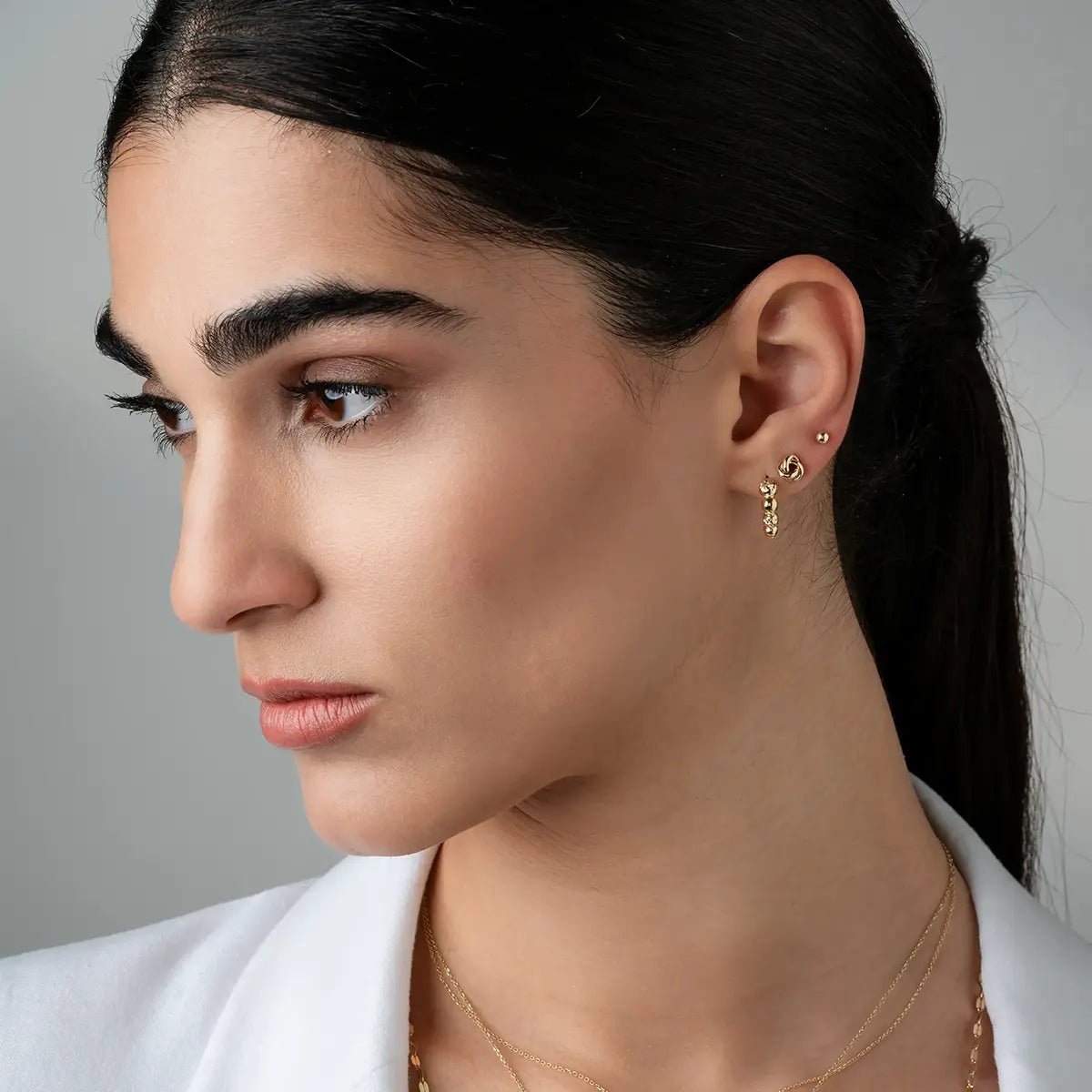
The general idea is to go bigger at the bottom and smaller as you move up the ear. Your first lobe piercing gets the main event: a medium or large hoop, or even a drop earring if you want maximum length. Second lobe piercing gets a smaller hoop or a stud. If you have upper piercings (helix, cartilage, that sort of thing), those get the most delicate pieces. Small gold hoop earrings work beautifully up there, and so do ear cuffs. Our Minimalist Diamond Ear Cuff is perfect for this because it does not even require a piercing. It clips onto the cartilage and adds a diamond accent without any commitment at all.
And yes, you can absolutely mix metals. Yellow and white gold together, rose with yellow, all three at once. That old rule about matching metals feels like it belongs to a different era. Our earring stacks collection has curated sets if you want a shortcut, but the stacks I admire most are the ones women piece together slowly over months and years, adding something new whenever they find a piece that speaks to them.
Frequently Asked Questions
Can I sleep in gold hoop earrings?
My mother does it every night with her medium tube hoops. Smaller hoops and huggies are the most comfortable for sleeping because they sit closer to the ear and do not press into anything when you lie on your side. The large hoops can dig in a bit depending on how you sleep, so plenty of women take those off at night. But to be clear, sleeping in gold hoops will not damage the earrings themselves. It is purely a comfort question.
Will gold hoop earrings irritate my ears?
Almost every earring allergy I have encountered traces back to one thing: nickel in the base metal of plated jewelry. Our 14k solid gold contains zero nickel. We hear this story constantly from customers who had written off earrings entirely after years of reactions to cheap pairs. They try our gold hoops almost reluctantly, expecting the worst, and then email us surprised that their ears feel completely fine. Solid gold solves this problem for the vast majority of people with sensitive ears.
What size gold hoop earrings should I get?
Depends what you are going for. If you want something you barely notice during the day, small hoops or huggies in the 12 to 15mm range are your best bet. The sweet spot for most women is the medium (20 to 25mm): big enough to see and appreciate, small enough to wear to a work meeting without a second thought. The large hoops (30mm and up) are the statement makers. If you genuinely cannot decide, go medium. It is the most versatile size and the one I recommend most often as a first pair.
How much do real gold hoop earrings cost?
Our small classic tube hoops in 14k solid gold start at $198. Prices go up from there based on size and complexity. A pair with pavé diamonds or a larger statement design typically falls in the $400 to $700 range. What you are paying for at every price point is solid gold all the way through, hand finished at our Athens workshop, with a clasp mechanism built to last decades of daily wear.
What is the difference between huggie earrings and hoop earrings?
Think of huggies as a hoop that has been shrunk down until it sits snug against the earlobe. Same closure mechanism, same materials, but the diameter is small enough that it "hugs" the ear instead of hanging below it. A traditional hoop hangs lower and moves more, which gives it that signature visual swing. Huggies are what I recommend if you live an active life or want earrings you literally forget you are wearing. Traditional hoops are what you want when you want people to notice.
Can I shower in gold hoop earrings?
Yes, without hesitation. My mother has showered in the same pair for years. Solid 14k gold does not react to water, regular soap, or shampoo. The only thing I would keep an eye on is chlorine. If you swim in a pool every single day for months, the chlorine can gradually dull the surface finish. Occasional pool days are totally fine. Just rinse them with fresh water after and you have nothing to worry about.