

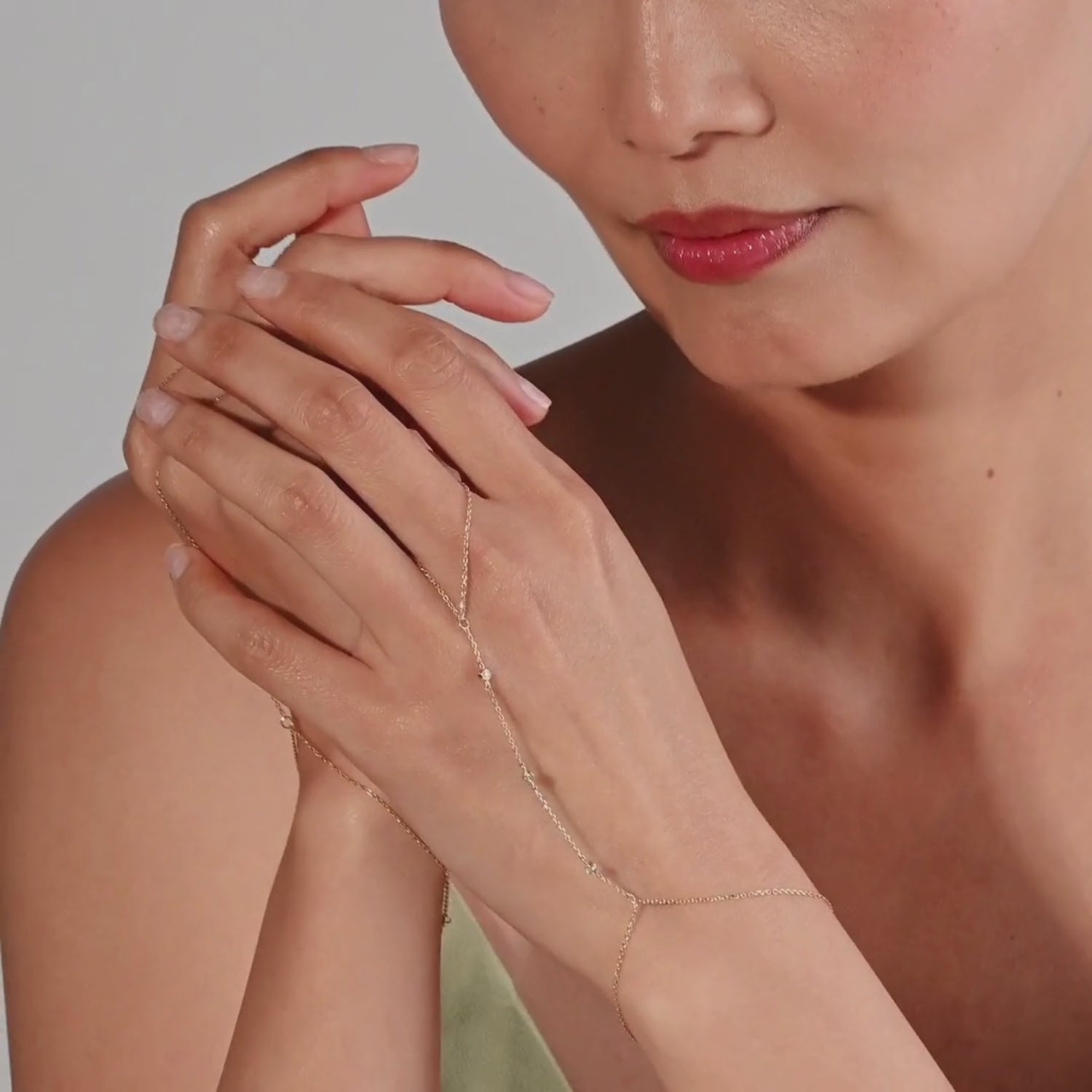
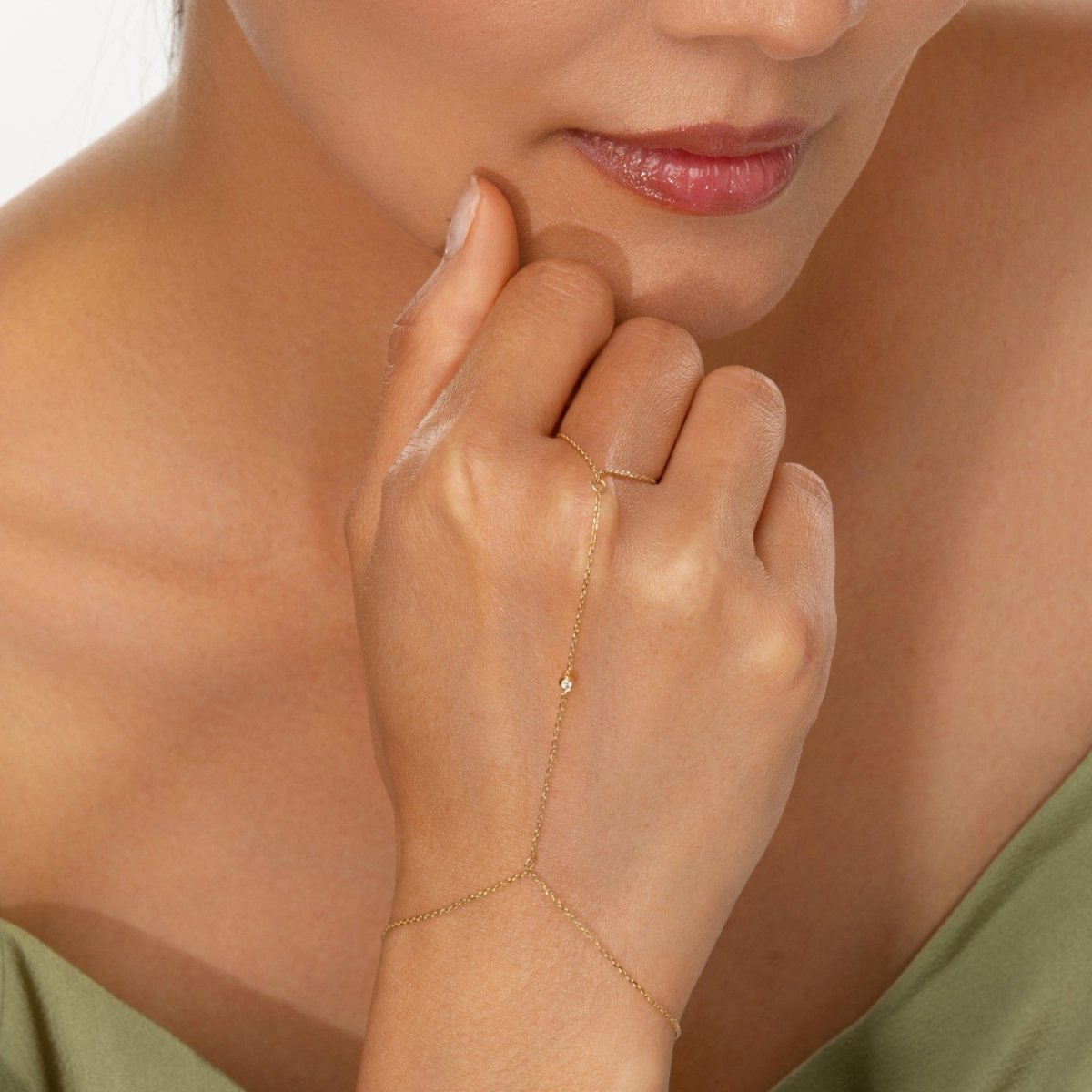


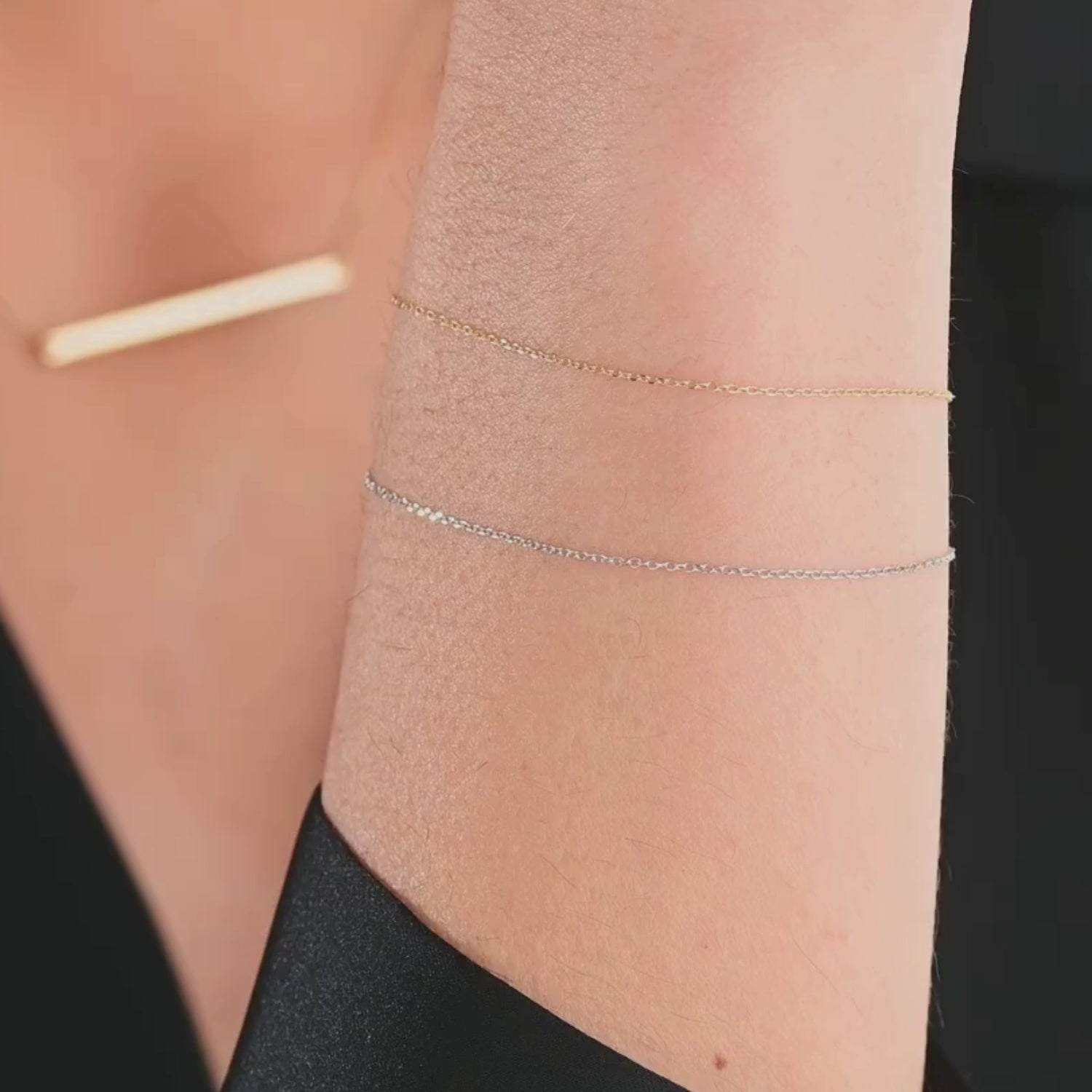
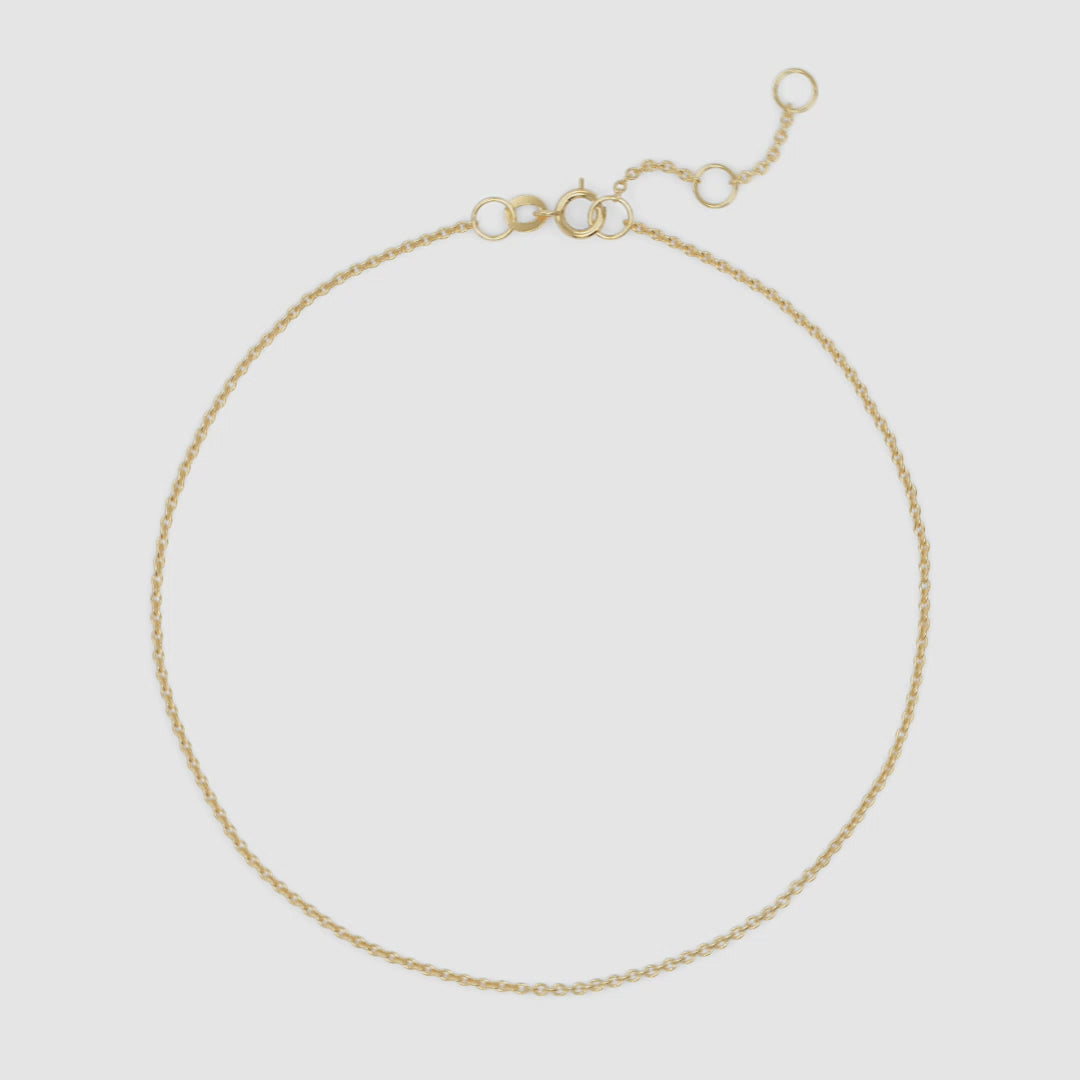


















My grandfather could identify a chain without looking at it. He would close his eyes, run it through his fingers, and tell you: cable. Or rope. Or herringbone. The man had been working gold since he was fourteen years old in Athens, and by the time I was old enough to sit next to him at the bench, his hands knew things his eyes did not even need to confirm.
Chains were the pieces he respected most. Not the rings. Not the bracelets. Chains. Because a chain has absolutely nowhere to hide. Think about it. There is no gemstone pulling your attention. No setting doing the heavy lifting. It is just link after link after link, and if one of those links is wrong, the whole thing falls apart. You feel it in the drape. You feel it when it sits against your collarbone. You feel it in that split second when you run it through your fingers before putting it on in the morning.
I have been making gold chain necklaces in this same workshop for sixteen years now, and honestly, I still feel that way about them. I watch one of our technicians solder chain links under his magnifying glass every single day. I watch an other one flatten curb chains with this insane precision that I could not replicate if I tried. And when customers come to us, nine out of ten times, the first thing they ask about is the chain. Not the pendant. The chain.
So here is what I know. Every chain style we make, how each one actually feels when you wear it, what survives daily life and what does not, and which one you should probably start with if this is your first real gold chain purchase.
Link Chains: The Foundation of Every Jewelry Workshop
Link chains are the simplest concept in jewelry. Individual links, connected one to the next, forming a strand. But the way those links are shaped, sized, and oriented relative to each other changes everything about how the chain looks and behaves.
Cable Chain
This is the one everyone starts with, and honestly, there is a reason for that. Round or oval links, each connected to the next at a 90 degree angle so the whole thing lies flat. My grandfather used cable chains for nearly every pendant necklace he ever made. His logic was simple: why would you put a pendant on a chain that fights for attention? Cable lets the pendant do the talking.
At standard wearing thicknesses, which for us means 1.2mm and above, a well made cable chain in solid gold is practically indestructible. The links alternate direction, which means tension gets distributed evenly across the entire length instead of concentrating at one weak point. The solder joints hide inside each connection where you cannot see them. It is elegant engineering disguised as simplicity.
We make ours in 14k and 10k solid gold, starting from $148. I went deep on cable chains in our gold necklace guide, so I will skip the repeat here.
Curb Chain (Cuban Link)
Ask someone to picture a "gold chain" and they are almost certainly imagining a curb. Uniform links, twisted and pressed flat so they lock against each other. The chain sits completely flat on your skin with this satisfying heft to it, even at thinner widths. There is a reason curb chains have been popular for literally centuries.
Kostas handles our curb chain finishing. The process is more involved than people realize. Each individual link gets flattened, and then the entire chain goes through polishing that takes, I kid you not, longer than most customers would guess. Here is the thing about flattening: it has to be absolutely uniform. If one link gets pressed even slightly more than the one beside it, the chain picks up a twist. You might not see it. But the second you put it around your neck, you will feel that something is off. That is the difference between a $50 chain from a factory and one from a goldsmith who actually cares.
Cuban link, by the way, is just another name for curb chain. The term blew up in the 1970s and 1980s through Miami's hip hop culture, but the construction is the same chain your grandmother might have worn. Thicker ones (3mm and up) make bold statements. Thinner curb chains at 1.5mm to 2mm are gorgeous as dainty everyday necklaces or layering pieces.
Figaro Chain
Figaro is Italian. Named after the Rossini opera character, supposedly, though I have never been able to confirm that with absolute certainty. What I can tell you is this: the pattern alternates between two or three short links and one longer link, repeating over and over. That rhythm gives figaro a visual texture that cable and curb simply cannot match.
I have a soft spot for figaros. Something about the irregular pattern makes them feel less like "jewelry" and more like an artifact. Like something you would find in the back of a drawer in your grandmother's apartment in Florence. The longer links catch light differently than the shorter ones, which creates this shimmer when you move that I find hard to describe but impossible to miss in person.
One thing to know: figaro construction is trickier than a standard curb because the alternating link sizes create different tension at different points along the chain. A goldsmith who knows what they are doing accounts for that in the solder work. A careless one does not, and you wind up with a chain that snaps at the junction between a short link and a long one. We have fixed more than a few figaros that customers brought in from other workshops with exactly that problem.
Marine Link Chain
This is the chain that makes me homesick. Marine link chains are modeled after anchor chains from boats in the Aegean. Oval links, each with a center bar running across the middle for structural reinforcement. Growing up in Athens, I saw these on everyone. Fishermen's wives down at the harbor. My yiayia and her friends at Sunday church. Young women getting ready for Saturday night out in Kolonaki.
That center bar is what makes the marine link distinct. It adds real structural strength without adding bulk, and it gives the chain a look that you either recognize instantly or have never seen before. There is no middle ground with marine link. Our Marine Link Chain at $348 in 14k gold is the one I point people toward when they tell me they want a gold chain necklace that feels rooted in tradition but does not look like it belongs in a museum.
Rope Chains: The Workshop Favorite
If you want to know how good a goldsmith really is, ask them to make you a rope chain. It will tell you everything.
Rope chains are made by twisting two or more strands of links around each other in a spiral. When it is done well, the finished chain genuinely looks like a tiny rope made of gold. The spiral creates these hundreds of small reflective facets along the entire length, so the chain catches light from basically every angle. In certain light, a rope chain almost glows.
Thanasis does most of our rope chain work. I have watched him do it hundreds of times now and the patience required is something else entirely. Each strand needs consistent tension throughout the twist. Go too loose and the chain looks limp, lifeless. Go too tight and you lose that fluid drape that makes people fall in love with rope chains in the first place. Thanasis has this way of holding the strands that I still have not figured out how to teach to anyone else in the workshop.
People underestimate how durable rope chains are. Because the links spiral together and interlock, stress gets distributed across multiple strands at once. Compare that to a cable chain where one link carries all the force at any given moment. Rope spreads that same force across several links simultaneously, which makes it shockingly strong for how delicate it can look.
At 2mm and above, a solid gold rope chain is one of the toughest gold chain necklaces you can buy. Thinner ropes (1mm to 1.5mm) make beautiful subtle everyday pieces. Go to 3mm or beyond and you have a standalone statement that does not need a single thing hanging from it.
Flat Chains: Liquid Gold Against Your Skin
Herringbone Chain
Herringbone makes people stop. I have seen it happen in our shop countless times. Someone walks in, sees a herringbone chain laid out on the counter, and their hand goes straight to it. The chain is flat, wide, completely fluid. When it drapes against your collarbone it honestly looks like someone poured liquid gold across your skin. The name comes from the pattern, which looks like a herring fish skeleton: V shaped links nested so tightly together there is no gap between them.
Now let me be straight with you about herringbone, because not enough jewelers are. It is the most beautiful chain we make. It is also the most high maintenance chain we make. Herringbone kinks. If you fold it, twist it, drop it in a pile with your other jewelry at the end of the night, it will develop a kink. And that kink? Nearly impossible to fix without bringing it to someone like Eleni, who has spent more hours at our bench repairing kinked herringbones than she would probably care to count.
But look. If you commit to hanging it up or laying it flat after every single wear, a herringbone in 14k solid gold is absolutely stunning. Our Herringbone Chain Necklace gets photographed more than almost anything else in the collection. You just have to respect it. Treat it like the special piece it is and it will reward you.
Snake Chain
Think of snake chain as herringbone's more easygoing cousin. It is not made from traditional links at all. Instead, tightly fitted ring segments lock together to create a smooth, round, tubular surface. Run a snake chain through your fingers and it feels almost like a solid metal cord. Silky. No breaks, no gaps, no texture. Just one continuous line of gold.
From a craft perspective, the construction is fascinating. Each ring segment fits into the next with such precision that you genuinely cannot see where one ends and the next begins. The whole thing moves as one piece. That is actually why some goldsmiths call them flexible tube chains, though I have always thought "snake" captures the feel better.
Snake chains are incredible at 16 inches as a standalone choker necklace, sitting right against the base of the throat. They also pair well with clean, small pendants because that smooth surface is not competing with the pendant for attention.
Fair warning though. Snake chains can kink too, not as easily as herringbone, but it happens. And when a snake chain kinks badly, the repair is actually harder. Those ring segments can separate and leave a visible seam that even Eleni has trouble making disappear completely. Be gentle with them.
Box and Franco Chains
Box Chain
Box chain is what happens when you swap round links for square ones. Each square link connects to the next at a 90 degree angle, and the result is this rigid, geometric look that feels distinctly modern. I always tell customers: if cable chain is a handwritten letter, box chain is a perfectly typeset line of Helvetica. Clean, precise, no nonsense.
Strength wise, box chains punch way above their weight. That square geometry distributes force more evenly than round links, which is exactly why I recommend them for heavier pendants. The angular construction also means they resist twisting and tangling better than almost anything else we sell. If you are the kind of person who is genuinely rough on your jewelry (and I have met plenty of people who are), a box chain in solid gold should probably be at the top of your list.
The light catch is different too. No curved reflections like you get with round link chains. Instead you get these crisp, defined little flashes from the flat faces of each square link. It is subtle, but once someone points it out to you, you notice it every time.
Franco Chain
Franco is what I call box chain's more sophisticated relative. Interlocking V shaped links woven into a dense, round profile. Looks almost braided, but has the structural strength of a link chain. They came out of Italy originally and caught on because they manage to combine the visual richness of rope with the durability of curb. That is a hard combination to achieve.
These are not dainty pieces. Franco chains come alive at 2.5mm and above, where the woven pattern becomes visible and the chain takes on this density you feel immediately when you pick it up. They lay flat against the skin. They do not kink. And breaking one under normal wearing conditions? I honestly cannot remember the last time I saw that happen.
Specialty Chains: Singapore, Wheat, and Byzantine
Singapore Chain
Singapore chain starts with the same concept as curb but adds a literal twist. The flat curb links get twisted into a spiral, and that spiral catches light unlike anything else in our collection. When a Singapore chain moves, it sparkles. Not diamond sparkle. Something more subtle, more continuous. Hundreds of tiny reflective facets from the twist, all firing at once as you move through your day.
Weight wise, Singapore chains are remarkably light because the twisted construction is efficient with material. A 1mm to 1.5mm Singapore weighs less than a cable chain of the same length but looks significantly more interesting. If you are building a layering set and want something that adds visual texture without adding bulk, this is the one.
Wheat Chain (Spiga)
Spiga is Italian for ear of wheat, which describes exactly what this chain looks like. Four strands of oval links woven together in a braid that resembles a twisted wheat stalk.
Giorgos is the one who makes our wheat chains, and they take him roughly twice as long as a comparable cable chain. That extra time shows. The braided construction creates depth that you have to see in person to fully appreciate. Turn a wheat chain under a light and watch the shadows shift inside the weave. It gives the chain this three dimensional quality that no flat chain can touch.
Wheat chains also feel incredible on the skin. Because of the braided structure, there are no individual link edges catching on fine clothing or body hair. The chain just glides. I am always surprised more people do not know about spiga, because once they feel one, they tend to fall for it immediately.
Byzantine Chain
Byzantine is our most complex chain. Full stop. Individual round links woven in a specific repeating pattern that produces a dense, almost ornate texture. The technique goes back to the actual Byzantine Empire, and the fundamental construction has not changed in over a thousand years. That alone tells you something about how well this design works.
Making Byzantine by hand is slow. Painfully slow. Every single link gets opened, threaded through the previous links in a precise sequence, and then soldered shut. Mess up the sequence and you are taking apart the last several links to start that section over. Nikos is the only goldsmith in our workshop who has the patience for long Byzantine runs, and even he caps himself at a few hours before he needs to step away and rest his eyes.
Worth it though. A Byzantine chain in solid gold is the kind of piece strangers will reach out and touch. Something about that intricate woven texture is magnetic. These are statement chains, typically 3mm and above, and they absolutely do not need a pendant. The chain is the entire piece of jewelry.
Chain Width: What the Numbers Actually Mean
Chain width is measured in millimeters. Sounds simple, but the visual difference between each millimeter is way bigger than most people expect.
Under 1mm: Nearly invisible. Thread thin. For the most delicate thin necklaces, usually holding a single small pendant. Beautiful to look at, but fragile. I generally steer people away from anything under 1mm for daily wear unless they pick a strong chain style like box or cable.
1mm to 1.5mm: What most people mean when they say "dainty." Visible, but just barely. A 1.2mm cable chain is what we use for the majority of our pendant necklaces. The chain is there, doing its job, not stealing the show from whatever hangs on it.
1.5mm to 2mm: This is the sweet spot for everyday wear and I will die on that hill. Substantial enough to look good on its own without any pendant. Subtle enough to layer or tuck under a collar. If someone asks me where to start with their first standalone gold chain necklace, I always say start here.
2mm to 3mm: Now we are talking statement territory. A 2.5mm chain is visible from across a room. It reads as intentional, deliberate jewelry, not something you forgot to take off. Rope, curb, and figaro look especially good at this thickness.
3mm and above: Bold. There is no missing a chain this thick. Curb and rope at 4mm or 5mm are what people pick when they want one necklace to carry an entire outfit. Yes, more gold means a bigger investment. But a thick solid gold chain is something you will still be wearing twenty, thirty years from now.
Which Chains Kink and Which Ones Do Not
I wish more jewelers were upfront about this. It would save everyone so much frustration.
High kink risk: Herringbone and snake. Both are flat or tubular with tightly packed components. One sharp bend can permanently deform the chain. If you are the type to toss your jewelry on the nightstand at the end of a long day, these two are probably not for you.
Low kink risk: Cable, box, curb, figaro, and marine link. All of these have individual links with enough space and articulation between them that the chain bends without warping. You could literally ball a cable chain up in your fist, straighten it out, and it would look exactly the same as before. Try doing that with a herringbone. Actually, do not try that. Just bring it to Eleni at our bench instead.
Medium kink risk: Rope, Singapore, and wheat. The twisting and braiding makes them more resilient than flat chains, but they are not as forgiving as basic link styles. Treat them reasonably well and they will be fine. Hang them or lay them flat when storing.
If you have never owned a gold chain necklace before, my honest recommendation is to start with cable, curb, or rope. Those are the most forgiving while you build the habits of caring for fine jewelry. Graduate to herringbone or snake after those habits are second nature.
Pendant Chains Versus Statement Chains
This is really the most important decision, and it boils down to a single question. Are you buying a chain to hold something, or are you buying a chain to BE the thing?
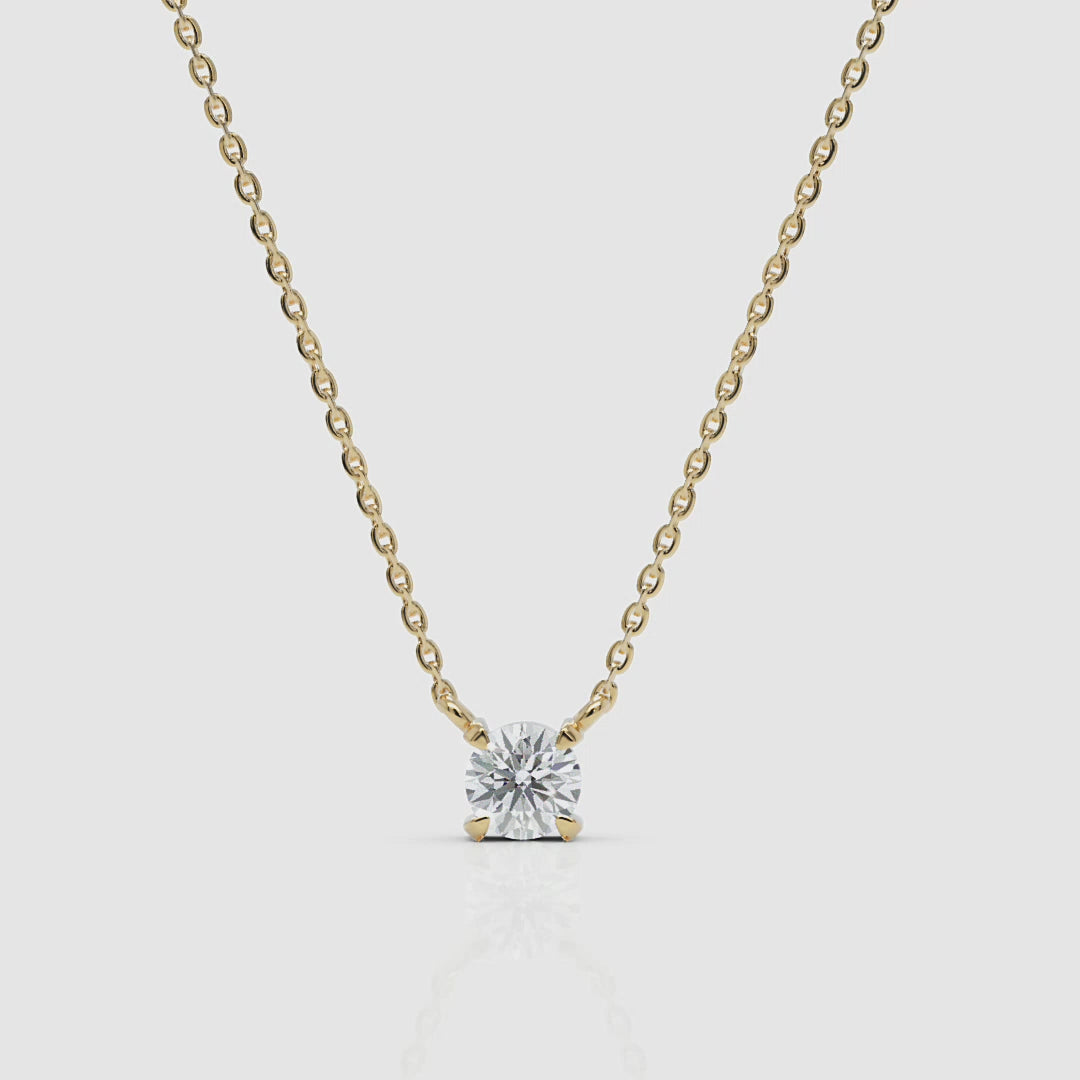
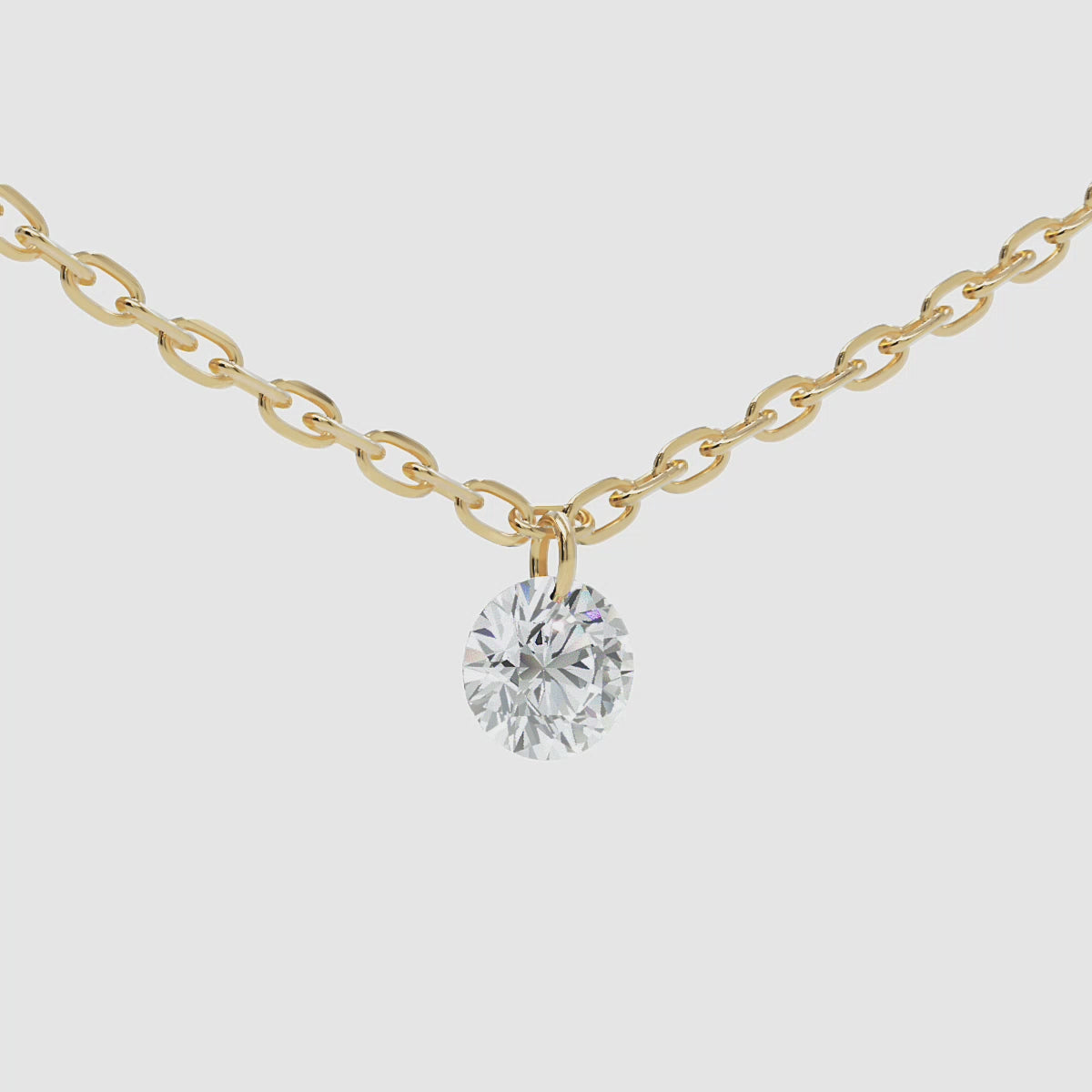
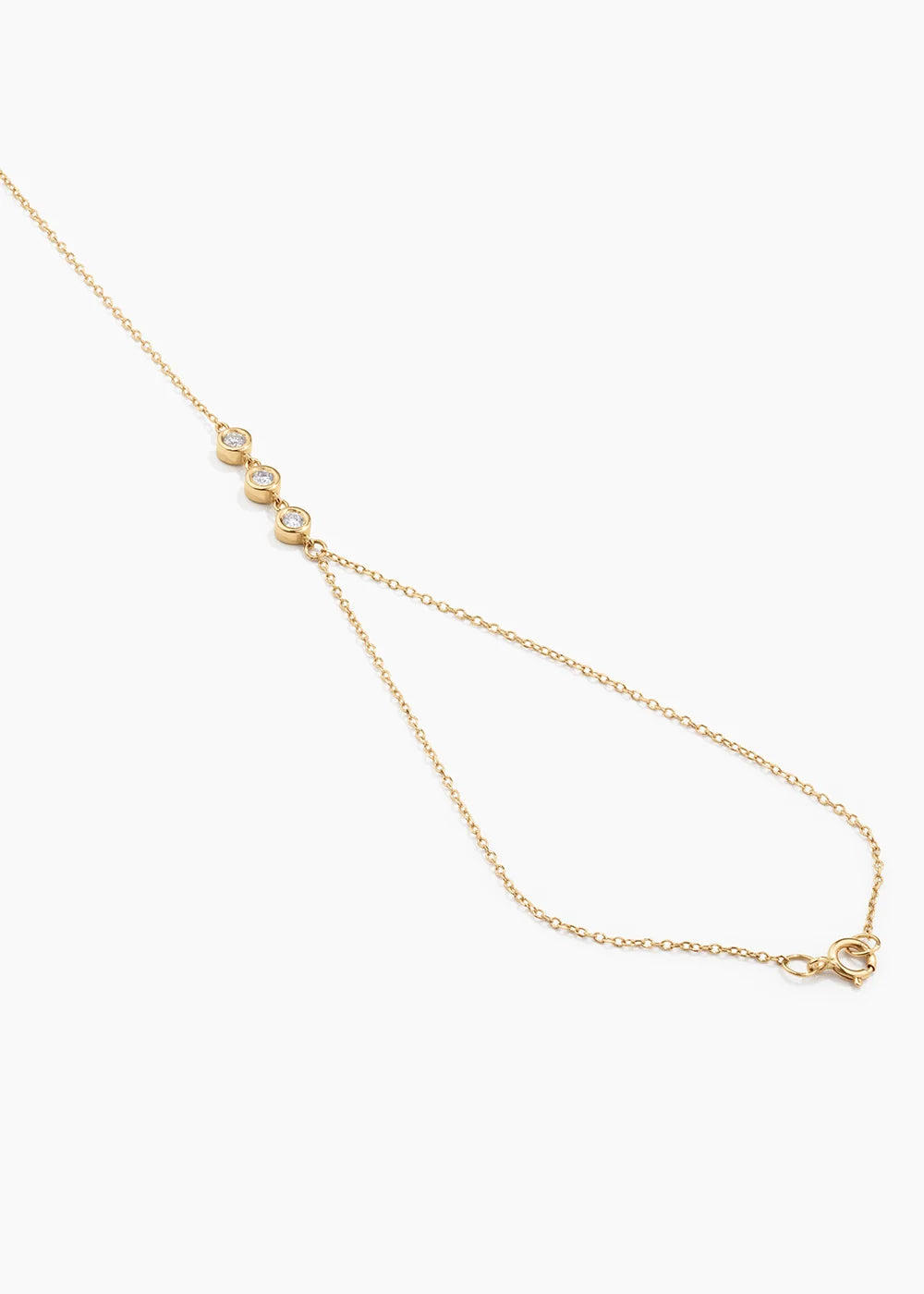
For pendants, go with a chain that steps back visually. Cable and box chains are your best bet. They hold pendants perfectly, let the pendant slide freely, and never compete with whatever you hang on them. Every one of our diamond solitaire necklaces and diamond station necklaces uses a chain picked with exactly this logic. The chain serves the design. Period.
If you want the chain to be the jewelry, look at rope, curb, herringbone, or Byzantine. Those have enough visual weight to carry an entire outfit with nothing else needed. I see it constantly. A simple black top, a well chosen statement chain in solid gold, and that is it. That is the whole look, and it works every single time.
Want both? Build a layering set. One pendant chain, one statement chain, different lengths. I put together a whole guide on how to layer gold necklaces that walks you through exactly how to make that work without the chains getting tangled or competing with each other.
Common Questions About Gold Chain Necklaces
What is the strongest gold chain style?
Curb (Cuban link) and box chains, hands down. The interlocking flat links spread force across multiple contact points, so they hold up incredibly well under daily wear. Rope is also surprisingly strong because those twisted strands share tension across several links at once. If you need something very delicate, under 1.5mm, box chain gives you the best strength per millimeter.
Can I put a pendant on any chain?
You can, but that does not mean you should. Cable and box chains are built for pendants. The pendant slides freely, sits centered, behaves the way you want it to. Curb and figaro can work too, but the pendant sometimes leans to one side because of how the flat links orient themselves. What I would avoid is putting anything heavy on a herringbone or snake chain. That concentrated weight at one point will eventually cause kinking. I have seen it happen too many times to sugarcoat it.
What chain width should I choose for everyday wear?
1.5mm to 2mm. That is the range I recommend to almost everyone who asks. Thick enough to see and wear confidently on its own. Thin enough to layer with other pieces or tuck under a collar when you want to. If the chain is exclusively for a pendant, 1mm to 1.2mm works fine. If you want a standalone piece that makes a statement, go 2.5mm or bigger.
Do gold chains stretch over time?
Not in the way you are probably picturing. Solid gold chains do not stretch like a rubber band. What can happen with very thin chains, we are talking under 1mm, is that a single link can elongate if the chain catches on something and gets yanked. That is deformation of one link, not the chain stretching overall. At 1.2mm and above in solid 10k or 14k gold, you will not have this problem. Hollow chains are a different story entirely. They deform easily, which is one of many reasons I tell everyone to buy solid.
What is the difference between a rope chain and a cable chain?
Cable chain: individual links connected one after another in a single line. Rope chain: multiple strands of links twisted together in a spiral. In practice, cable is simpler, lighter at the same width, and costs a bit less. Rope is heavier, more complex to make, and has this shimmer to it that cable just does not produce. Both are excellent for daily wear. Cable is the understated one. Rope is the one that catches eyes.
How should I store my gold chain necklace?
Hang it. That is the single best thing you can do for any chain, any style. A jewelry hook on the wall, a dedicated necklace stand on your dresser, anything that keeps it vertical and separated from your other pieces. Hanging eliminates tangling and completely removes kink risk for flat chains like herringbone and snake. If hanging is not an option, lay the chain flat in a soft lined jewelry box, ideally in its own compartment so nothing else touches it. Please, whatever you do, do not throw a gold chain necklace into a pile with the rest of your jewelry. I have spent thousands of hours at the bench detangling chains and it tests my patience every single time.
Browse our complete gold chain necklace collection, or explore all gold necklaces, rose gold necklaces, and white gold necklaces. For a broader look at choosing the right gold necklace, read our complete gold necklace buying guide.