




Two weeks ago a woman came into the workshop holding a necklace she bought online. Thin chain, tiny diamond, looked nice in the photos. She wore it for three months. The gold had started to peel off the chain in small flakes near the clasp. The diamond was cloudy. She paid $180 for it.
That necklace was gold plated brass with a cubic zirconia. It was marketed as a "dainty diamond necklace." And this is why I get frustrated enough to write things like this.
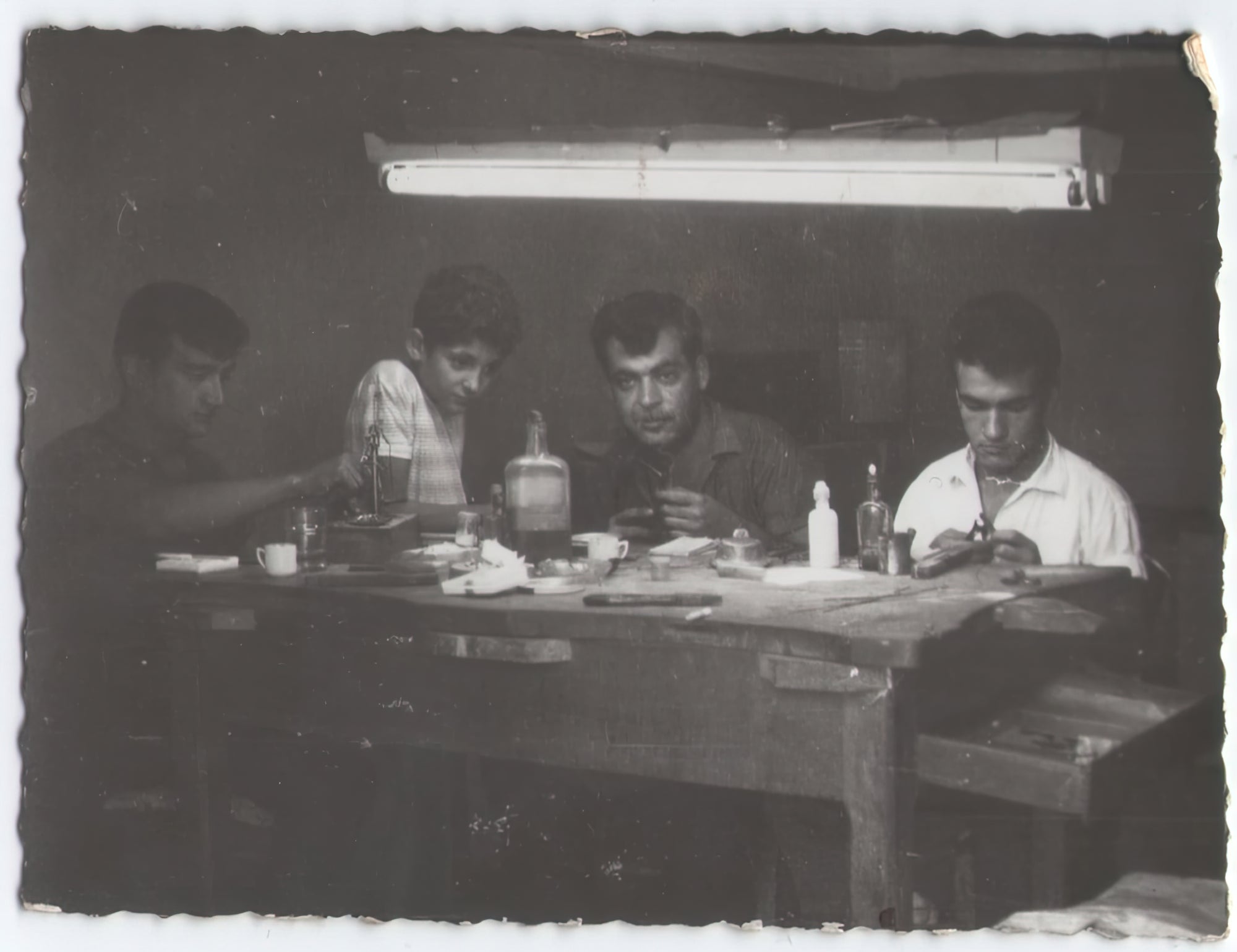
My name is Laki Tasatzi founder of ENEA Studio. Third generation goldsmith. I have been making dainty diamond necklaces in our Athens workshop since I was old enough to hold a torch without burning myself, which was around seventeen. My grandfather started this bench in 1953 and I still use his mandrel for shaping bezels.
What "Dainty" Actually Means When You Are the One Making It
Dainty is not a marketing word to me. It is a set of constraints that make my job significantly harder.
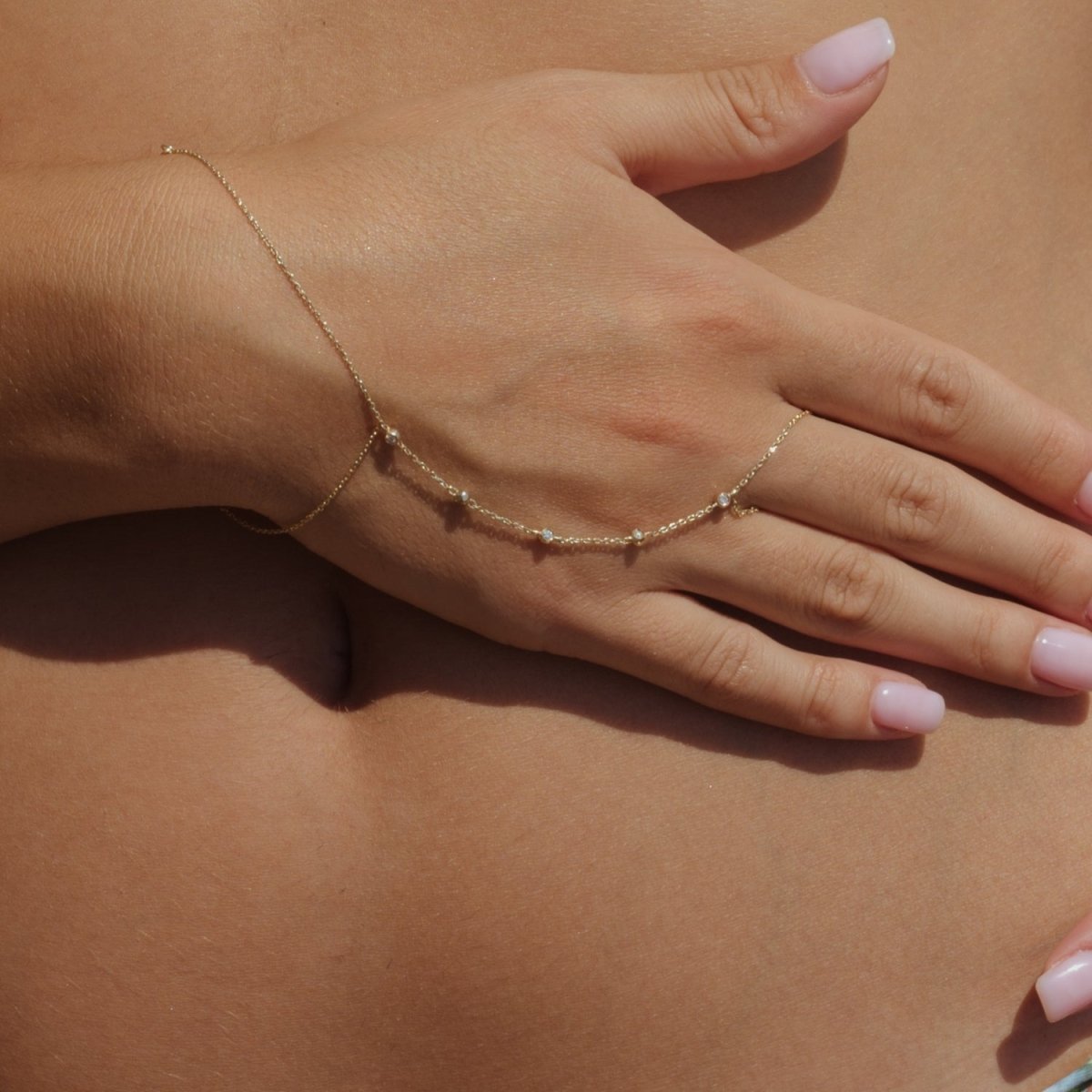
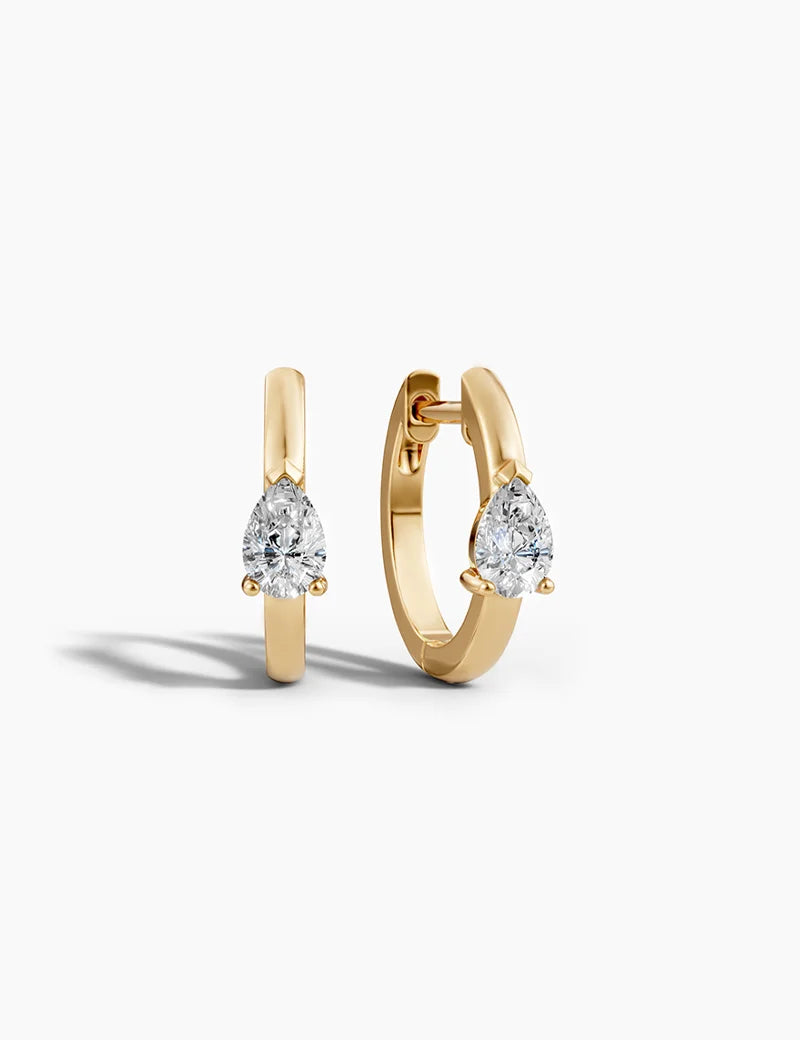
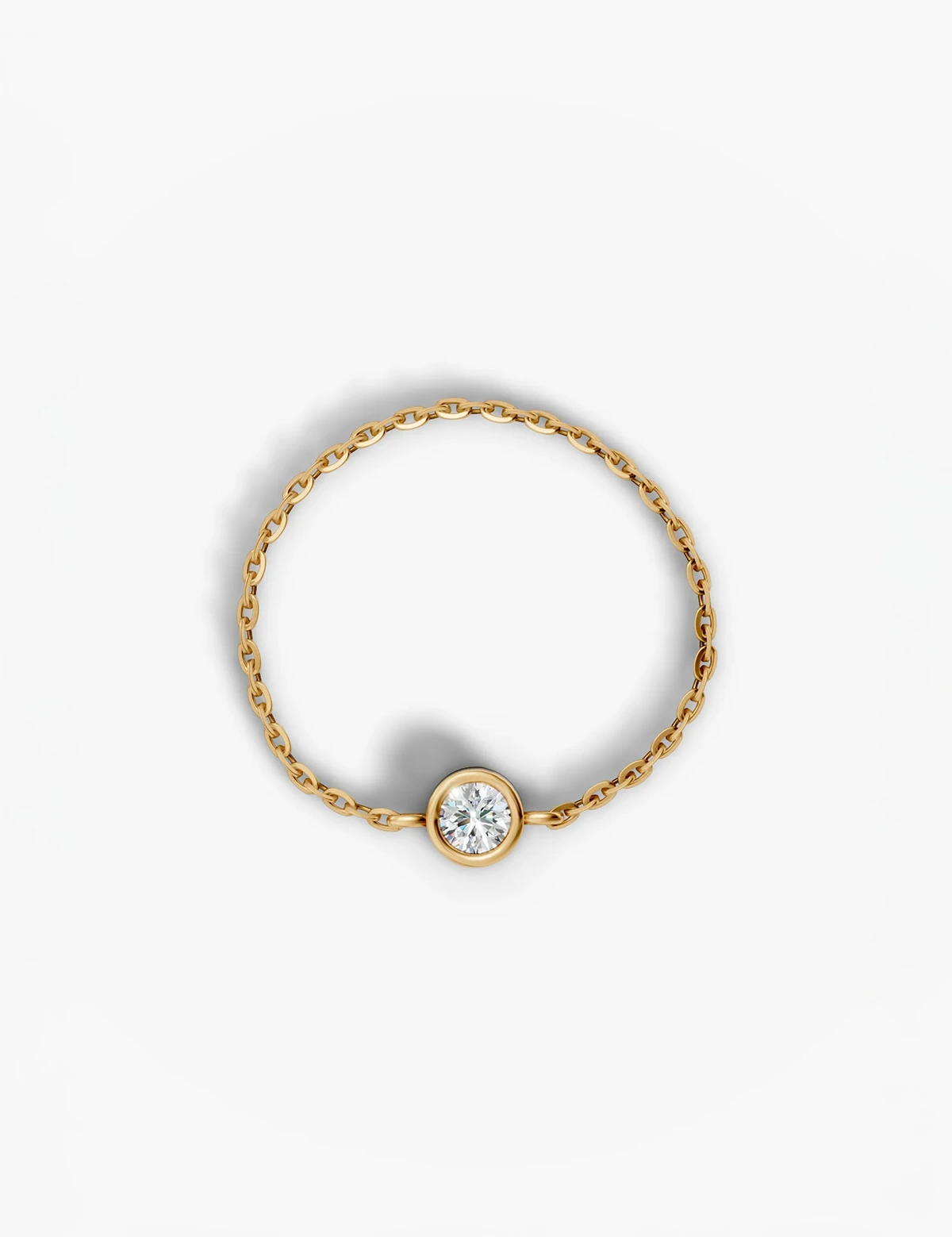
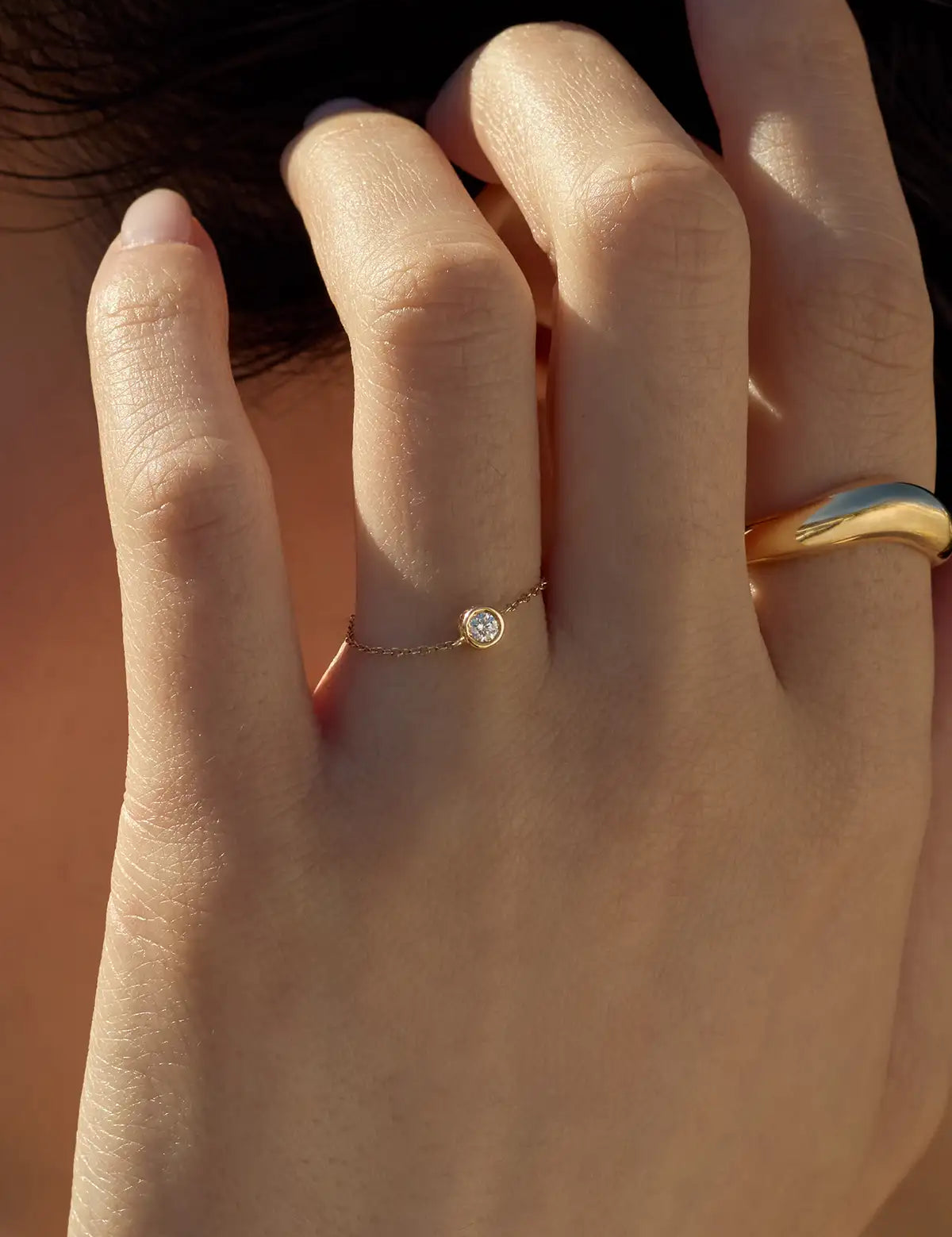
When I sit down to design a dainty diamond necklace, I am working with a chain that is 1.00mm thick. For reference, that is thinner than a spaghetti strand. The total weight of the finished piece needs to stay under 2 grams. The diamond sits between 0.05 and 0.10 carats, which means it is roughly the size of a small seed.
At those dimensions, there is nowhere to hide mistakes. A solder joint that would be invisible on a chunky chain becomes a visible lump on a 1.00mm cable chain. A bezel that is 0.25mm too thick around the diamond makes the whole setting look clunky instead of effortless. I check every single piece under a loupe before it leaves the bench. My brother Dimitris does a second check. Two sets of eyes on every necklace.
Brands throw around the word dainty for anything that looks small in a photo. I have seen 4 gram necklaces with 0.50 carat stones called dainty.
The Stone Size Mistake I See Constantly
Women email me asking for the biggest possible diamond on the thinnest possible chain. I understand the instinct. You are paying for a diamond, you want to see it. But here is what happens in practice.
Last year a customer shipped me a necklace from another brand. 0.25 carat round brilliant on a 0.5mm chain. She wanted me to tell her why it "looked wrong." I could see the problem the second I held it up. The stone was too heavy for the chain. When she bent forward, the diamond would swing to whichever side was lower. When she stood straight, the chain would bow slightly under the weight, creating a small dip right at the diamond instead of sitting flush against the collarbone.
The proportions were off. It looked like someone hung a cherry on a thread.
Our dainty diamond necklaces use stones between 0.05 and 0.15 carats. At that size, the diamond and the chain exist in proportion. The stone catches light, yes, but it does not overpower anything. The whole piece moves as one object on your neck. No swinging. No bowing. No weird dip at the pendant.
The woman who sent me that other necklace ended up ordering our 0.07 carat solitaire. She texted me a photo a week later and just wrote "THIS is what I wanted." I saved that message. I look at it when I am having a bad day.
Why I Make Dainty Diamond Necklaces in 10k Gold
I use 10k gold across many of my collections. Rings, bracelets, earrings. For dainty diamond necklaces, I also work in 10k, and here is why I am confident in it.
10k gold is 41.7% pure gold, with the remaining alloy metals adding real structural strength. At dainty gauges, that extra durability actually works in your favor. The higher alloy content gives a 1.00mm chain more tensile strength and resistance to everyday stress than you might expect. It holds up beautifully for daily wear.
I have tested 10k at these dimensions extensively. The metal performs well at the clasp, at the bail, at every point where a fine chain takes pressure. Combined with careful construction from our bench, a 10k dainty diamond necklace can absolutely last for years and years of constant wear.
The benefit to you is real: 10k gold lets me offer a dainty diamond necklace at a more accessible price point without compromising on craftsmanship or longevity. Same precision setting, same quality diamonds, same handcrafted finish. The gold simply works harder for its weight.
My family has been working gold for over 70 years. Three generations taught me when to use heavier karats and when a smarter alloy does the job just as well. For dainty diamond necklaces, 10k is that smarter choice.
Here are the revised versions:
Why I Use Both Bezel and Prong Settings on Stones This Small
Every goldsmith has opinions about settings. Here are mine on both.
For a dainty diamond necklace with a stone under 0.10 carats, I work with both bezel and prong settings depending on the design. Each has its strengths, and I choose based on what serves the piece best.
Bezel settings wrap a thin wall of gold around the entire circumference of the diamond. The stone is locked in completely. Nothing can catch on it, nothing can snag. For a woman who wears her necklace every single day (and that is most of our dainty necklace customers), the bezel is incredibly low maintenance. The diamond catches light from the top face, giving it a softer, warmer glow. And the stone will still be sitting exactly where I set it twenty years from now.
Prong settings hold the diamond with small metal claws, allowing light to enter from the sides and bottom as well as the top. On a stone this small, the sparkle is noticeably sharper. I use prong settings when the design calls for maximum brilliance and an airier, more open look. At this scale, the prongs require precise craftsmanship to ensure they sit flush and secure, which is why I am particular about how they come off our bench.
I made my wife's necklace with a bezel set 0.07 carat diamond four years ago. She has worn it through two pregnancies, countless showers, the beach, sleep, everything. The bezel looks the same as the day I finished it. That is the test I apply to every piece we make, regardless of setting style: would I put this on someone I love?
14 to 18 Inches. Here Is How to Choose.
Women spend more time agonizing over chain length than any other decision. I get emails with paragraphs of deliberation. Let me simplify it.
Our dainty diamond necklaces come in 14 to 16 inch and 16 to 18 inch lengths with an adjustable chain, so you are not locked into one position.
At 14 to 16 inches, the necklace sits right on or just above the collarbone. That is the sweet spot for a tiny diamond. The collarbone is the natural shelf of the neck, and a small stone sitting right there catches light and catches eyes because that is where people naturally look when facing you.
At 16 to 18 inches, it drops toward the upper chest. This works beautifully for layering or for anyone who prefers a slightly lower, more relaxed placement.
If you layer (and most of our customers do now), put the dainty diamond at the shorter length and the second chain at 18 or 20 inches. The diamond anchors the whole look at the highest point.
The Necklace You Forget You Are Wearing
This is the whole point of a dainty diamond necklace and I think some people miss it. It is not about making a statement. It is about having something permanent on your body that feels like part of you.
Our customers tell us the same thing over and over. They forget it is there. They touch their collarbone absentmindedly and feel the chain and it grounds them. They catch a flash of light in a mirror and remember. Someone at dinner leans in and says "that is beautiful, where did you get that?" and the answer is a workshop in Athens where three generations of goldsmiths have been making exactly this kind of thing since 1953.
That is what we make. Small things that last forever.
See our dainty diamond necklace collection. Each piece is under 2 grams, 14k solid gold, 10k solid gold, bezel set lab grown diamond, handmade in Athens.