



















I am going to tell you something that might sound strange coming from someone who sells gold necklaces for a living.
Most gold necklaces people buy online are not worth the money.
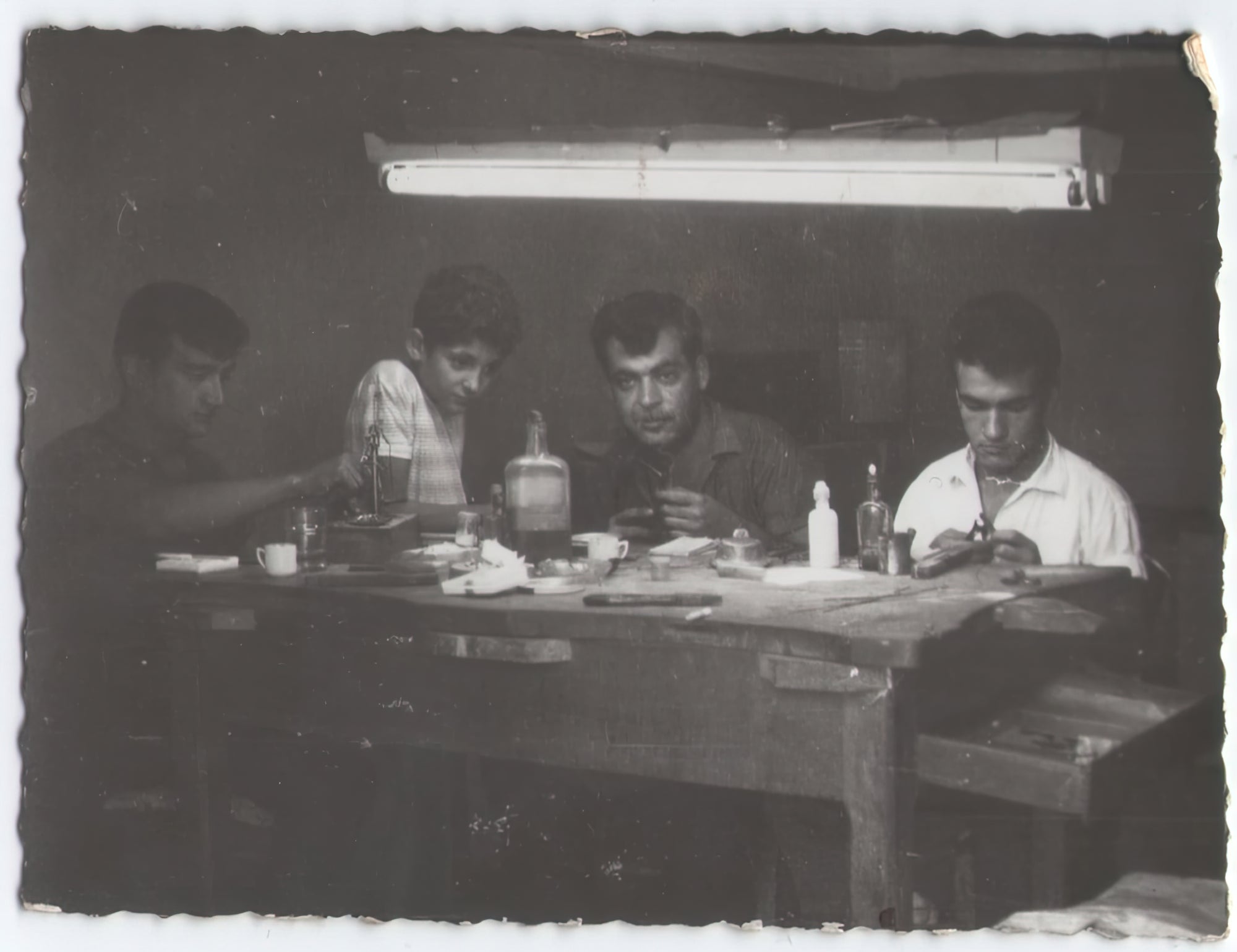
Not because gold is a bad material. Gold is the single best material for jewelry that exists. It does not tarnish. It does not corrode. It does not turn your skin green. It lasts, literally, forever. My grandfather Vouclos made gold necklaces in the 1950s in Athens that are still being worn today. Some of them have come back to our workshop for a simple cleaning, and they look like they could have been made last month.
The problem is not gold. The problem is what gets sold as a "gold necklace" in 2026. Hollow chains that dent if you pinch them between two fingers. Gold plated pieces with a layer of real gold thinner than a sheet of paper over a base metal that will eventually react with your skin. "Gold filled" pieces that are technically better than plated but still not solid gold, and still have a shelf life. And then there is the word "vermeil," which sounds fancy but is just gold plating over sterling silver.
I have been making jewelry in our Athens workshop since I was old enough to sit at a bench. I design every piece in Rhinoceros 3D, then walk across the room and watch our goldsmiths bring it to life. Three generations of our family, the Vouclos family, have been doing this since 1953. So when I tell you what to look for in a gold necklace, I am not summarizing an article I read. I am telling you what I know from handling solid gold every single day.
Solid Gold vs Everything Else (This Is the Only Conversation That Matters)
Before you think about chain styles, pendant shapes, diamond accents, or whether you want yellow or white or rose gold, you need to answer one question: is it solid gold?
Solid gold means the gold goes all the way through. Edge to edge, inside to outside, every millimeter. There is no "underneath." There is no coating to wear off. There is no expiration date.
Plated gold has a thin layer of real gold over brass or copper or some other base metal. It looks identical to solid gold on day one. Give it six months of daily wear and the story changes. The plating wears through at friction points. The base metal starts showing. Sometimes it turns your neck green. You can re plate it, sure, but you are basically putting a fresh coat of paint on a rusting fence. The underlying issue does not go away.
Gold filled is better. The gold layer is thicker, mechanically bonded instead of electroplated. It lasts longer. But it is still a gold layer on top of something else. It is not solid gold.
Solid 10k gold and solid 14k gold are what we use at ENEA Studio. Nothing else. The difference between the two is the purity of the gold content: 10k is 41.7% pure gold mixed with silver, copper, and zinc for strength. 14k is 58.5% pure gold with the same alloys. Both are real gold all the way through. Both will last your entire life and then some. Both can be passed down to your daughter or granddaughter and they will look just as beautiful on her as they did on you.
If the necklace you are considering does not have a 10k, 14k (or 417, 585) hallmark stamped somewhere on it, ask questions before you buy.
Chain Types: What Actually Works for Daily Wear
I get asked about chain types constantly, so let me walk you through the ones that matter.
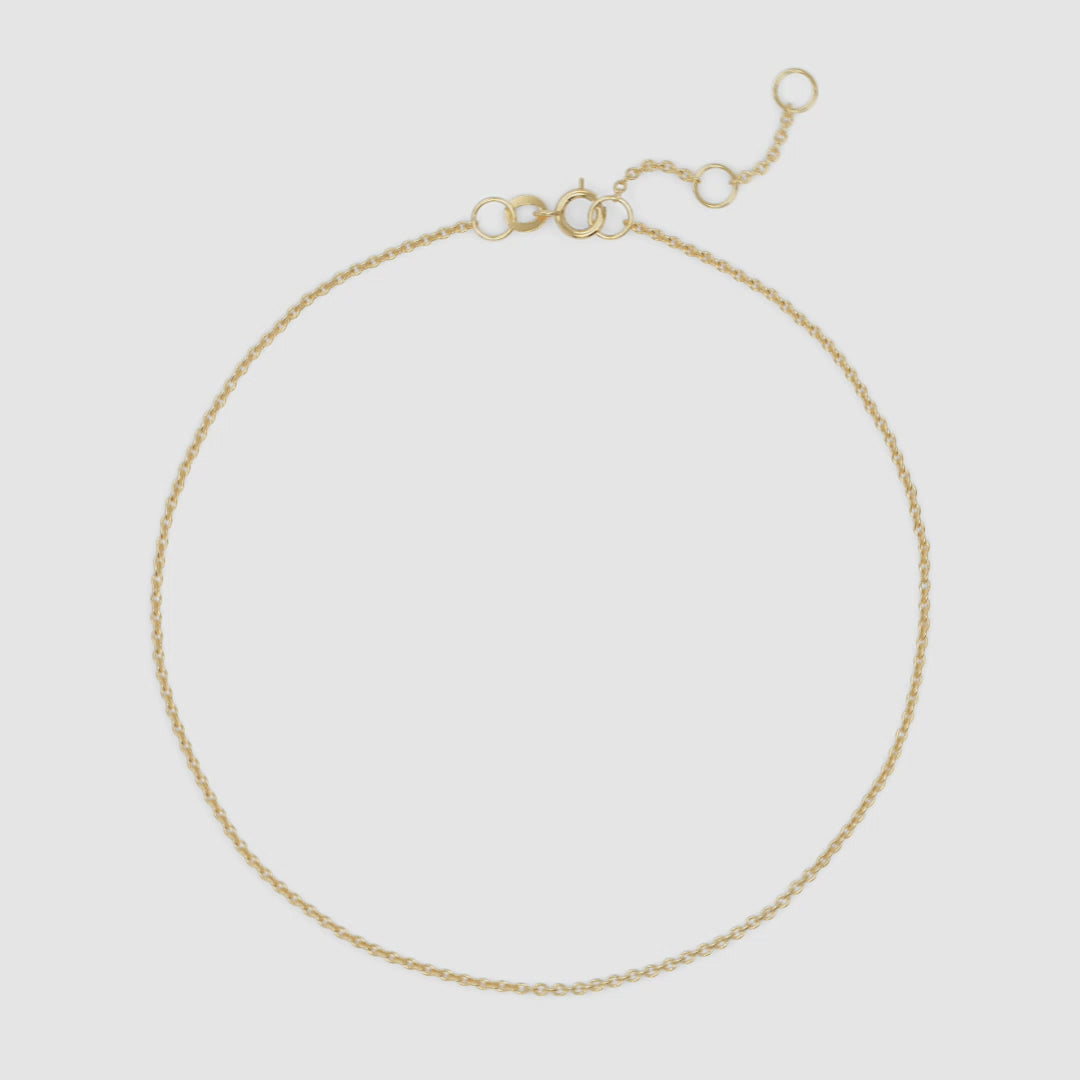
Cable chain. The classic. Small oval links connected one after another. This is the chain my grandfather used for 90% of his pendant necklaces because it is clean, strong, and it lets the pendant be the star. Our Fine Cable Chain starts at $198 in 14k solid gold. We also make it in white gold at $198 and 10k gold at $148. If you just want a clean gold chain to wear every day, start here. It works with everything.
Box chain. Square links instead of oval. Slightly more modern feeling, catches light differently because of the flat faces on each link. Our Box Chain Necklace is $398 in 14k. Has more visual weight than a cable chain of the same thickness.
Herringbone chain. Flat, fluid, drapes against the collarbone like liquid gold. This is a statement chain. It does not need a pendant. Our Herringbone Chain Necklace is $698 in 14k. If you want one necklace that makes an outfit, this is the one. My only advice: herringbone chains can kink if stored carelessly. Hang it or lay it flat, never ball it up.
Paperclip chain. Elongated rectangular links. Looks more contemporary, carries more visual presence than a cable chain. Our Paperclip Chain Necklace at $448 is one of those designs that reads casual or dressy depending on what you pair it with.
Marine link chain. This one has a story. The marine link pattern comes from the actual anchor chains used on Mediterranean boats. Oval links with a center bar for extra strength. I grew up around these chains in Athens because they are everywhere in Greek jewelry tradition. Our Marine Link Chain at $348 is the piece I recommend when someone says "I want something that feels like it has history."
The Necklaces Our Customers Come Back For
I pay close attention to what happens after the first purchase. Not just what sells. What people come back for. What they tell their friends about. Those are the designs I trust the most.
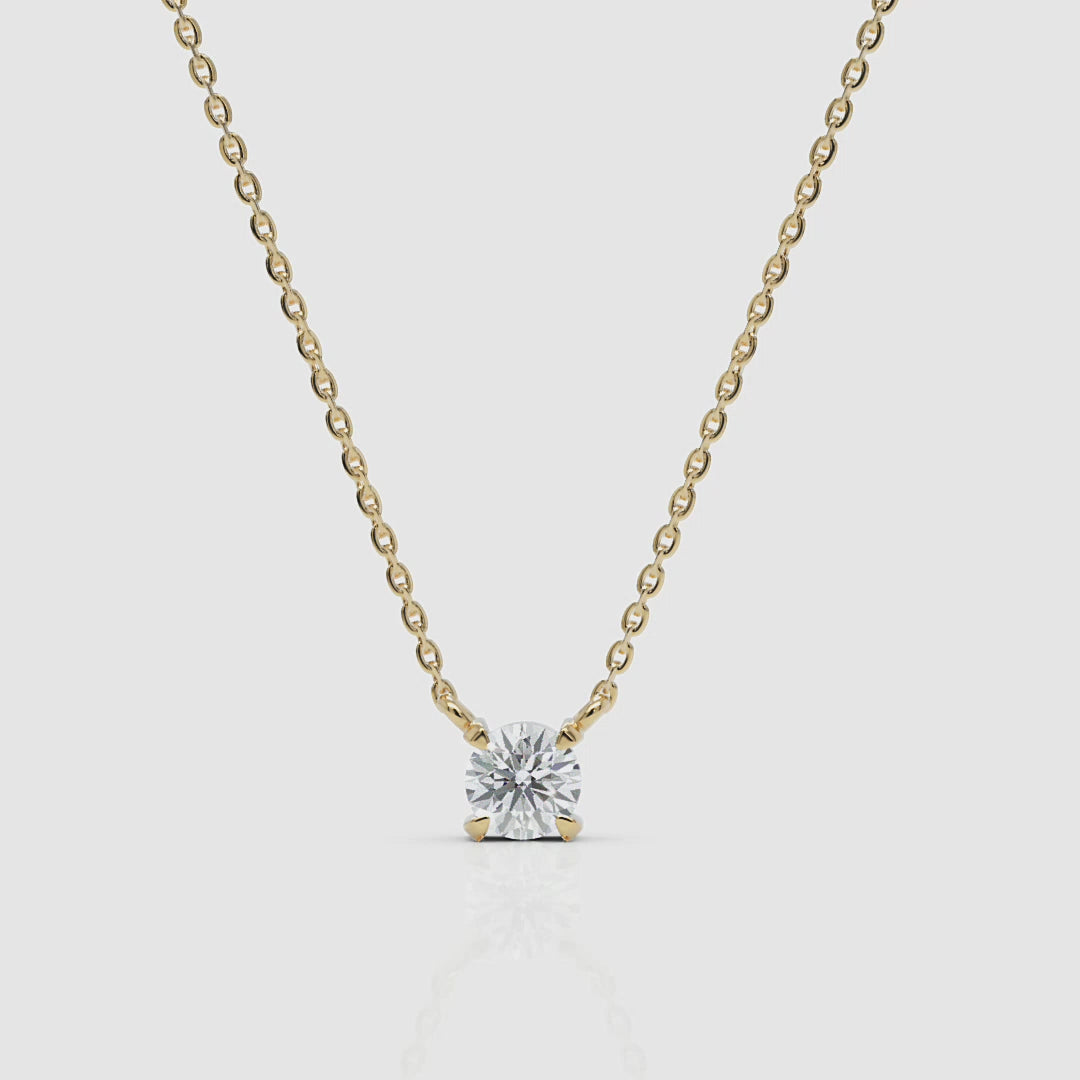
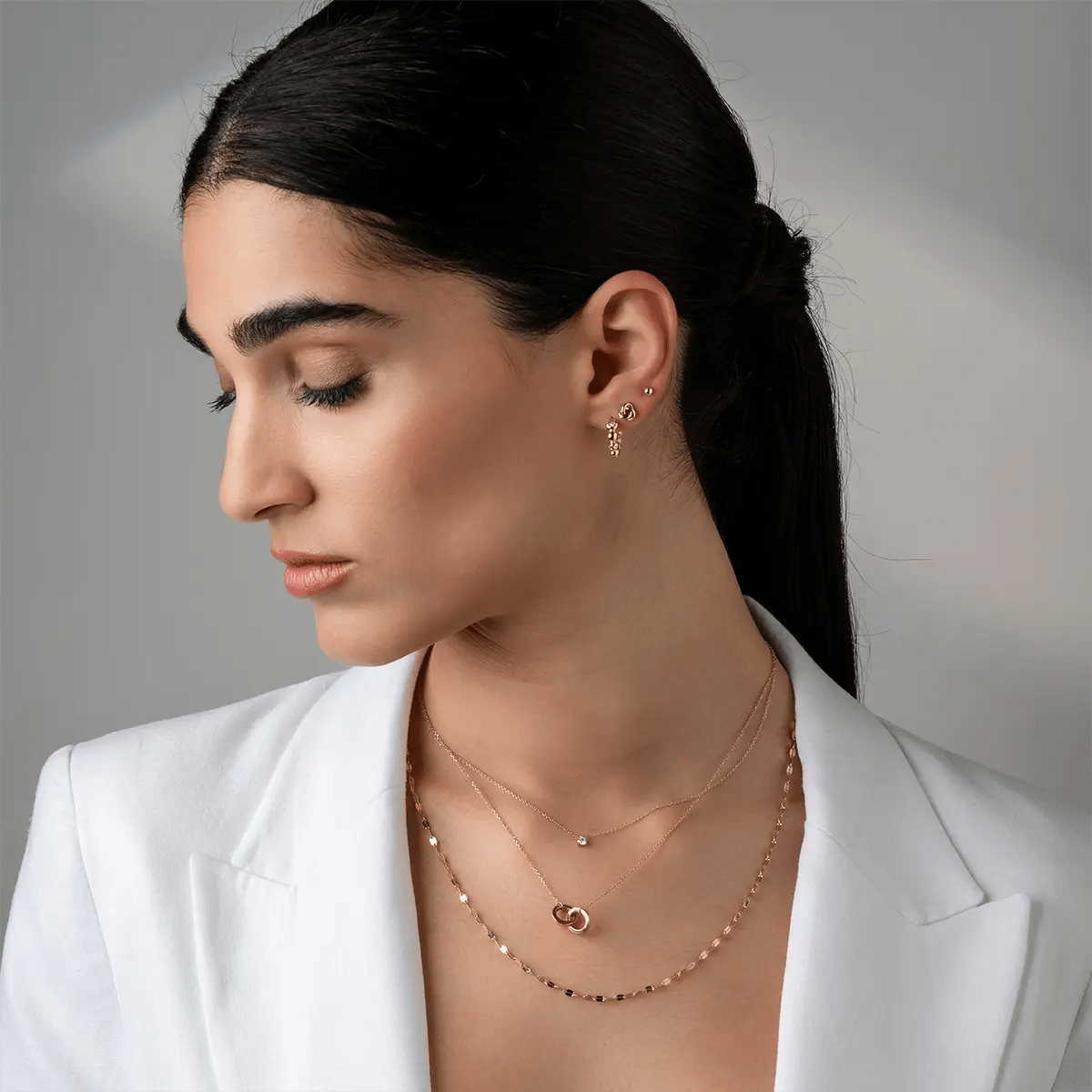
The Éclat Single Diamond Solitaire Necklace at $248 is, by a wide margin, our most recommended piece. One lab grown diamond, bezel set in 14k gold, on a delicate cable chain. It goes with literally everything. I have customers who tell me they have not taken it off in months. The simplicity is the entire point. My grandfather had a phrase for designs like this: "nothing to argue with." No element fights any other element. It just works.
For layering, the Dyo Double Chain Layered Necklace at $298 gives you the two necklace look in one piece. Two chains at different lengths, connected by a single clasp. No tangling. No fiddling with multiple closures. I designed this because so many of our customers were buying two separate chains and struggling to layer them without them getting twisted up. Problem solved.
The Layered Chain Necklace at $824 is the same concept taken further. Multiple chains, different textures, all connected as one piece. This is the necklace people buy when they want to skip the whole "building a layering set" process and just have it done right from the start.
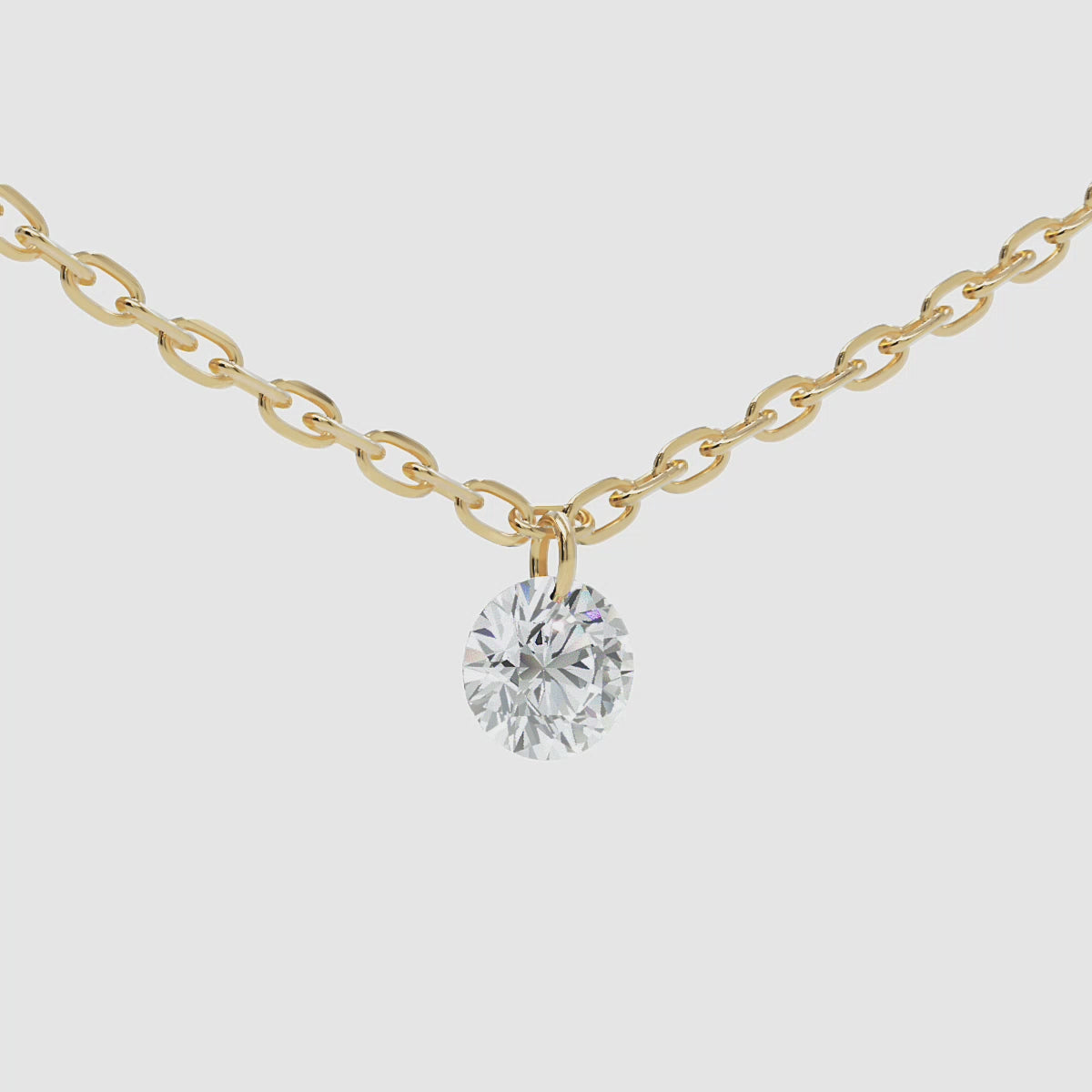
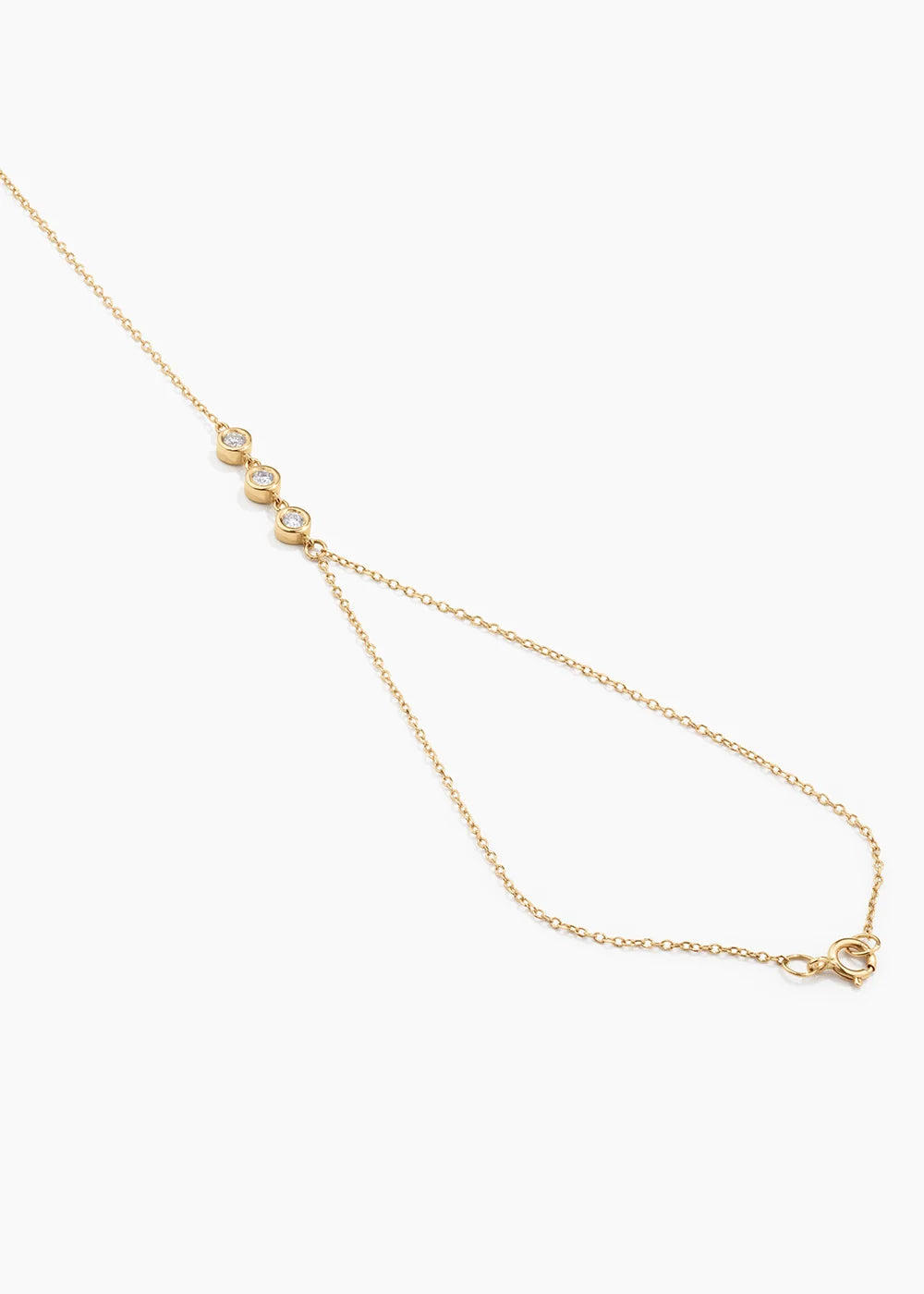
If you want something with more diamond presence, the Núde Diamond Station Necklace at $588 is extraordinary. Diamonds drilled directly through the center (no setting, no prong, no bezel) so they sit flush against the chain and catch light from every angle. This is a technique that most jewelers do not attempt because it requires extreme precision. One fraction of a millimeter off and the diamond cracks. Our goldsmiths have been perfecting this for years.
And the Poetry Initial Letter Necklace at $398 is the piece with the most emotional weight. A single letter, your initial or someone you love, in a typeface I designed specifically for this collection. These are the necklaces customers email me about months later to tell me how much they mean to them. Also available in 10k gold at $348.
Layering: The Art of Wearing Multiple Gold Necklaces Without Looking Like a Mess
Layering is everywhere right now. And when it is done well, it looks incredible. When it is done poorly, it just looks tangled.
Here is what I have learned from watching thousands of customers build their layering sets.
First, vary your lengths. You want at least two to three inches between each necklace. A choker at 14 inches, a standard chain at 16 or 18 inches, a longer piece at 20 or 22 inches. If two necklaces sit at the same length, they will tangle constantly and visually compete with each other.
Second, vary your textures. A delicate cable chain next to a bold paperclip chain next to a diamond station necklace. The contrast is what makes layering interesting. Three identical chains at different lengths just looks like you accidentally put on too many necklaces.
Third, use a single clasp solution when you can. The Dyo Double Chain Layered Necklace exists for exactly this reason. One clasp, two chains, zero tangling.
And a practical tip that I wish more jewelers shared: if you are layering chains from different purchases, connect them at the clasp with a small jump ring so they hang as one unit. Your neck will thank you.
10k vs 14k for Necklaces: Which Should You Choose?
I wrote a whole article about 10k gold for rings that goes deep on this comparison, so I will keep it focused here on what matters specifically for necklaces.
Color. When a gold necklace sits against your skin, the warmth of 14k shows up more than it does on, say, a ring. Something about the contrast of gold against skin tone at the neckline and décolletage area makes that subtle color difference between 10k and 14k more visible. If color depth matters to you, and for necklaces I think it should, lean toward 14k.
Strength. For chains specifically, the alloy content in 10k actually has a real benefit. A 10k chain link is marginally harder to deform than a 14k chain link of the same thickness. For very delicate chains, this can matter. For standard thickness chains, the difference is academic.
Price. A 10k version of the same design typically runs 15 to 25 percent less. If you are building a layering set and buying three or four pieces at once, 10k lets you build that set for significantly less.
My honest recommendation: for your primary, everyday necklace, the one you wear most often, go 14k. For secondary pieces, layering additions, trend driven designs you might rotate seasonally, 10k is a smart call.
White Gold, Yellow Gold, Rose Gold: A Quick Guide
Yellow gold is the classic. It is what people picture when they hear "gold necklace." Warm, rich, timeless.
White gold is yellow gold mixed with white metals (palladium, silver, sometimes nickel) and rhodium plated for that bright silver color. It pairs beautifully with diamonds because the white metal does not add any warmth to the stone. Our Éclat Diamond Bezel Necklace in White Gold at $298 is a perfect example.
Rose gold gets its pink hue from a higher copper content in the alloy. Softer, romantic, flattering against almost every skin tone. The Dyo Double Chain Layered Necklace in Rose Gold at $298 is the piece that converts rose gold skeptics.
Can you mix metals? Absolutely. The "rules" about matching your gold colors died a decade ago. Some of our best selling customers wear yellow and white gold together intentionally. It looks modern and deliberate.
Before You Buy: What to Actually Check
Solid vs plated vs filled. This is the first and most important checkpoint. If the listing says "gold plated," "gold filled," "gold tone," or "gold vermeil," you are not getting solid gold. Those are fine for costume jewelry. They are not fine for a piece you plan to wear daily for years.
The hallmark. Look for 10k, 14k, 417, or 585 stamped on the clasp or a tag near the clasp. No stamp? Ask.
Clasp quality. This is where cheap necklaces reveal themselves. A good lobster claw clasp in solid gold should open and close smoothly, with a spring that actually springs back. A weak clasp is the number one reason necklaces get lost.
Chain construction. Are the links soldered closed or just bent shut? Soldered links will not pull apart under normal wear. Open links can, especially on finer chains. Every chain we make uses soldered links.
Weight. A solid gold necklace has a satisfying weight to it. Not heavy. But present. You can feel the difference in your hand between a solid gold chain and a hollow one. The solid chain has substance. The hollow one feels like it might blow away.
Return policy. Buy from someone who lets you see and feel the piece before committing. We offer returns because I am confident that once you hold one of our necklaces, you are not sending it back.
Common Questions
Will a solid gold necklace turn my neck green? No. Never. That reaction comes from plated jewelry where the base metal underneath reacts with your skin chemistry. Solid gold does not have a base metal. There is nothing underneath to react.
Can I shower wearing it? Yes. Soap and water will not harm solid gold. Just avoid prolonged exposure to chlorinated pools or hot tubs.
Will a gold necklace tarnish? Solid gold does not tarnish. Period. If your "gold" necklace is tarnishing, it is not solid gold.
How do I clean it? Warm water, one drop of dish soap, a soft cloth. Let it soak for ten to fifteen minutes. Wipe gently. Done. Once or twice a year, bring it to a jeweler for a professional polish.
Can I wear it in the ocean? Salt water is fine for solid gold. Just rinse it with fresh water afterward. The salt itself does not damage gold, but dried salt crystals can dull the shine temporarily.
What length should I choose? 16 inches sits at the collarbone (classic choker length). 18 inches is the most popular, sitting just below the collarbone. 20 inches gives you more breathing room and works well for pendants. Most of our necklaces come with an adjustable chain or an option to add our Necklace Chain Extender at $48.
Lab grown diamonds, are they real? Yes. Identical crystal structure, identical hardness, identical optical properties. The only difference is origin. One formed underground over millions of years. One formed in a controlled environment over weeks. Both are real diamonds by every scientific and gemological definition.
Browse the full necklaces collection, or go directly to: chain necklaces, diamond necklaces, pearl necklaces, and initial necklaces.
Looking for a different category? See our earrings, rings, or bracelets.
Read our guide on earrings: 14k Gold Earrings: What My Grandfather Taught Me About Weight, Balance, and Getting It Right.