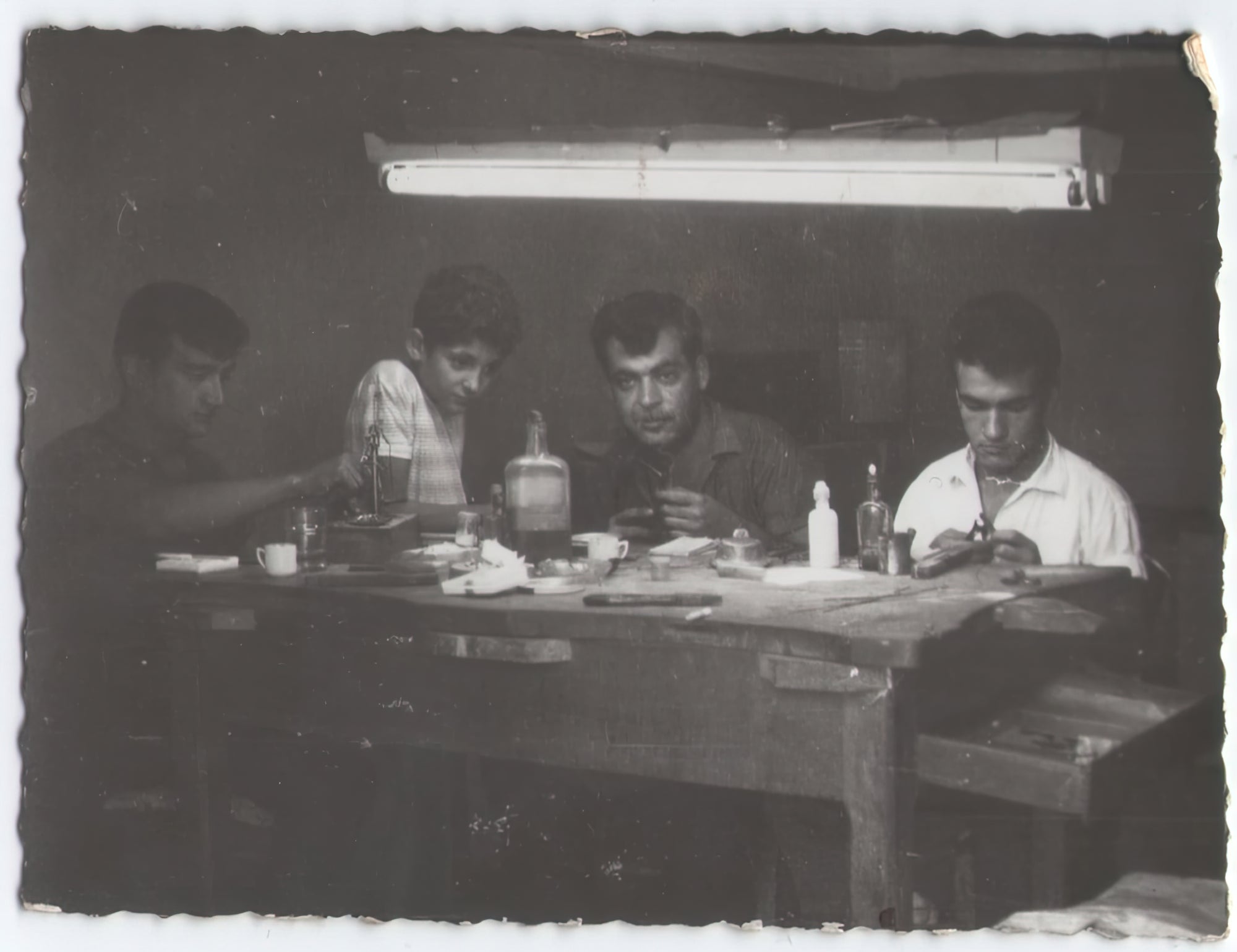





My grandfather Thanasis had this thing he used to say. Every single time someone walked into the workshop and ordered a bracelet, he would hold the finished chain flat across his open palm, let it pool into the center like a little golden river, and go: “This is the only piece that moves with the hand.” Fourteen years old at the time, sitting on a stool in the corner trying not to get in anyone’s way, I thought he was just being dramatic. He wasn’t. He was making a point about engineering.
A necklace sits still against your chest. A ring stays put on your finger. Earrings hang. But a gold bracelet follows every gesture. Every reach for a coffee cup. Every wave. Every time you push your hair behind your ear. And because it never stops moving, it catches light differently every single second of the day. My grandfather understood that at a level I’m only now starting to appreciate, three decades later, from the same bench in the same Athens workshop.
I’ve spent the last twenty years making gold bracelets for women, and I still find the process more demanding than necklaces or rings. The drape has to be right. The weight has to sit correctly across the wrist bone. The clasp has to be secure without being clunky. Get any one of those wrong and the bracelet ends up in a drawer after two weeks. I’ve seen it happen. I’ve had customers come back and tell me honestly that they stopped wearing something because it just didn’t feel right. That kind of feedback keeps you sharp.
The Gold Chain Bracelet
Every collection starts here. A fine gold chain, no stones, no charms, nothing extra. Just metal and movement. Sounds boring on paper but on a wrist it’s anything but. Our team (that’s me, my brother Dimitris on the operations side, and our goldsmiths Thanasis, Nikos, and Kostas) makes more chain bracelets than any other category. They outsell everything. And the reason is simple: people put them on and forget they’re wearing them until someone across the table says “I love your bracelet.”
Here’s where it gets technical and I promise this matters. A cable chain uses uniform oval links that interlock. Strongest construction we offer. You can catch it on a door handle (happens more than you’d think) and the force distributes across every link instead of concentrating on one. Nothing breaks. A box chain looks sharper and more geometric, tiny square links in a row, but it’s more prone to kinking if you’re rough with it. Rope chains are twisted and they throw light from every angle, which makes them the dressiest option for something that has no stones at all.
Thickness matters too. Our dainty bracelets run about 0.8 to 1.2 millimeters. Barely visible on the wrist. I personally wear a 1mm cable chain on my left wrist that I haven’t taken off in about three years. Showering, workshop, gym, sleep. It’s still perfect. That’s what 14k gold does. The alloy is hard enough to take real daily abuse without bending, stretching, or losing its shape.
If someone asks me what to buy as a first gold bracelet, I say 1mm cable chain, 14k, seven inches. Done. Build from there later. You can always add more pieces to a wrist. You can never undo a first purchase that sits in your jewelry box unworn.
Tennis Bracelets
I used to think tennis bracelets were strictly formal. Like, you wear it to a gala and then it goes back in the box. I was wrong about that and I’ll admit it publicly. Sometime around 2019 or 2020, customers started buying tennis bracelets as everyday pieces. Wearing them to work. Wearing them grocery shopping. Stacking them with plain gold chains. The whole vibe shifted and now it’s one of our fastest moving categories.
The critical thing about a tennis bracelet that most brands won’t tell you is the hinge work. Each stone sits in its own little basket (four prongs or a bezel) and those baskets connect with tiny hinges. When those hinges are made properly, the bracelet moves like silk around your wrist. You can flex your hand, rotate it, do whatever, and the diamonds just flow. When the hinge work is sloppy (and I’ve seen plenty of examples from other brands that customers bring in for repair), the bracelet sits rigid, gaps form between the links, and stones start loosening after six months because the metal fatigues at the joints.
We use lab grown diamonds in our tennis bracelets and I’ll tell you exactly why. A tennis bracelet might have twenty or thirty individual stones. With natural diamonds, the cost of that many matched stones puts the piece into a price range that makes most people walk away. Lab grown changes that math entirely. Same stones, same sparkle, same hardness, but the total price drops to where the purchase actually happens instead of living on a wish list forever.
Hand Chain Bracelets
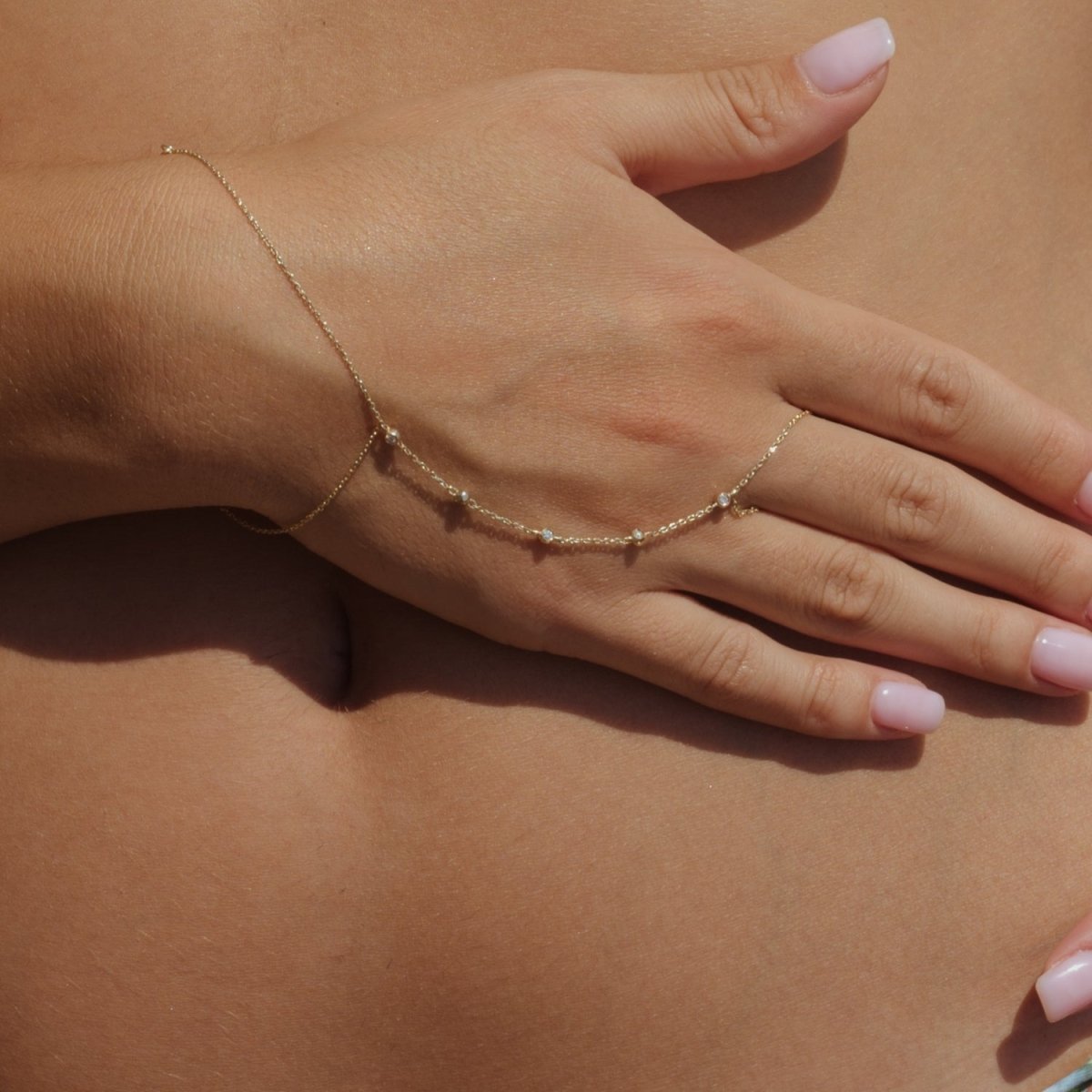
Now this one is special to me because I designed the entire Lien collection from scratch. A hand chain bracelet connects a chain at the wrist to a ring on the finger, with a delicate strand running across the back of the hand. The origin is South Asian bridal jewelry, and I first encountered the style about eight years ago when a customer of Indian heritage asked if I could make one in 14k gold. I had never made anything like it before. Took me three prototypes to get the tension right.
The reaction people have when they see a hand chain in person for the first time is always the same. They stop. They look at the hand. They tilt their head. And then they say some version of “I’ve never seen that before.” It’s one of those rare jewelry moments where you’re wearing something that most people in the room have genuinely never encountered. That novelty factor doesn’t wear off quickly either. I’ve had customers wearing our Lien pieces for over a year telling me they still get asked about it regularly.
Fair warning though: if you work with your hands in a physical way, construction, gardening, that kind of thing, the chain across the back of the hand can catch on things. For desk work, cooking, normal daily activity, it’s perfectly fine. But it’s not the piece you wear to move furniture.
Diamond Station Bracelets
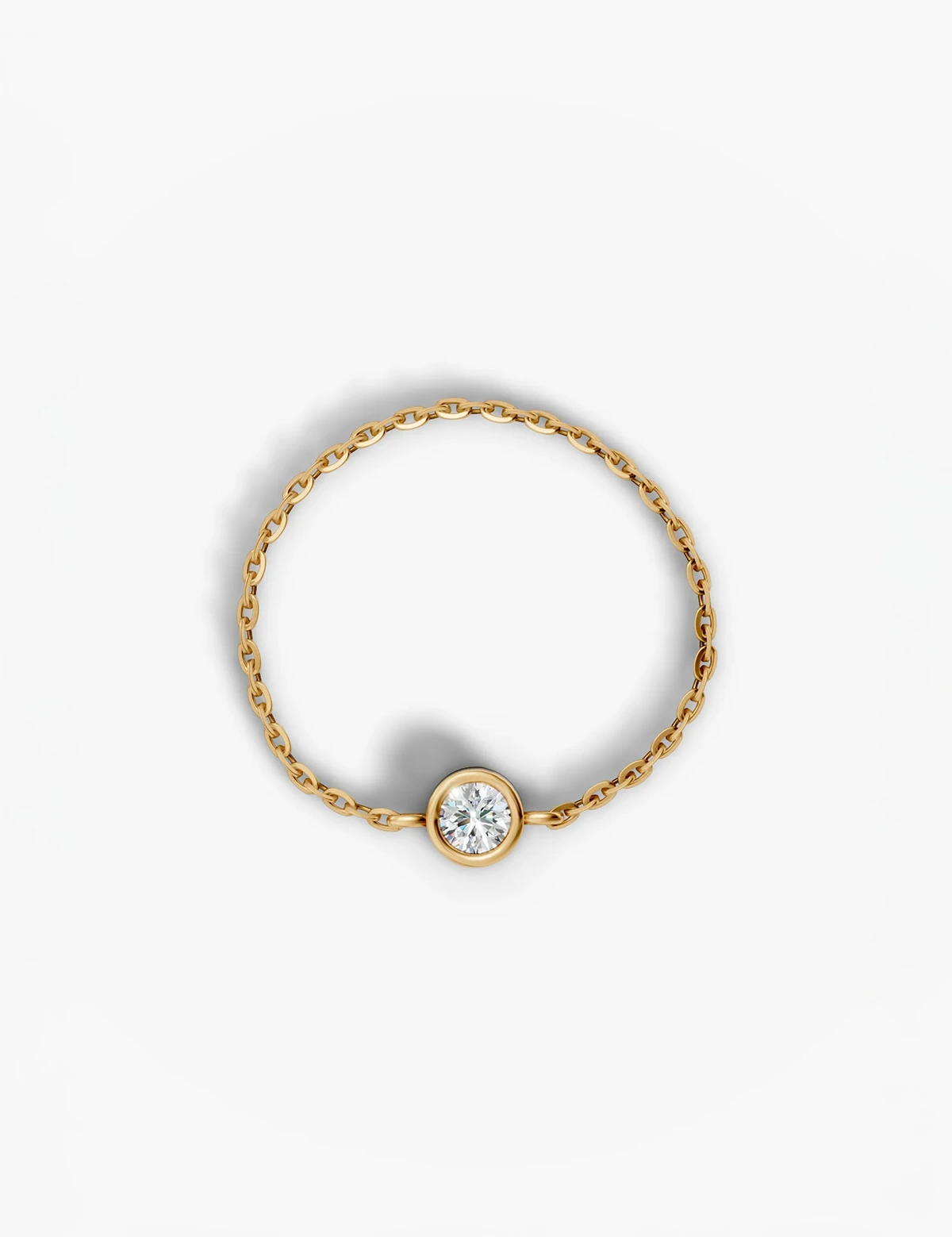
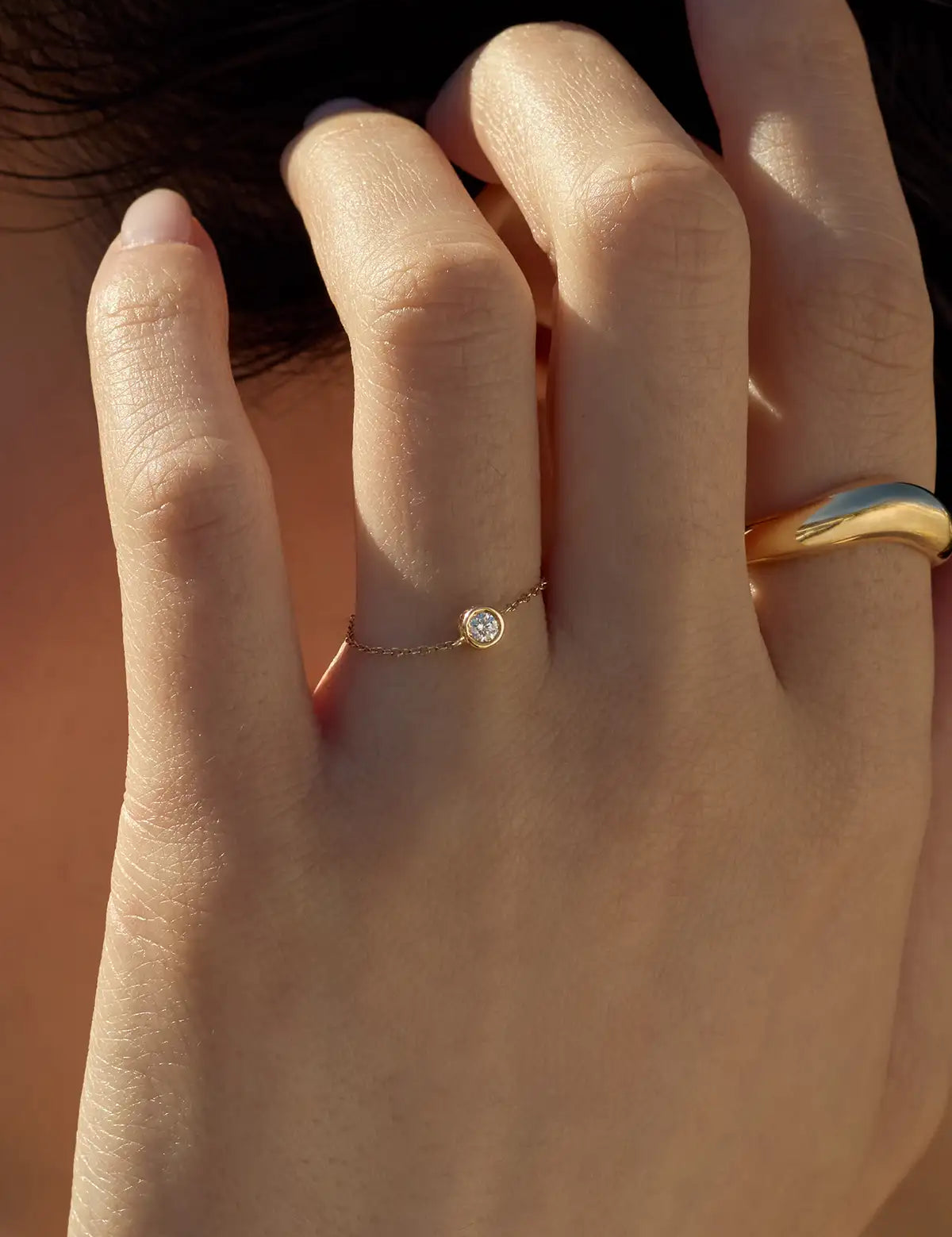
If you’ve read our layering guide for necklaces, you already know I’m obsessed with the station concept. Few diamonds spaced evenly along a chain. No cluster. No single focal point. Just scattered light that traces the curve of the wrist. Our station bracelets use the same bezel settings as our station necklaces. Each diamond wrapped in a thin gold wall that sits completely flush with the chain. Nothing sticking up. Nothing to catch on sleeves.
I watch customers try these on and the moment it hits the wrist something changes in their face. It’s the “oh” moment. They weren’t expecting something so subtle to have that much presence. And they’re right. A station bracelet is somehow less than a tennis bracelet (fewer diamonds, lower total carat weight) and more at the same time (more wearable, more everyday, more “this is just part of who I am now”). I’ve tried explaining why that works and the best I can come up with is that restraint reads as confidence. Three perfectly placed diamonds say more than thirty crammed together.
Stacking Bracelets
Dimitris (my brother, our COO, and honestly the person with the best eye for styling in our entire operation) always says that the best bracelet stacks look like they happened by accident. He’s absolutely right. The magic of stacking is building something that looks effortless even though every piece was deliberately chosen.
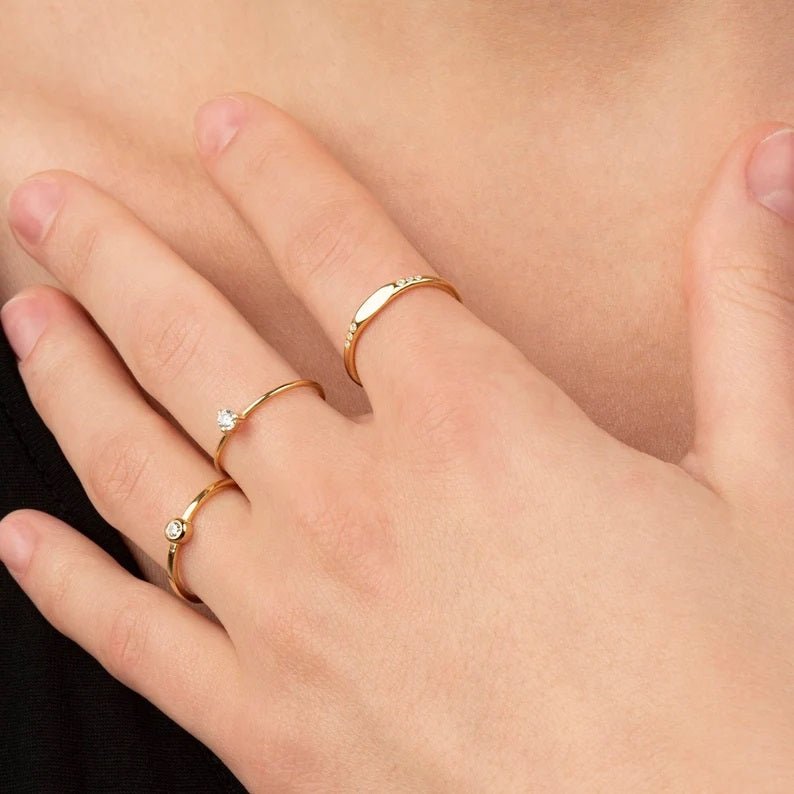
My advice: three to four bracelets max per wrist. Mix the weights. One thin chain, one slightly thicker, maybe a station bracelet with diamonds for that little flash, and a bangle if you want some structure. Keep the metal color consistent. All yellow gold or all white gold or all rose gold. Don’t mix metals in the same stack unless you really know what you’re doing.
Biggest mistake I see: stacking four bracelets that are all identical thickness. Looks like a matching set from a department store. Vary the scale. One piece should be thinner than the rest. One should have something different about it, a diamond, a charm, a different link pattern. That’s what makes it look curated instead of purchased in bulk.
10k vs 14k Gold for Bracelets Specifically
We have a whole separate deep dive on 10k versus 14k, but bracelets are a unique case because your wrist takes more abuse than any other part of your body that wears jewelry. You bang it on desks. You rest your arm on hard surfaces. You wash your hands constantly. The bracelet is right there absorbing all of it.
10k gold is actually harder than 14k. More alloy metals in the mix means a tougher metal. For a bracelet you plan to keep on permanently, that extra toughness matters. The trade? The yellow is slightly less saturated because there’s less pure gold per gram. For white gold or rose gold bracelets, honestly, you can’t tell the difference between 10k and 14k visually. For yellow gold, some people notice when you put them side by side.
My personal recommendation: 14k if you want the richest color and don’t mind spending a bit more. 10k if you’re going to be hard on your jewelry and you want the strongest possible bracelet at a lower price point. Both are solid gold. Both will look the same in thirty years. Neither will fade, tarnish, or discolor your skin.
How to Size a Gold Bracelet (Most People Mess This Up)
Bracelet sizing confuses more customers than ring sizing, necklace length, and earring weight combined. Here’s the shortcut version that I tell everyone who calls or emails us about it.
Take a flexible tape measure. Wrap it around your wrist right above the bone. That number is your wrist circumference. Now: add half an inch if you want it snug. Add a full inch for a comfortable everyday fit. Add an inch and a half if you want it loose and relaxed.
Most women land somewhere between 6 and 7 inches at the wrist. Our standard 7 inch bracelet fits the majority. If you’re between sizes, go up. A bracelet that’s slightly loose looks intentional. A bracelet that’s too tight looks like a mistake. And please remember that chain bracelets and bangles size completely differently. Chains drape and conform. Bangles are rigid circles that need to slide over the widest part of your hand. Different measurement entirely. Check the size guide.
Quick Note on Pearl Bracelets
People don’t typically group pearl bracelets with gold chain bracelets, but they should. Pearls on the wrist feel completely different from pearls on the neck. Less formal. Almost playful. Especially when freshwater pearls are mixed with solid gold chain links, which is how we make ours. The organic shape of the pearl next to the precision of gold links creates this contrast that just works. Warmer than an all gold piece. More interesting than a plain pearl strand.
One Last Thing: Do Not Buy Plated
I write this in every single blog post and I will keep writing it. Gold plated bracelets are 0.5 to 2.5 microns of gold over brass or copper. Microns. That is a thickness you cannot see with the naked eye. On your wrist, where the bracelet rubs against every surface you touch all day long, that gold layer wears through in months. You’ll see the dull base metal underneath. Green skin. Tarnished links. Money wasted.
Gold filled is a step up (thicker gold layer, mechanically bonded) but still not solid gold through and through. Only a solid gold bracelet guarantees the piece looks the same decades from now. I repair jewelry my grandfather made in the 1950s and 1960s. The gold hasn’t changed. Same color. Same luster. Same weight in the hand. That permanence is the entire point.
Frequently Asked Questions
What’s the best gold bracelet for daily wear?
14k solid gold chain bracelet, 1mm thickness, cable or box chain. Strong enough for everything, light enough that you forget about it, elegant enough that it works from the gym to a dinner table. Start there and stack later.
What karat gold is best for bracelets?
14k for color and durability balance. 10k if you want maximum toughness at a lower price. We don’t recommend 18k for bracelets because the higher purity makes the metal softer and more prone to scratching, stretching, and general wear damage. Save 18k for earrings where it won’t take physical abuse.
How do I know my bracelet size?
Measure your wrist just above the bone with a flexible tape. Add half an inch for snug, one inch for standard, or one and a half for loose. Most women fall between 6 and 7 inches. Our 7 inch standard fits the majority comfortably.
Can I shower wearing a gold bracelet?
Solid gold, yes. Water and soap won’t damage it. Soap buildup in the chain links can dull the shine over time, but warm water with a tiny drop of dish soap cleans that off in minutes. For diamond bracelets, remove before showering because soap film reduces the sparkle of the stones.
Are lab grown diamond bracelets worth buying?
Without question. Identical stone, identical hardness, identical look on the wrist. For tennis bracelets where you have 20 or 30 matched diamonds, lab grown brings the total cost down to where most people can actually afford the piece. Our lab grown diamond bracelet collection exists because of exactly this logic.
How many bracelets should I stack together?
Three to four on one wrist. Enough to create depth and that satisfying layered clink when you move your arm, but not so many they slide up toward your elbow. Vary the thicknesses. Add one piece with a stone to anchor the whole stack visually.
Laki Tasatzis, Founder, ENEA Studio