




























I have set stations by hand, one stone at a time, enough of them to know that the part which decides whether a station necklace is any good is the part no photograph will show you.
The form looks simple. A fine chain. A few small stones set at intervals, bare metal between them. That simplicity is the trap. A station necklace is almost entirely engineering, and the engineering stays invisible until the day it fails.
It has a pedigree, at least. Elsa Peretti drew the first Diamonds by the Yard for Tiffany in 1974, and nearly everything sold as a station necklace since is a footnote to that drawing. The good ones honour the engineering she got right. The careless ones borrow the look and skip it.
The setting is the whole of it
Forget the stone for a moment. Look at what holds it.
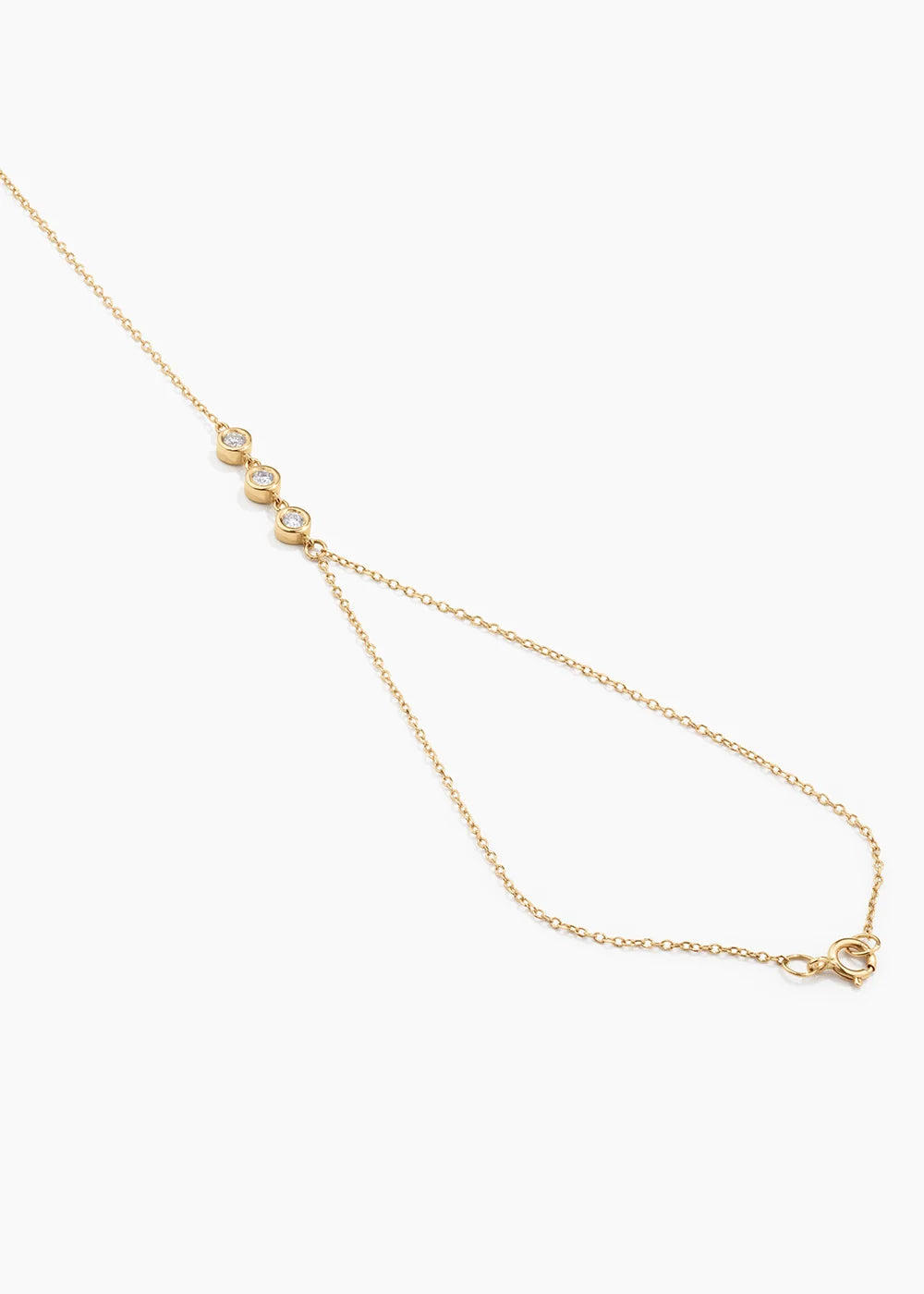
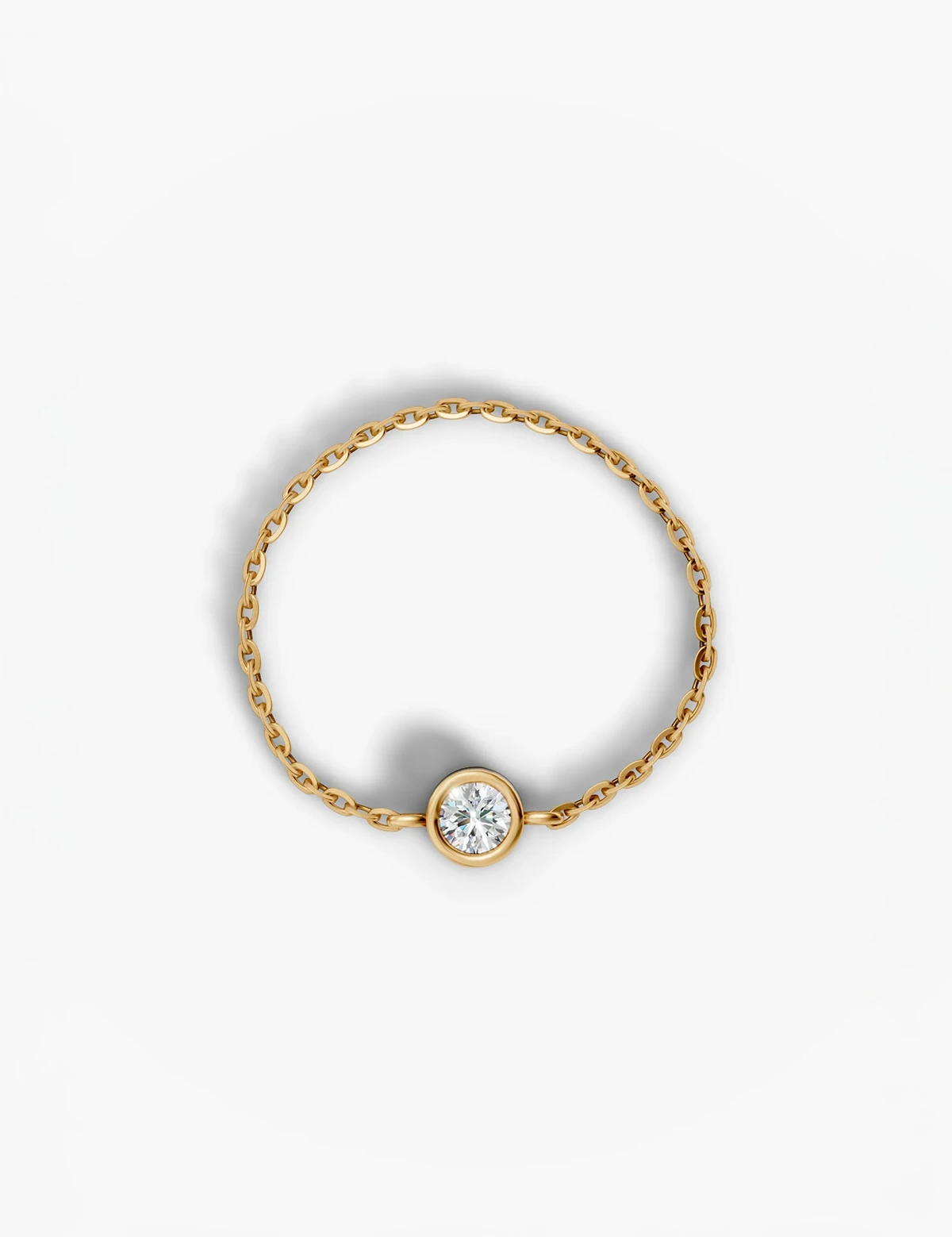
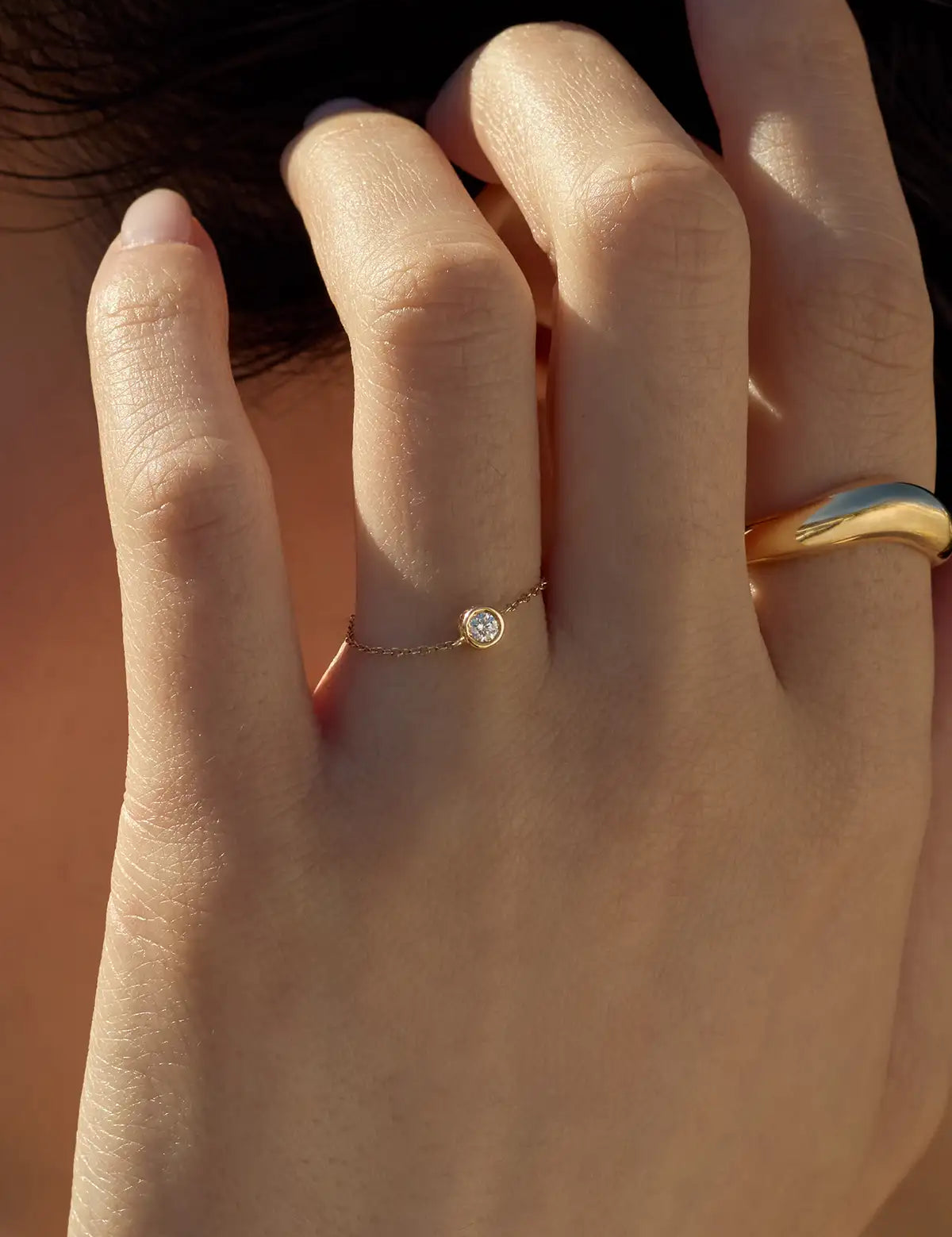
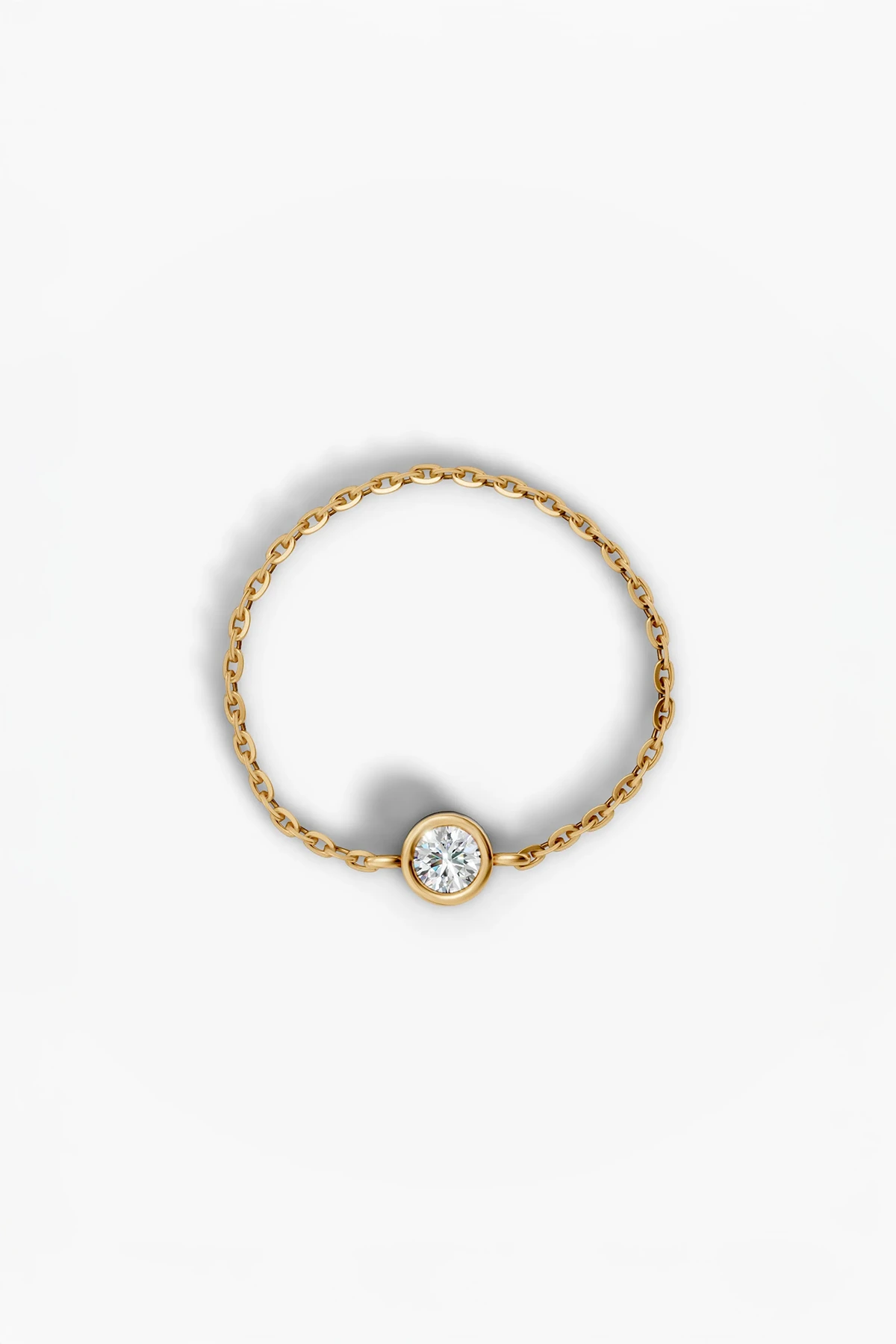
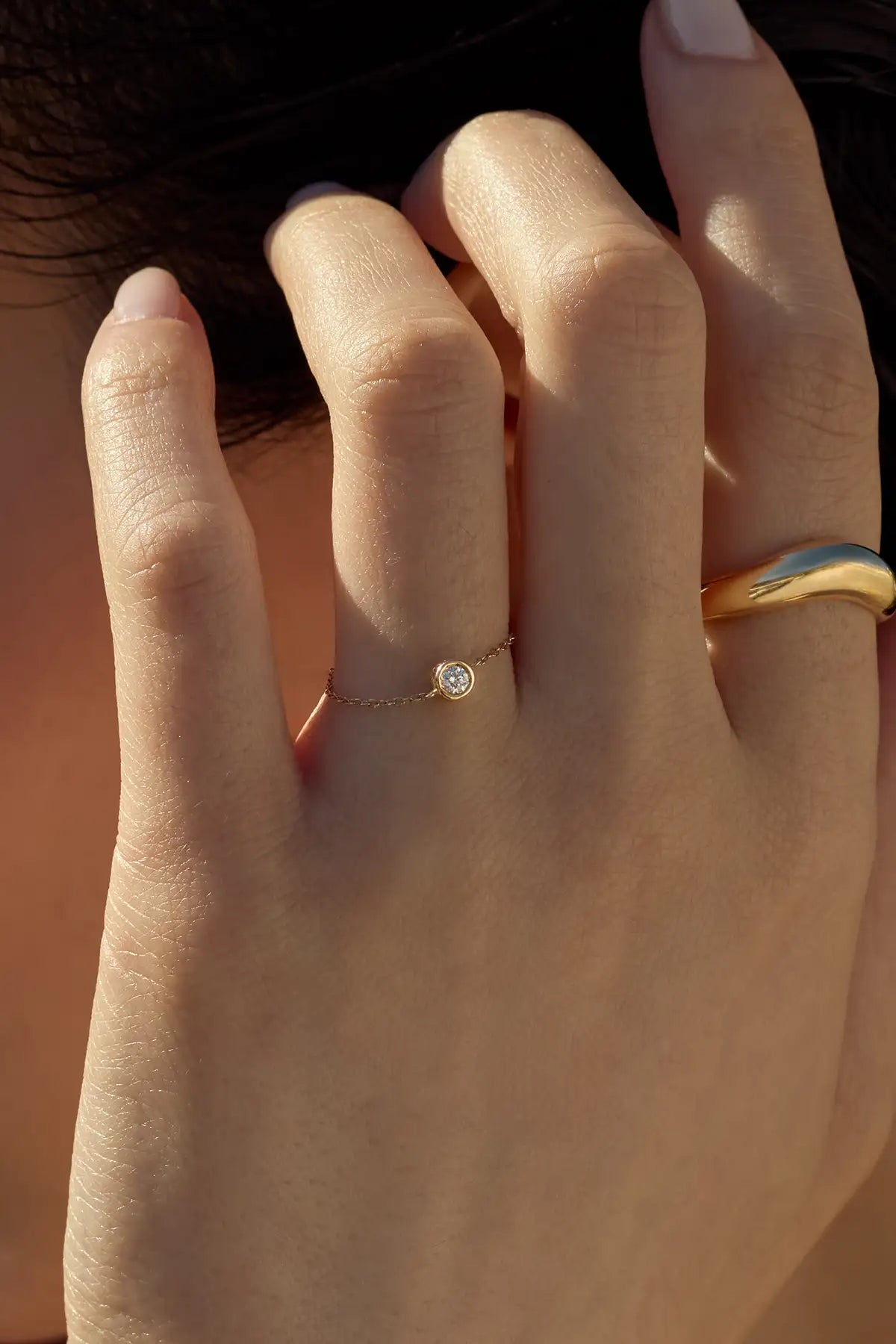
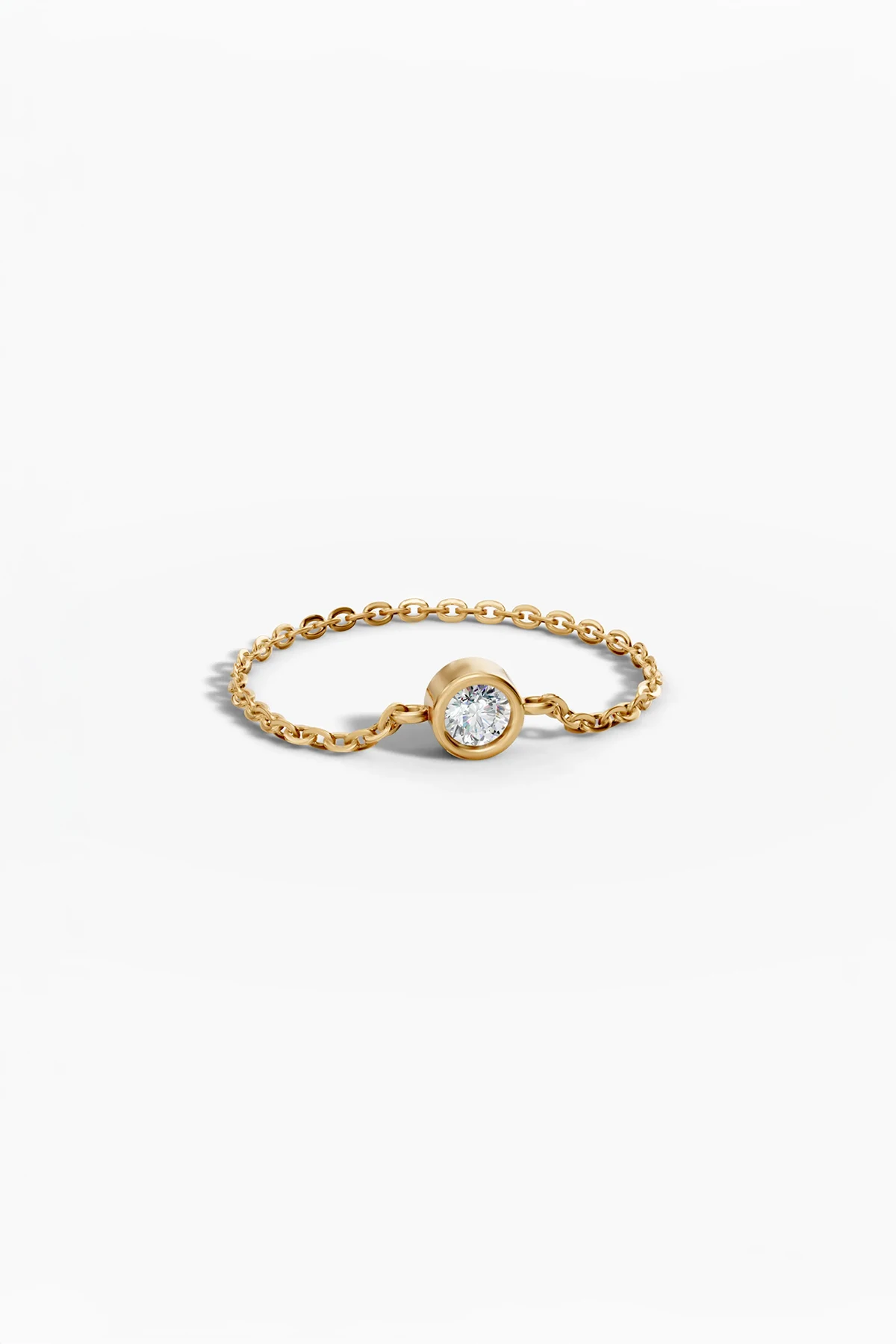
A bezel wraps a thin wall of gold around the stone's full girdle. It is the most secure setting there is, it shields the diamond's most fragile point, its edge, and it gives a sweater nothing to catch. It is what we use most. If I had to put one station necklace on someone and never see it again, it would be a bezel. You can read the logic across the diamond bezel necklaces; the Alinéa diamond bezel station necklace is the idea at its plainest.
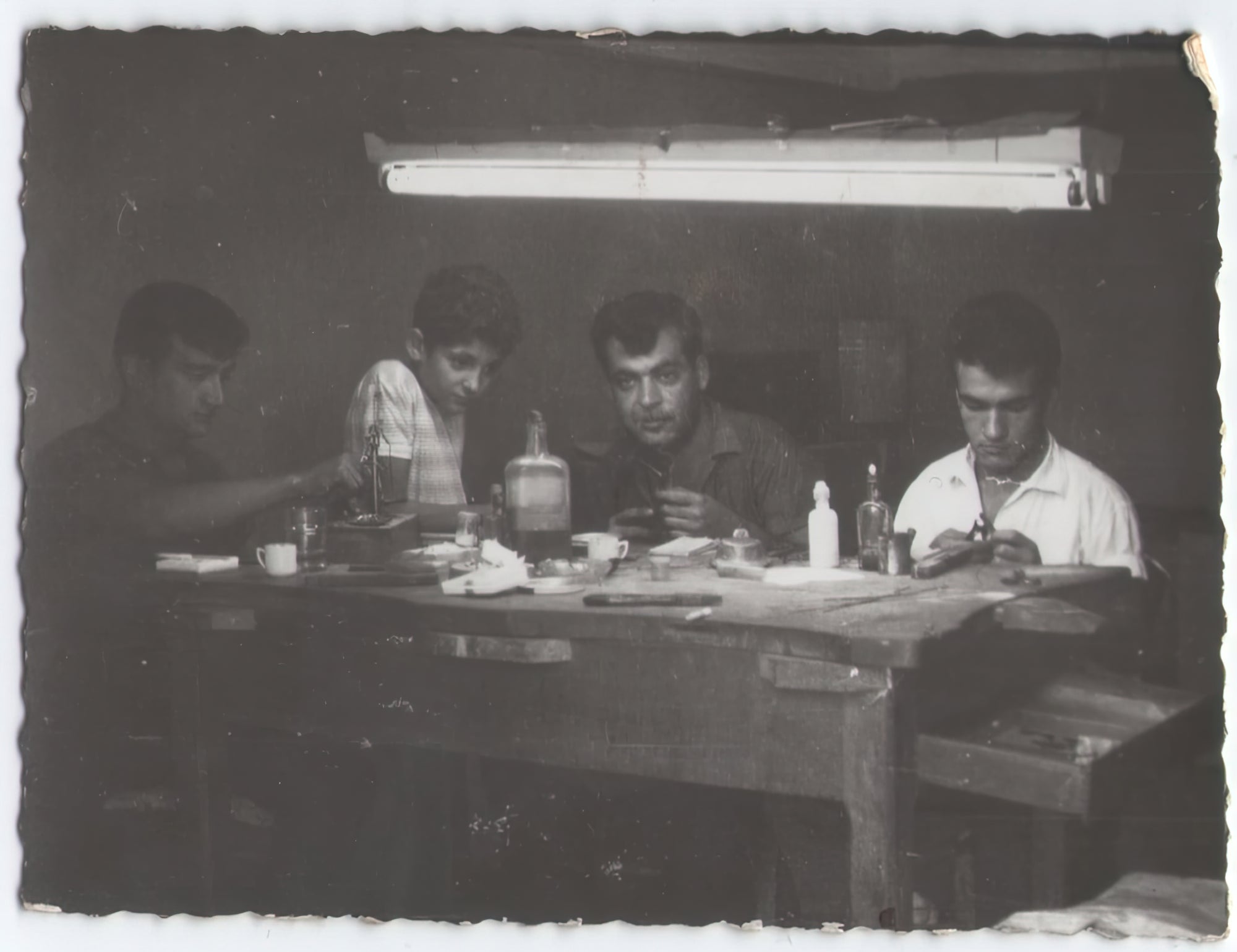
My father taught me to set a stone by feel rather than by jig. The pressure that closes a bezel comes from the fingers, the same fingers that have closed thousands before it. A station necklace is that act repeated down a chain, ten or twenty times over, each one made as carefully as if it were the only one. You cannot see that in a listing. You feel it years later, when not a single station has loosened.
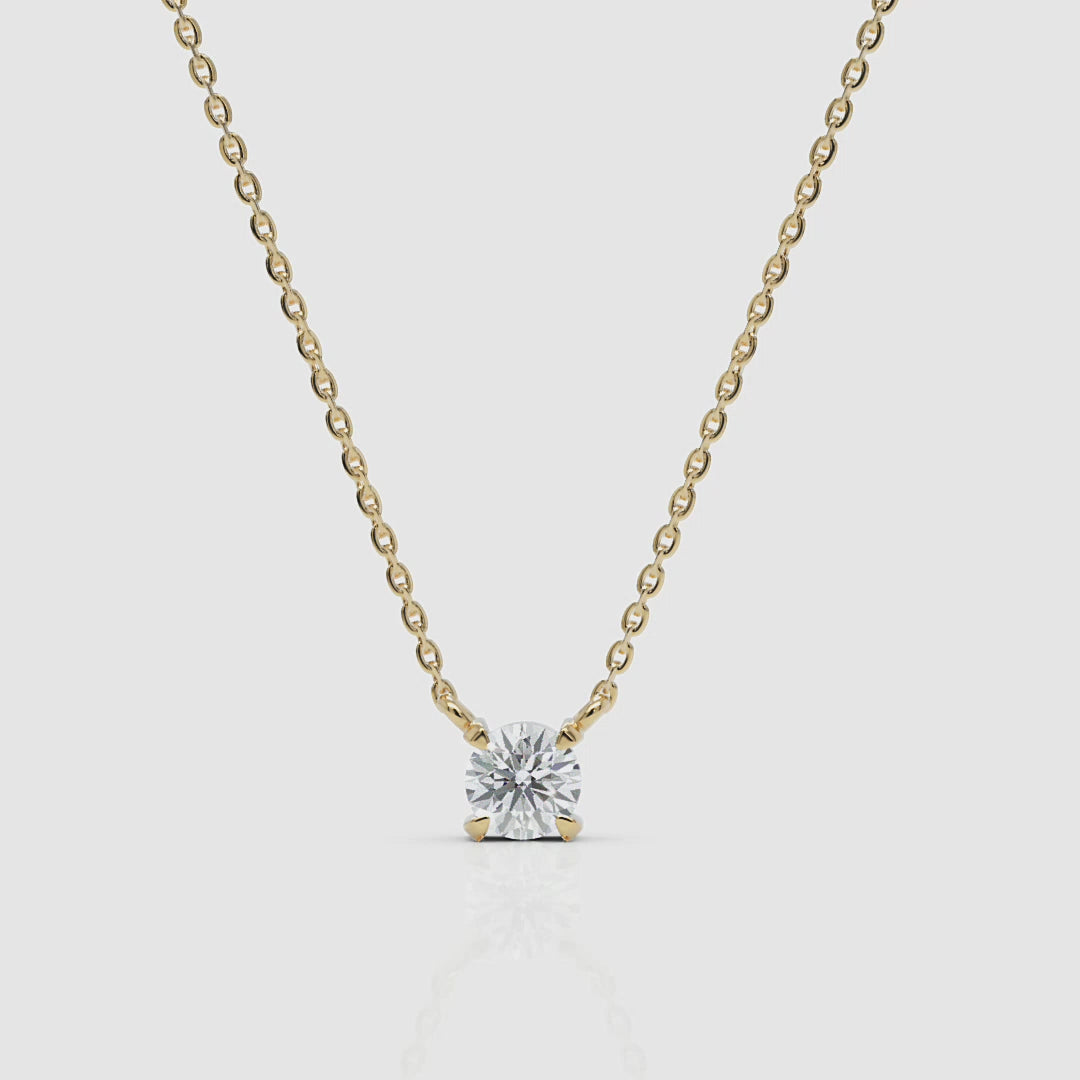
Prongs lift the stone on small claws and let in more light from the sides. Brighter. Also more to go wrong: a claw wears, lifts, snags, and over ten years of real wear it wants checking. Beautiful, higher maintenance. Know that going in.
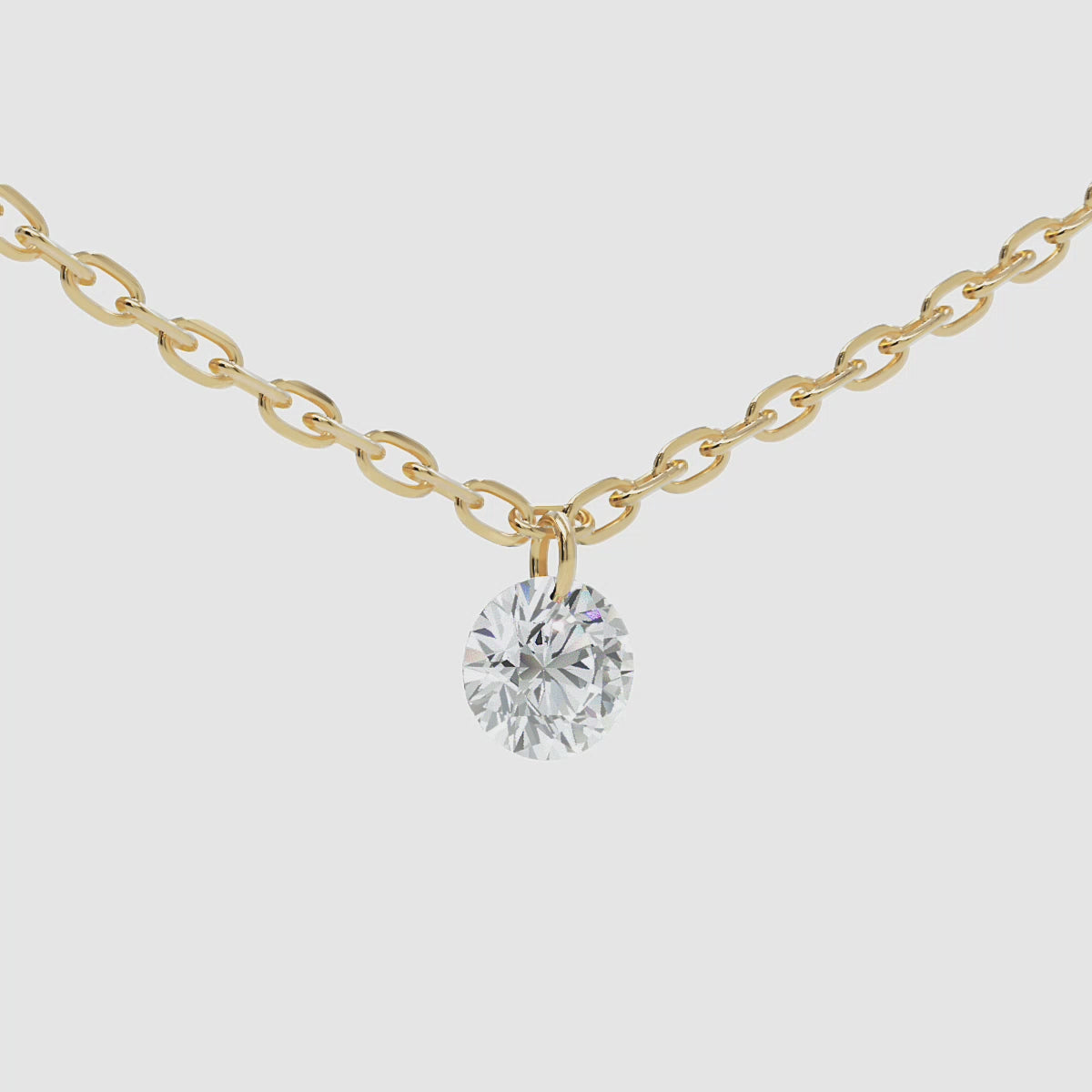
Then there is the drilled station, the hardest thing here to make and the easiest to admire. The chain runs through a hole bored clean through the diamond, so the stone floats with no metal on it at all. A diamond is the hardest material there is. Drill it slightly wrong and it shatters, and a shattered stone has no repair. The Núde diamond by the yard necklace and the rest of the Núde line are made this way. That is why they look like light resting on skin and nothing else.
So the setting is not a detail you can wave past. It decides security, brilliance, and whether the thing survives a decade of mornings.
Spacing is the necklace
Here is the part nobody photographs honestly: how far apart the stations sit.
Close them up, an inch or less, and the necklace reads rich, almost a tennis line. Spread them out, two inches and beyond, and it goes quiet and modern, a few points of light with room to breathe. Neither is right. They are different necklaces wearing the same name, and plenty of people only learn which one they bought when the box arrives.
And the spacing has to be even, which sounds trivial and is not. Spacing stones evenly took me longer to learn than setting them did. The chain wants to lie one way and the spacing wants another, and the hand has to win that argument the same way every time, station after station, or the eye catches the wrong gap at once, the way it catches a crooked picture frame. A necklace made properly keeps its stones where they were placed. A bad one drifts them all toward the clasp inside a week. Compare a few across the station necklaces and the wider diamonds by the yard necklaces and you start to see it.
The chain fails before the stone does
A plain chain has one job. A station necklace has a dozen, because every station is a join, a point where setting meets chain and is fixed there, and every join is a small interrogation of the metal.
Plate fails at exactly those points. The thin gold rubs off first where the settings sit and where the chain bends, and within a year the brass grins through at every station, the precise spots your eye is drawn to. I see these on the bench often enough: plated pieces brought in for repair with the brass already showing at every join, and rarely anything in them worth saving. Solid gold has nothing to rub off. We build in solid fourteen or ten karat, gold at the join and gold on the surface, because a necklace made of small connections is only as honest as its worst one. The same gold as the rest of the diamond necklaces. No coating chosen to make a price look smaller.
This is the dull half of the decision. It is also the half that decides whether the necklace is on a neck in fifteen years or dead in a drawer.
Length
Length matters as much as the stones, and it is what people get wrong most. Eighteen inches that looked right on a model lands somewhere else entirely on a real collarbone.
Fourteen to sixteen sits high and reads sharp. Seventeen to eighteen, the classic, falls just under the collarbone and behaves with almost any neckline. Past twenty it drapes, which is wonderful on purpose and a letdown by accident. Measure it against your own neck at a mirror with a length of string. Do not trust the photo. The photo has been lying to you this whole time.
One real advantage: because there is bare chain between the stones, a station necklace layers better than nearly anything. A second, finer chain slips through the gaps instead of wrestling them. Put it over a plain diamond solitaire necklace or something from the dainty diamond necklaces and the two read as one deliberate line.
Diamonds, pearls, two sides
The idea outgrew diamonds long ago. Space small pearls instead and you get the same rhythm, cooler against the gold, and the pearl station bracelet takes it to the wrist. The serious versions are finished on both sides, so a station that flips still shows a face and not a flat back, like the Alinéa two sided diamond station necklace. You only notice that detail when it is missing, which is the whole point of it.
Want more light and less restraint? A trio diamond station necklace clusters its stones instead of spacing them evenly, while the Alinéa gold diamond station necklace holds the classic even beat. The same logic runs down to the diamond station bracelets, worth seeing together if you mean to wear them together.
If you only remember five things
Setting first: bezel for security, drilled for the float, prongs only if you accept the upkeep. Spacing second, and be honest about whether you want near continuous or nearly bare, because that one choice is the necklace. Solid gold, never plate, because the joins are where plate dies. Length against your own neck, not a screen. And stone size last of all; a small stone, well set, well spaced, on solid gold, outlives a big one set carelessly on plate every single time.
What it is actually for
A station necklace earns its keep by asking nothing of you. No occasion. No outfit built around it. It sits at the collarbone, throws light when you turn your head, and gets along with whatever is already there. You put it on in the morning and forget it by noon, and forgetting it is the highest compliment a piece of fine jewelry can earn.
Made in solid gold, it is also made to be kept. We repair and restring what we make for as long as it exists, which for a necklace of many small joins is the promise that counts: a loosened station gets tightened, not thrown away, and the necklace simply goes on. I do not wear what I make; these are pieces for the women in my life, and a station necklace is one I would fasten on my daughter twenty years from now, every stone still sitting where my hands left it. Start with the station necklaces, or see the whole idea across the diamond necklaces.