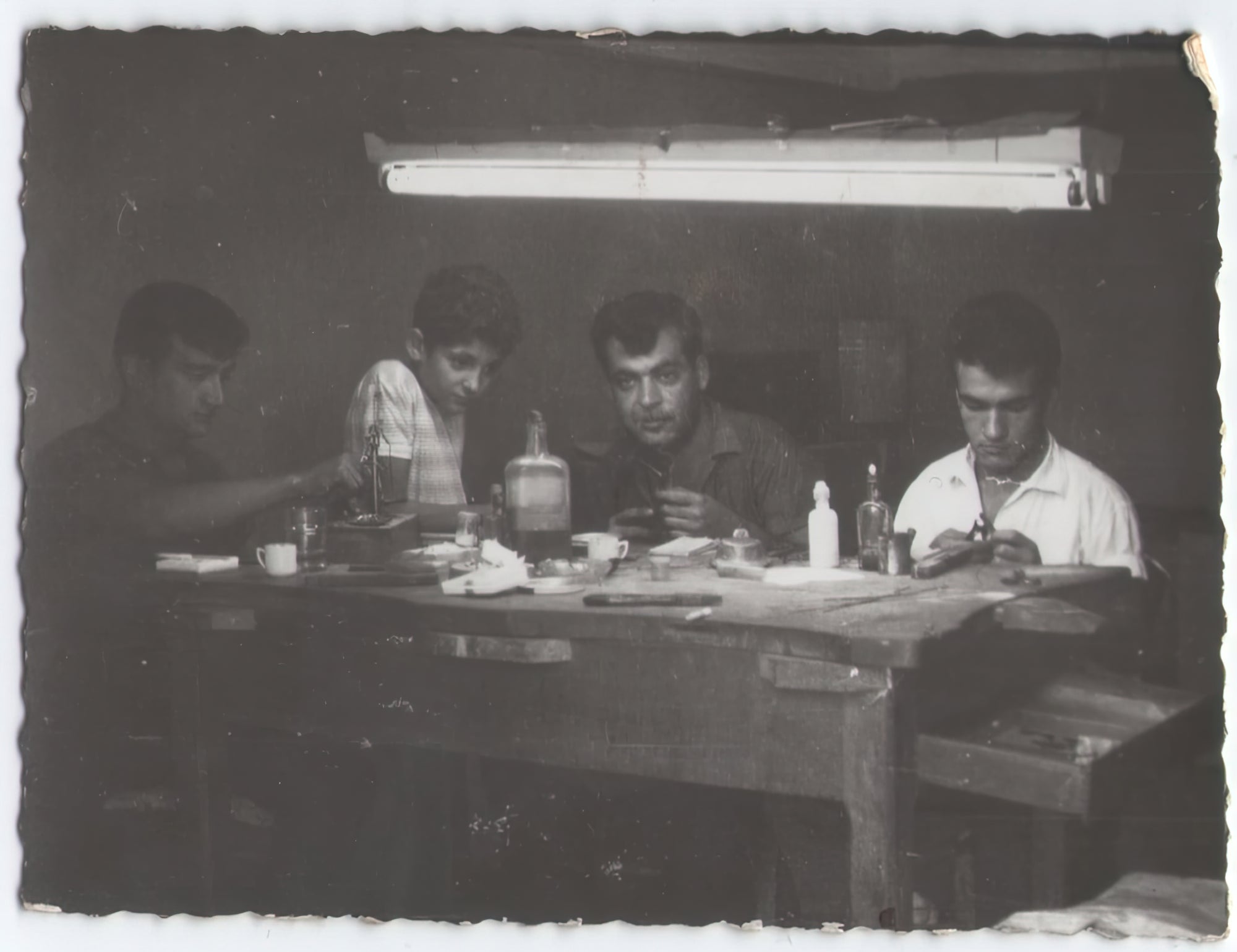

















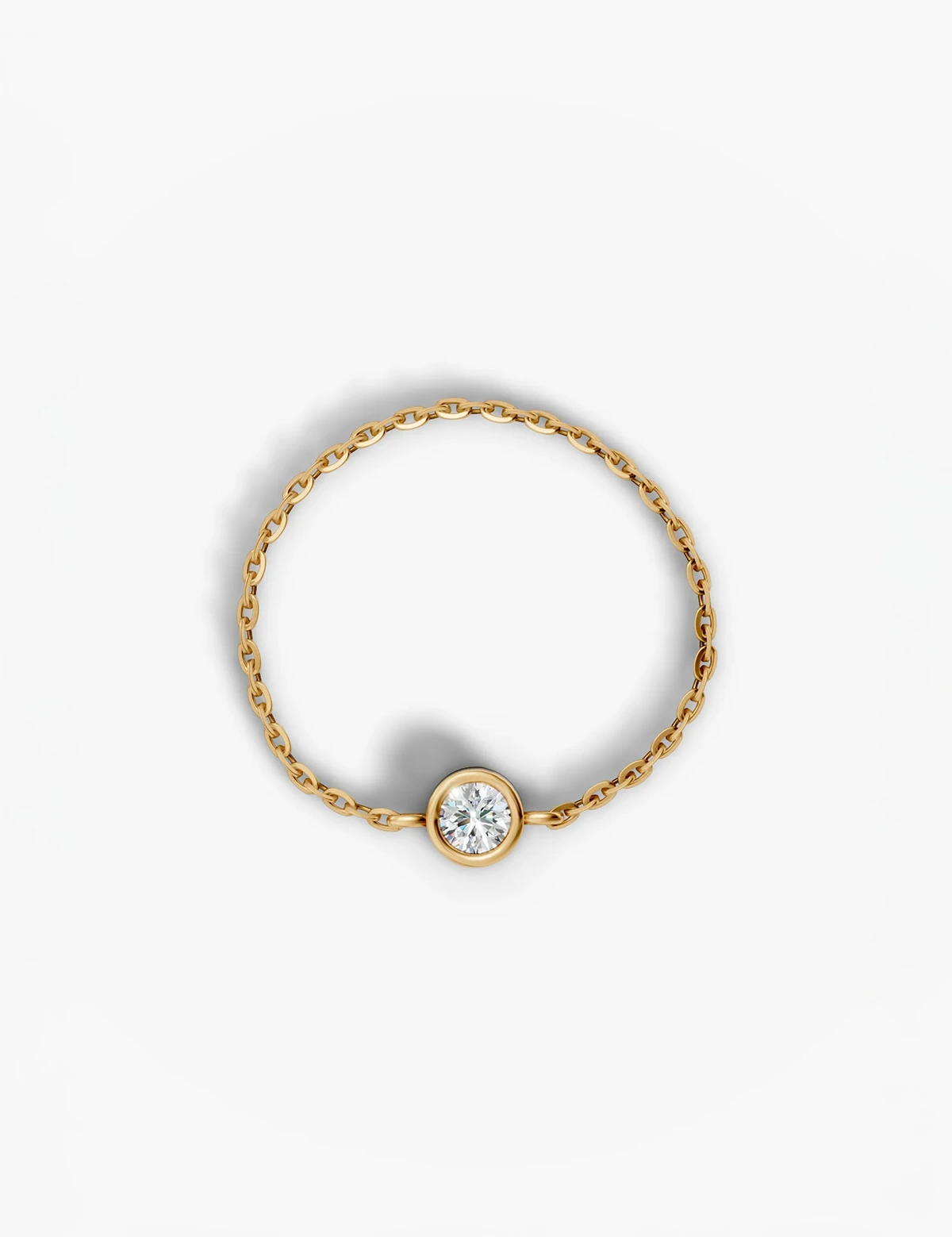
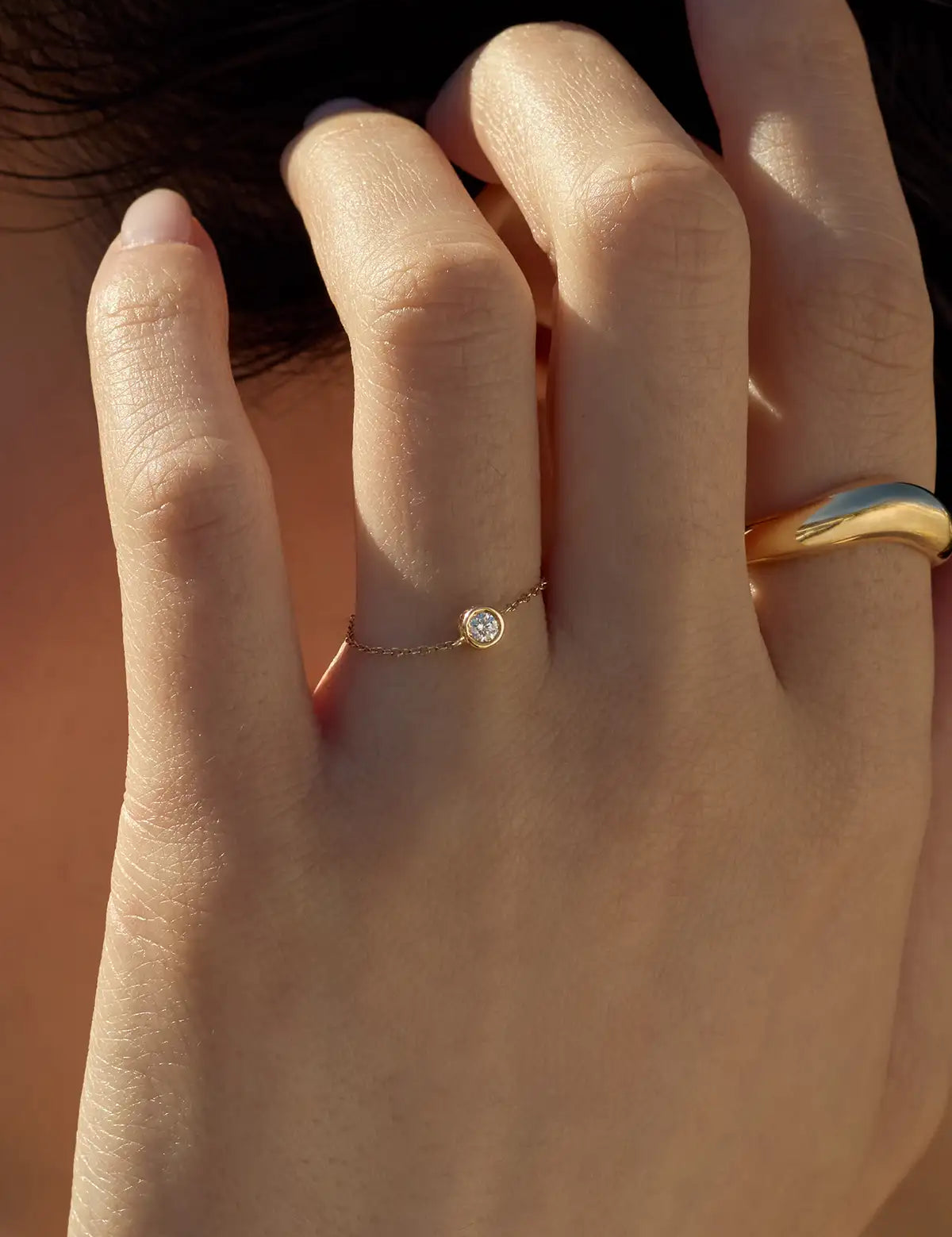
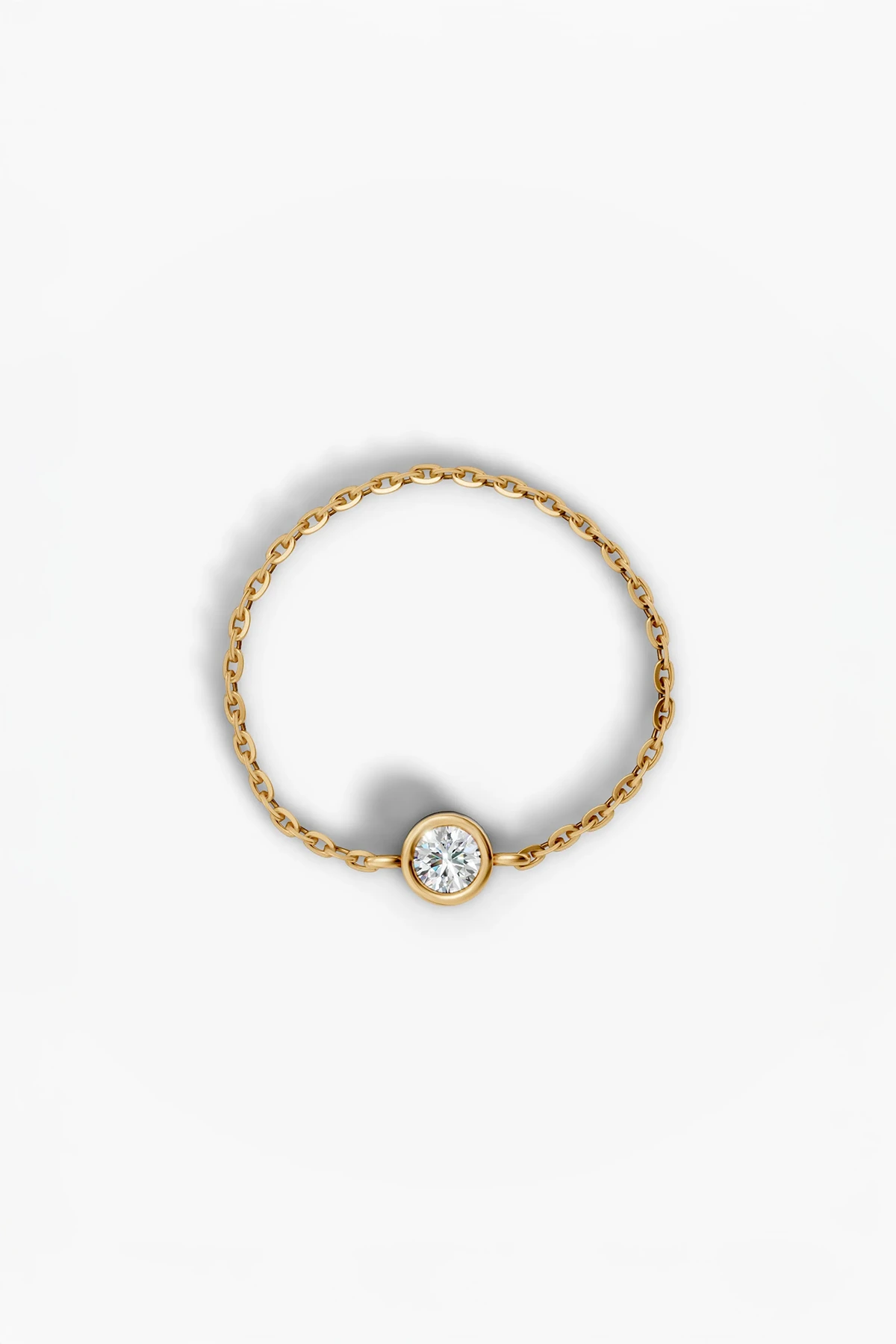
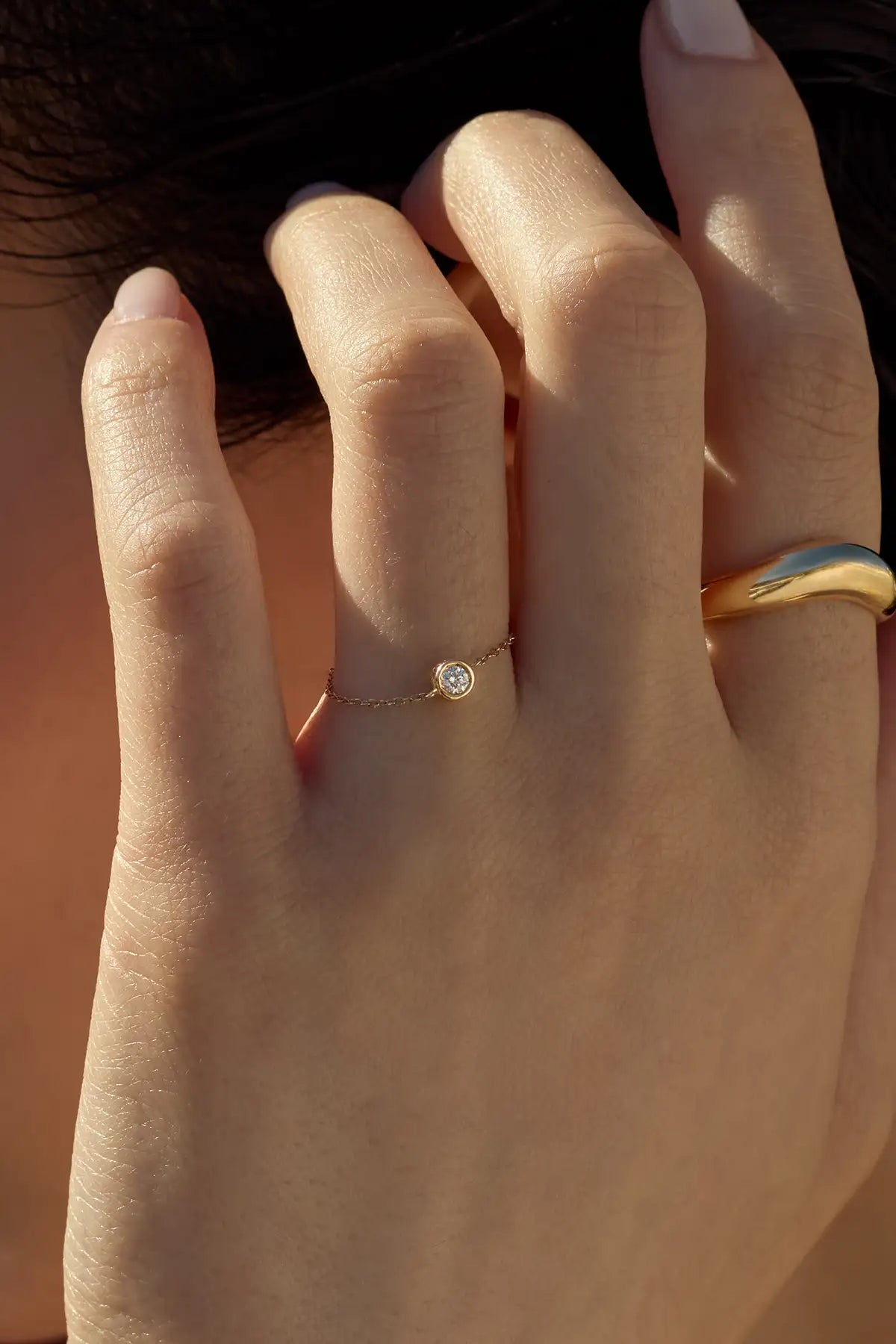




My grandfather taught me to draw gold wire by hand. He did it the same way Egyptian goldsmiths did in 3000 BCE, just with a steel drawplate instead of a stone one. The wire that becomes a chain starts thick and passes through smaller and smaller holes in the plate until it reaches the diameter the design asks for. What I learned at that bench is that the alloy decides everything. Pull a soft alloy too fast and the wire thins unevenly. Pull a hard alloy and it resists you, but the chain it becomes keeps its shape for decades. 10k gold is the hardest alloy we work, and that hardness is the whole argument for it.

A 10k gold necklace is the piece I point to when someone tells me the necklace will never come off. Not for dinners, not for sleep, not for the gym, not for the shower. This guide covers what 10k actually is, how it behaves against the skin, and the necklace styles we make in it at our Athens workshop, from a plain chain to diamonds spaced down the full length. Everything described here comes from our 10k gold necklaces collection, made in the same rooms where my family has worked gold since 1953.
What 10k means at the bench
Karat is a fraction. Pure gold is 24 karat, so 10k gold is 10 parts gold out of 24, which comes to 41.7% pure gold. The remaining 58.3% is an alloy of silver, copper, and zinc. Those are not filler metals. They are structural. Pure gold is soft enough to scratch with a fingernail; a pure gold chain would stretch under its own pendant within a year. The alloy metals brace the gold, and the more of them in the mix, the harder the finished metal.
This is why 10k is the most durable karat legally sold as gold in the United States. It resists scratching, holds a polish longer, and keeps the shape of its links under tension better than 14k or 18k. When a customer asks me which karat survives a toddler's grip on a pendant, the answer is 10k. When they ask which chain can be worn through years of daily clasping and unclasping without the jump rings deforming, the answer is the same.
The color runs slightly paler than 14k. Less gold in the mix means the yellow reads a touch cooler and quieter. Some customers prefer it for exactly that reason; it sits closer to the skin tone and announces itself less. In photographs the difference is nearly invisible. On the body, side by side, you notice it the way you notice the difference between morning and afternoon light.
One thing 10k is not: plated. A plated necklace is base metal wearing a gold coat a few microns thick, and the coat wears through at the friction points within months. Every necklace in our workshop is solid alloy from clasp to clasp. Cut any link in half and the metal is the same color all the way through. That is the line that matters, solid versus coated, far more than the line between one karat and another.
How a 10k gold necklace behaves on the body
Solid 10k gold does not tarnish in any way that daily life produces. It shrugs off water, sweat, soap, and salt air. You can shower in it. You can swim in it, though chlorinated pools deserve a rinse afterward, less for the gold than for the brightness of any diamonds on the chain. It does not turn skin green; that reaction comes from copper leaching out of plated brass, and there is no exposed brass here to leach.
Weight is where 10k surprises people. Because the alloy metals are lighter than gold, a 10k chain weighs slightly less than the identical chain in 14k. On a fine chain the difference is a fraction of a gram, imperceptible. What you do feel is the stiffness. A 10k chain has a little more spring in the hand, and that spring is what keeps fine links from kinking when the necklace tangles in a bag or under a collar. Untangle it, run it through your fingers, and it lies flat again.
Skin sensitivity deserves a plain answer. The alloy in 10k contains more copper and silver than the alloy in higher karats, and a very small number of people react to copper contact over long periods. It is uncommon. Most people who believe they are allergic to gold jewelry are reacting to nickel in plated pieces, not to a solid gold alloy. If your skin has been fine with solid gold before, 10k will not change that.
Care is almost nothing. Warm water, a drop of dish soap, a soft brush behind any stones, twice a year or whenever the diamonds look tired. The chain itself asks even less; the daily friction of wear keeps solid gold brighter than storage ever will. A necklace that lives in a drawer dulls faster than one that lives on a neck, which says most of what needs saying about how these pieces are meant to be treated.
The styles, piece by piece
A karat is not a style. Once you decide on 10k, the real decision begins: what kind of necklace it will be. These are the forms we make, and what each one does on the body.
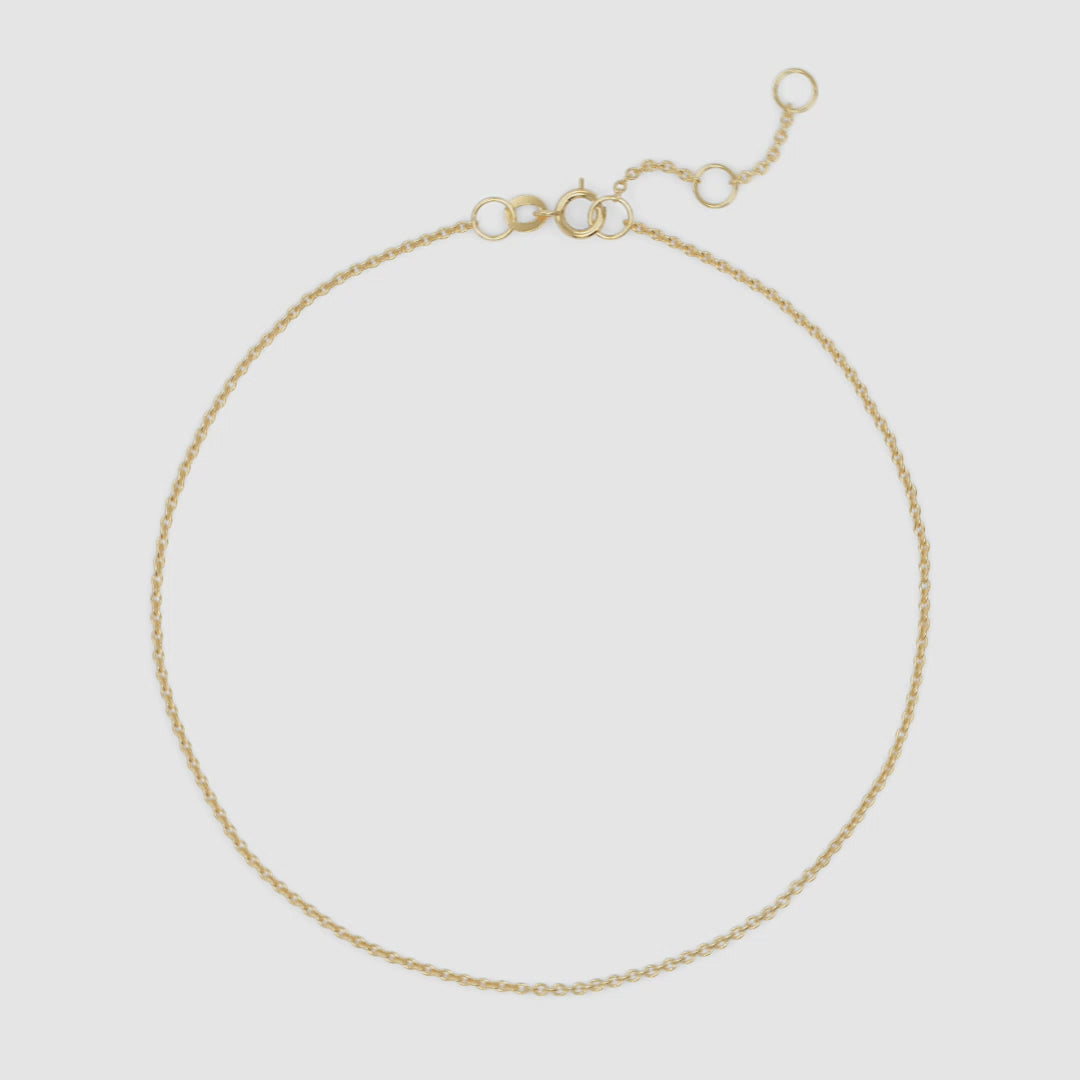
The plain chain. The foundation of everything. Our Fine Cable Chain in 10k gold is the piece I hand to someone buying their first solid gold necklace. Round links, each soldered closed, in a profile fine enough to disappear under a shirt and strong enough to carry a pendant later. A plain chain in 10k is the necklace most likely to still be on its owner's neck in thirty years, because there is nothing on it to date it and nothing about it that wears out.

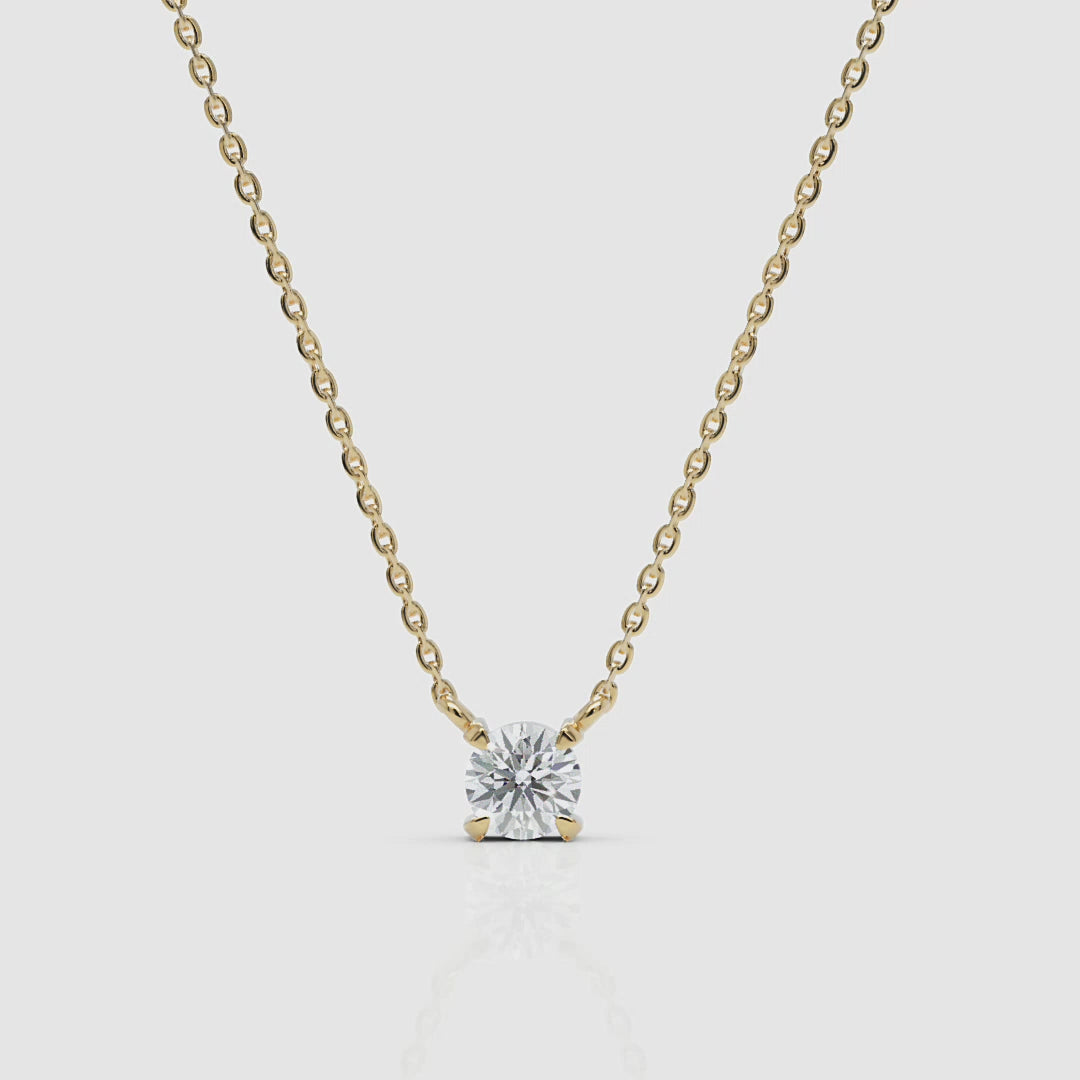
The solitaire. One diamond, centered at the collarbone. The Éclat Petite Diamond Solitaire in 10k gold is the smaller of ours, a single prong set stone that reads as a point of light. The Éclat Grand Diamond Solitaire carries a larger stone for those who want the diamond seen across a room rather than across a table. The whole category, in every karat and setting we make, lives in our diamond solitaire necklaces collection.
The bezel. Instead of prongs lifting the stone, a ring of gold surrounds it. The Éclat Diamond Bezel Necklace in 10k gold is the version I recommend for the roughest daily wear, because the bezel shields the diamond's girdle from knocks and never catches on knitwear. A bezel in 10k gold is the most protective combination we sell: the hardest karat around the most guarded setting.
The choker. Shorter, sitting high on the neck. The Alinéa Diamond Choker in 10k gold places a single bezel set diamond on a chain that rests above the collarbone, where it stays visible with every neckline. Chokers take more friction than longer chains, from collars, scarves, and hair, which makes the harder karat a practical choice rather than a stylistic one.
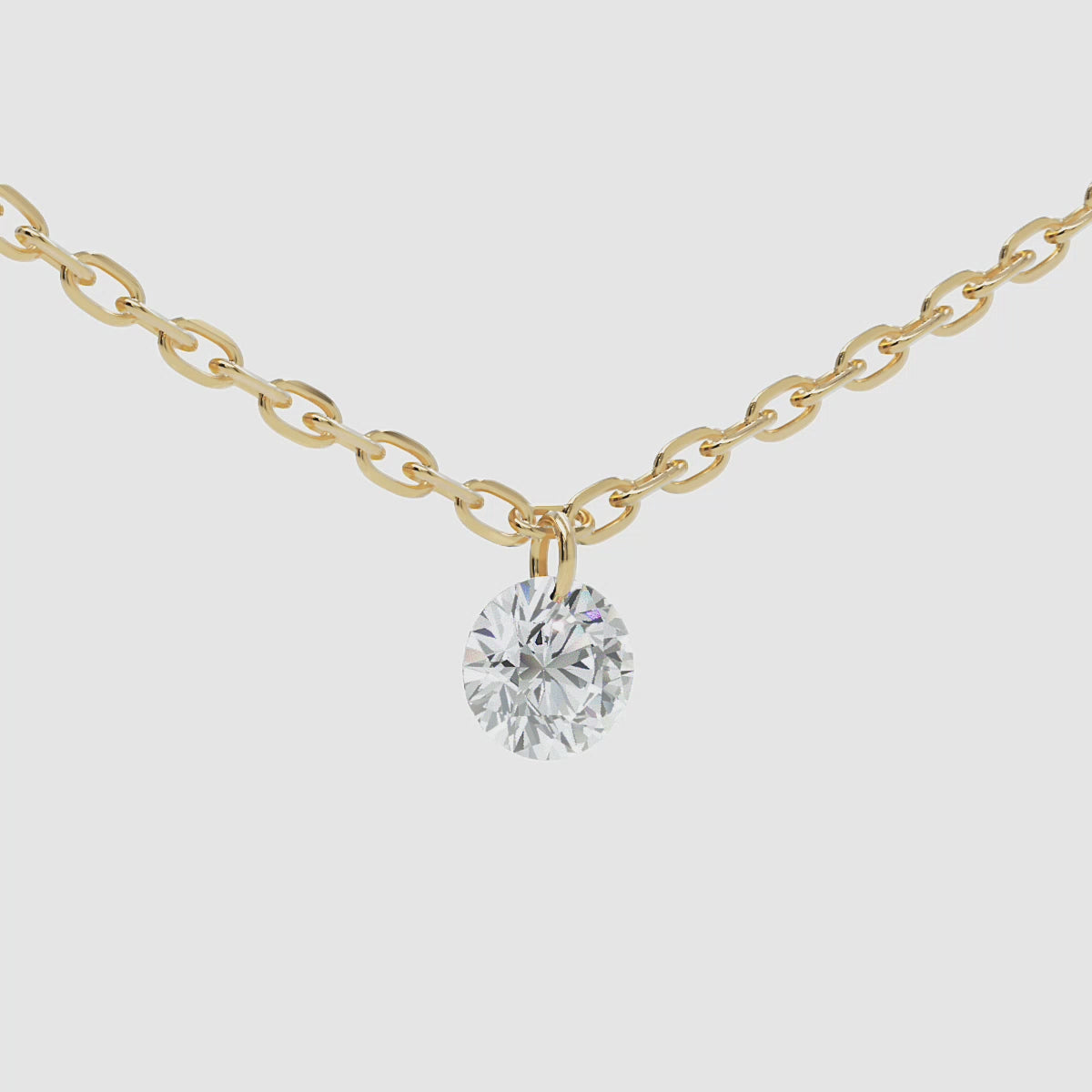
Diamonds by the yard. Stones spaced at intervals down the chain, so the light comes from several points instead of one. The Alinéa Diamond By The Yard in 10k gold sets its diamonds in prongs; the Núde Diamond By The Yard in 10k gold drills through the stones themselves so they sit on the chain with no visible metal at all. The spacing format has its own deep tradition, and its own station necklaces collection, where the intervals between stones are the design.
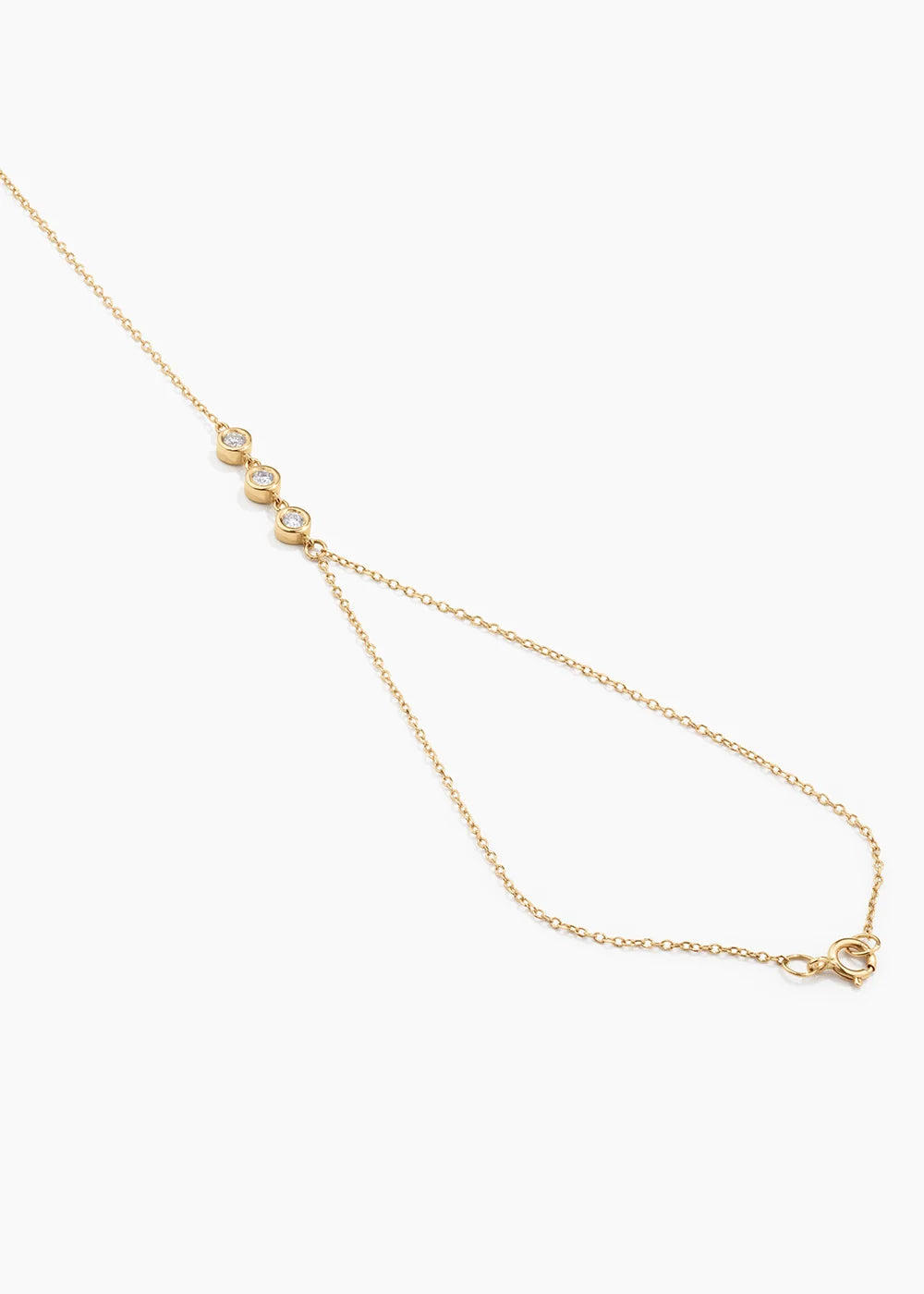
The trio and the bar. Between one stone and many sit the clustered forms. The Trio Diamond Necklace in 10k gold groups three prong set stones at the center, a form customers often choose to mark three of something: children, decades, anniversaries. The Curved Bar Diamond Necklace in 10k gold lines its diamonds along a single arc that follows the collarbone, reading as one continuous stroke of light rather than separate stones.
The lariat. A chain that drops below its own line, drawing the eye downward. The Nema Diamond Lariat Y Necklace in 10k gold hangs two bezel set diamonds on a vertical drop. It is the most deliberate of the styles here, the one that reads as a choice rather than a habit, and it pairs with open necklines in a way no horizontal chain can.
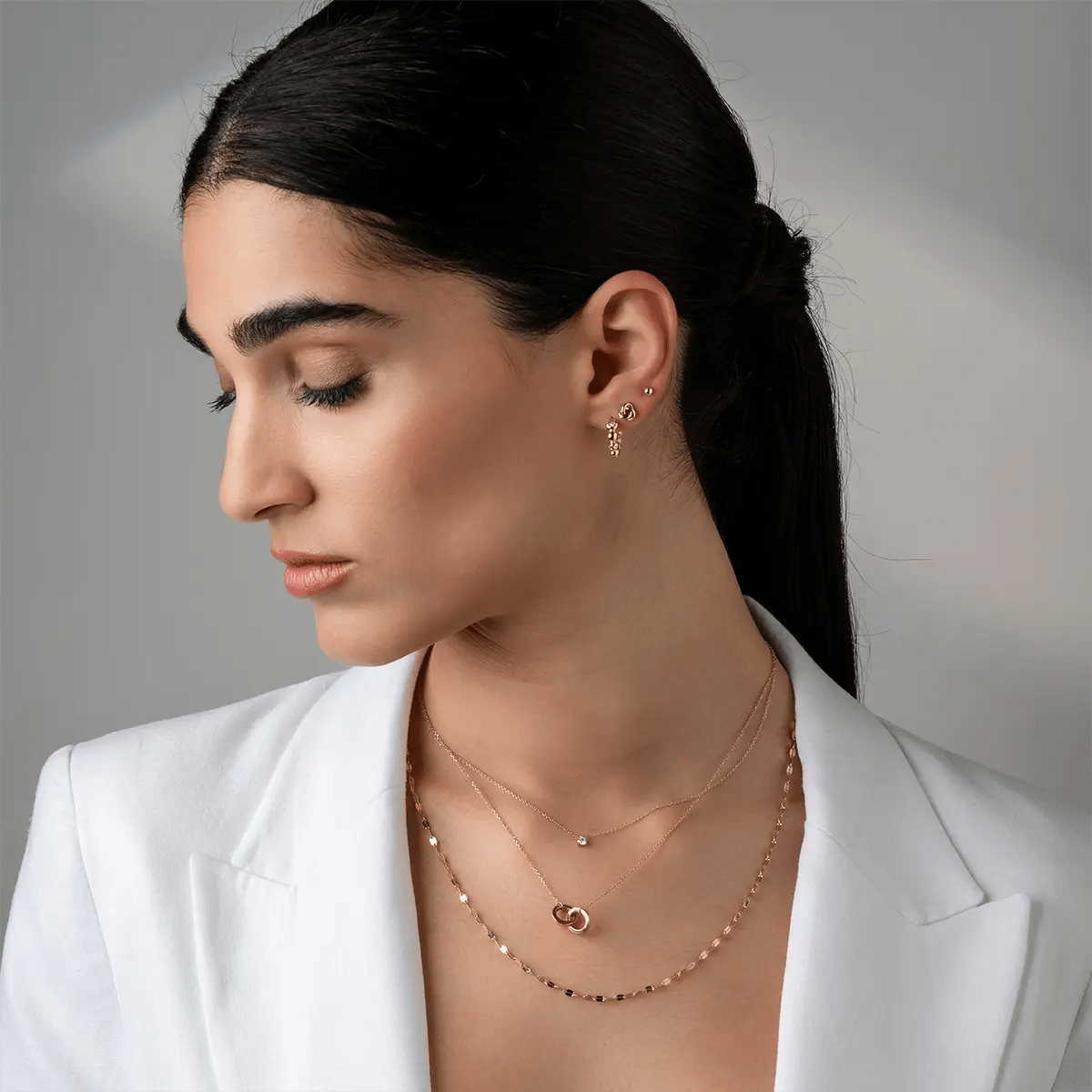
The layered piece. Two chains, one clasp. The Dyo Double Chain Layered Necklace in 10k gold gives the stacked look without the daily negotiation of two separate necklaces finding each other's clasps. For building a stack from separate pieces instead, the finer chains in our dainty gold necklaces collection are the natural companions; most of those designs come in 10k as well as 14k.
10k or 14k
The real comparison is short. 14k contains 58.3% gold to 10k's 41.7%, so 14k is warmer in color and slightly softer in the hand. 10k is harder, more scratch resistant, and less expensive per gram of finished necklace, because less of its weight is gold. Neither is the better metal. They are different answers to the question of how the necklace will live.
Two pieces stamped 14k can feel different on the skin. One can feel warmer, softer, and heavier on the same gram weight. That is because the portion that is not gold is alloy, and the alloy recipe varies between workshops. Our mix carries more silver than copper, which is why our gold reads slightly cooler in color than mass market gold of the same karat. The same is true of 10k. The stamp tells you the gold content; the workshop's alloy decides the character. It is one of the reasons two necklaces with identical hallmarks can age differently, and one of the reasons we mix our own.
My working rule after years at the bench: if the necklace will be worn several times a week and treated gently, 14k rewards you with its warmth. If it will be worn every single day and treated as part of the body, 10k is the engineering answer. The full range of both karats, across necklaces, bracelets, rings, and earrings, is in our 10k gold jewelry collection and our broader gold necklaces collection.

What a 10k gold necklace costs, and why
Because 10k carries less gold per gram, a 10k necklace costs meaningfully less than the same design in 14k. Our Fine Cable Chain is $158 in 10k against $208 in 14k. The Alinéa Diamond Choker is $258 in 10k, $308 in 14k. The difference is the metal, nothing else: same hands, same bench, same diamonds, same soldered links, same finishing. We price the karat difference at the cost of the gold itself.
What you are not paying for, in either karat, is plating that will need redoing, or a hollow chain that will dent and cannot be repaired. A solid 10k gold necklace is the lowest entry point into jewelry that behaves like an asset instead of an expense. It holds metal value, it survives daily wear, and when the day comes to pass it on, it is the same necklace it was on the first morning.
Length, and how the necklace falls
Length decides where the necklace lives on the body, and it matters more than most buyers expect. At 16 inches a chain rests at the base of the neck; at 18 it falls to the collarbone, which is where most of our pendants are designed to sit; at 20 it drops below, onto fabric rather than skin. The right length depends on the neck, the neckline, and what else is worn, which is why nearly every necklace we make is offered in more than one. When a piece will be layered, leave two inches between chains; it is the smallest interval that keeps them from finding each other and knotting.
A note on chain and pendant balance. A heavy pendant on a fine chain rotates to the back of the neck over a day; the clasp migrates forward. The fix is not a thicker chain but a properly weighted one, matched at the bench to the pendant it carries. Every pendant necklace in the 10k collection ships on the chain profile we tested it with. It is a small decision, invisible on a product page, that decides whether the diamond faces forward at 6pm.
Made to be worn out
The case for 10k gold is the case for jewelry that participates in a life instead of observing it from a drawer. The hardest karat, in a soldered solid chain, with settings chosen for protection, produces a necklace that can be worn with a wet head at 7am and forgotten until it catches the light at dinner. That is the standard the whole collection is built to.
We repair every piece we make. Forever. Send it back twenty years from now with a broken link or a worn clasp and we fix it. That is not a marketing promise. It is how my grandfather operated, how my father operated, and how my brother and I operate now. A piece worth making is a piece worth keeping alive. Start with the chain, or start with a diamond; either way, a 10k gold necklace from this workshop is built to outlast the reasons you bought it.