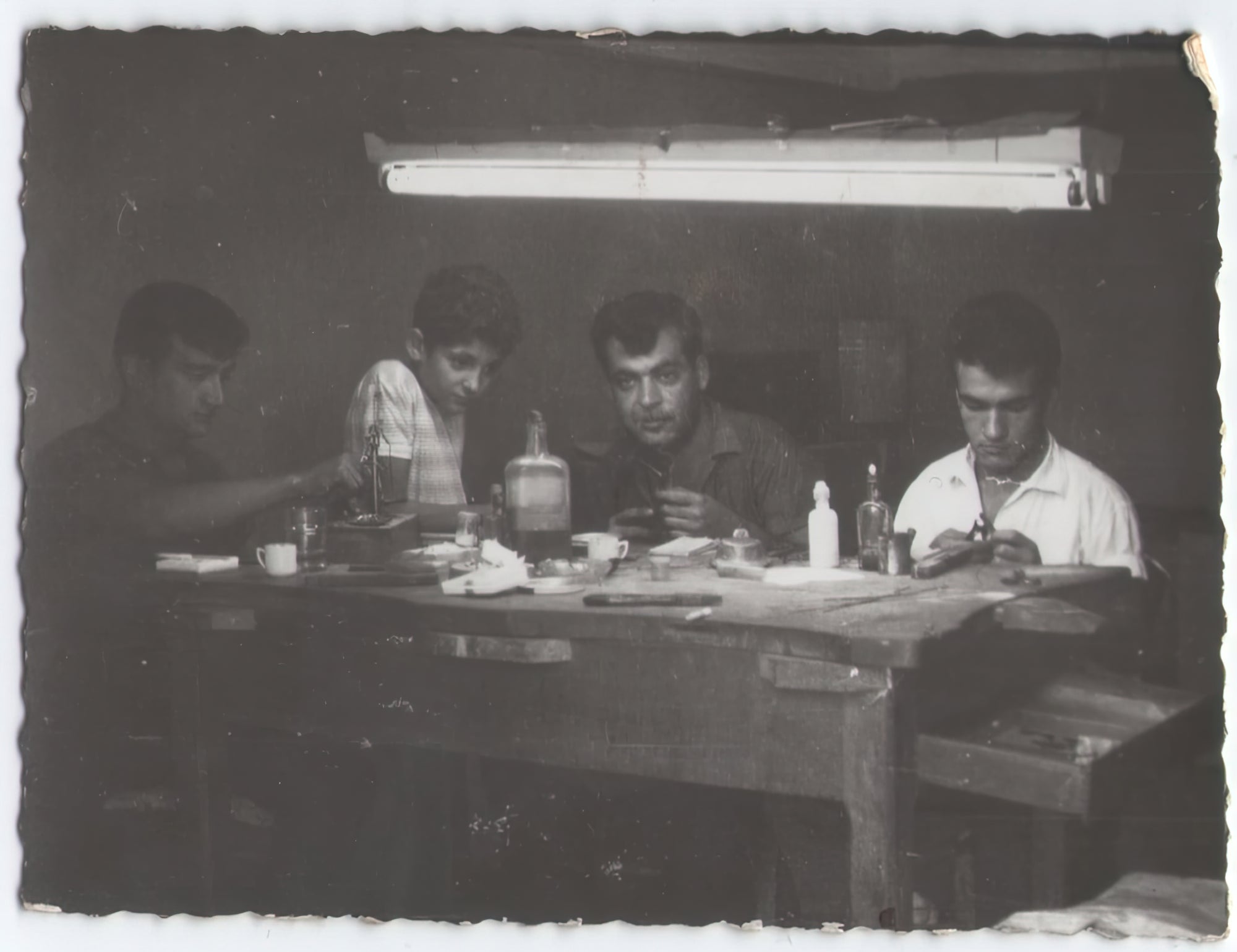












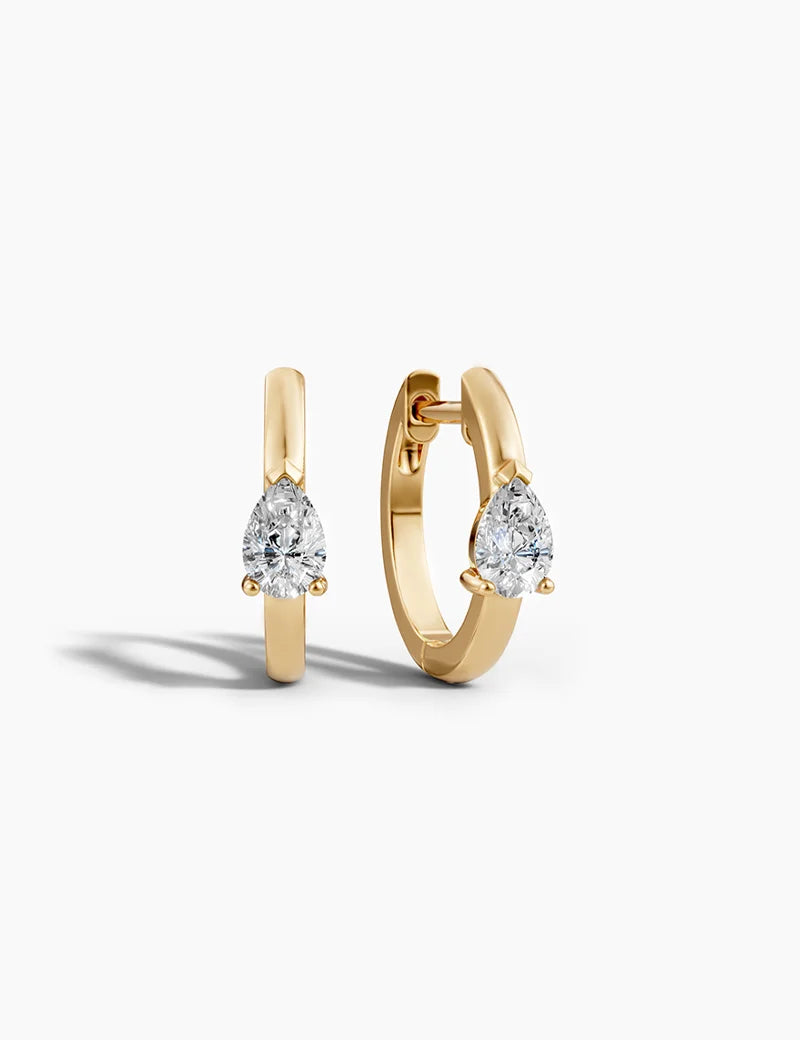


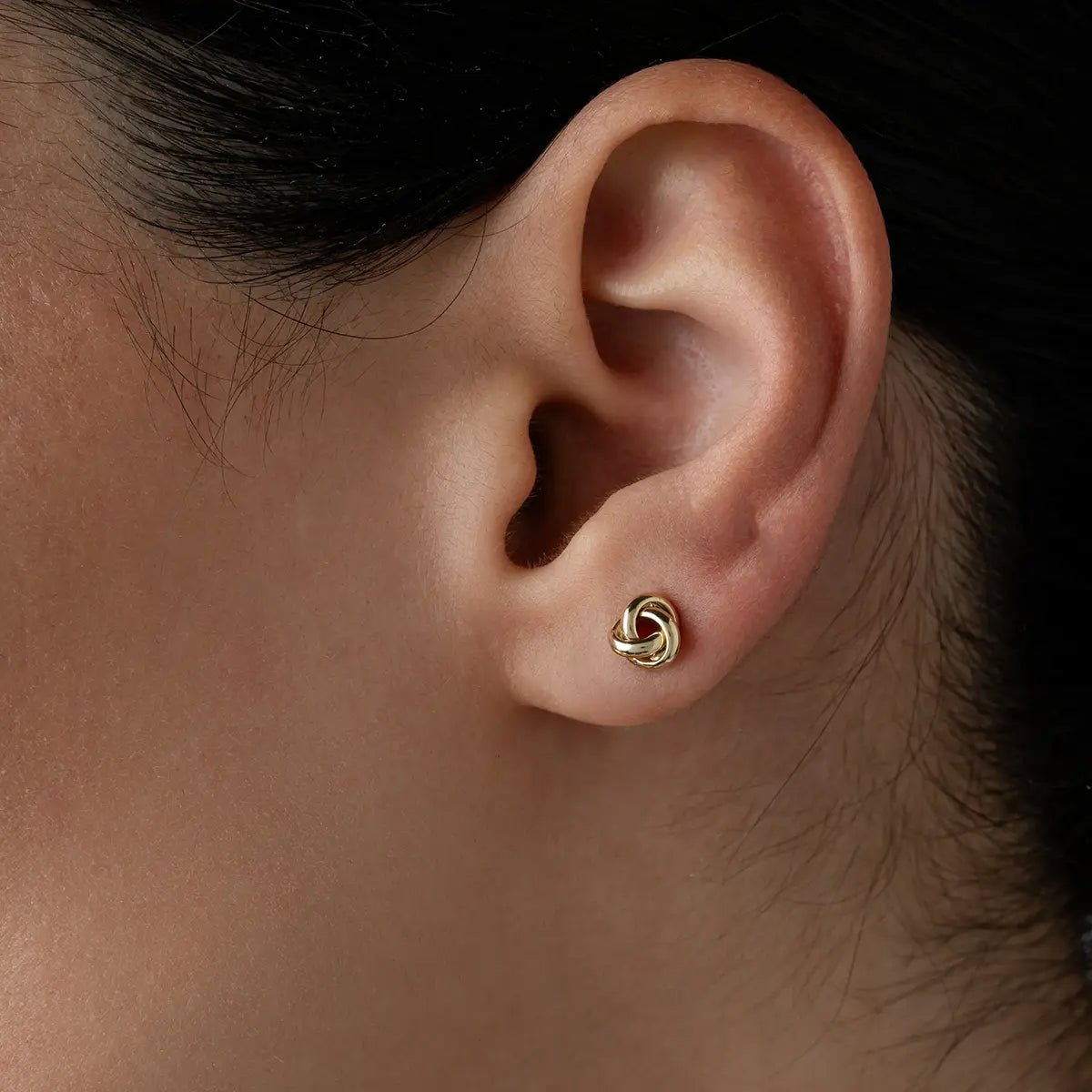
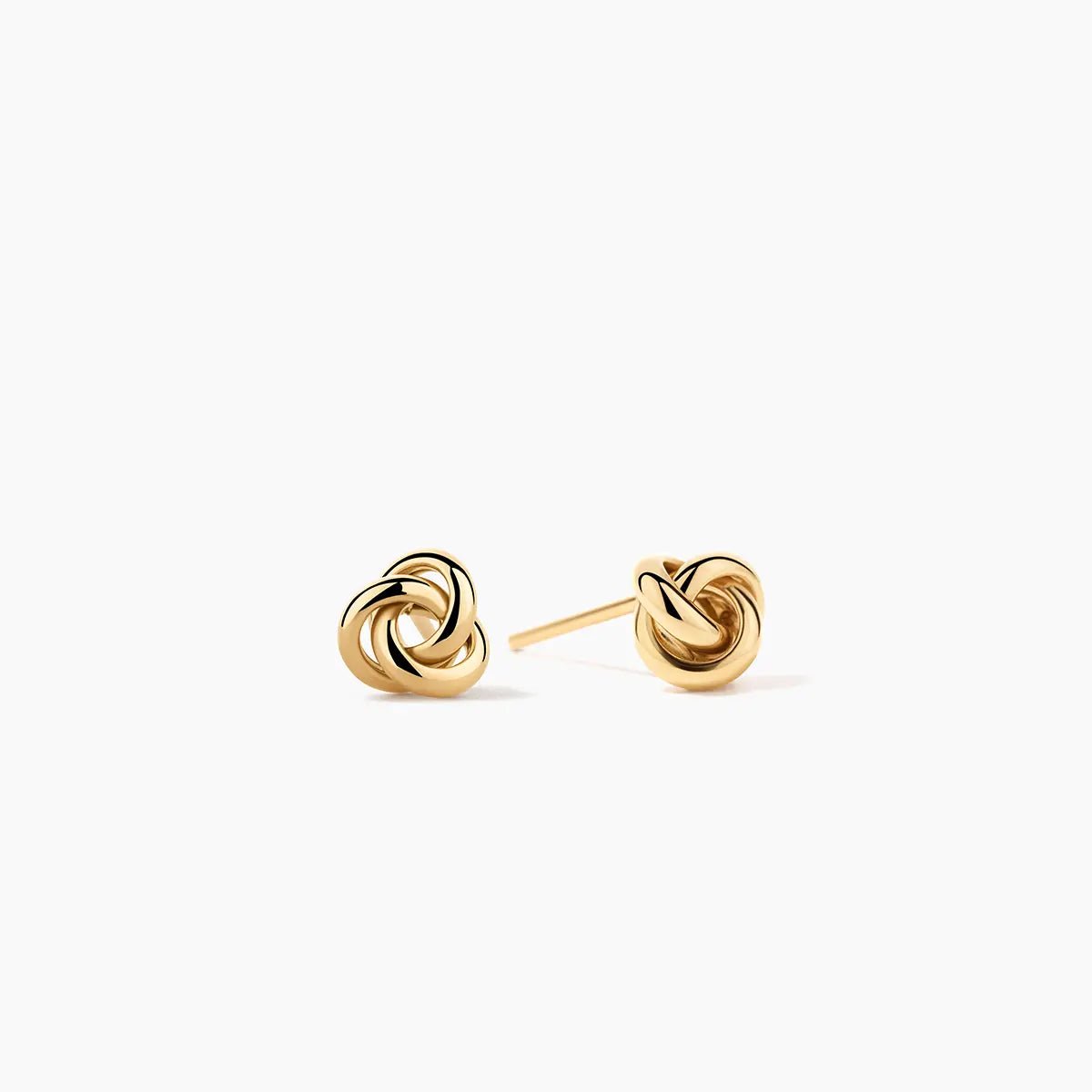
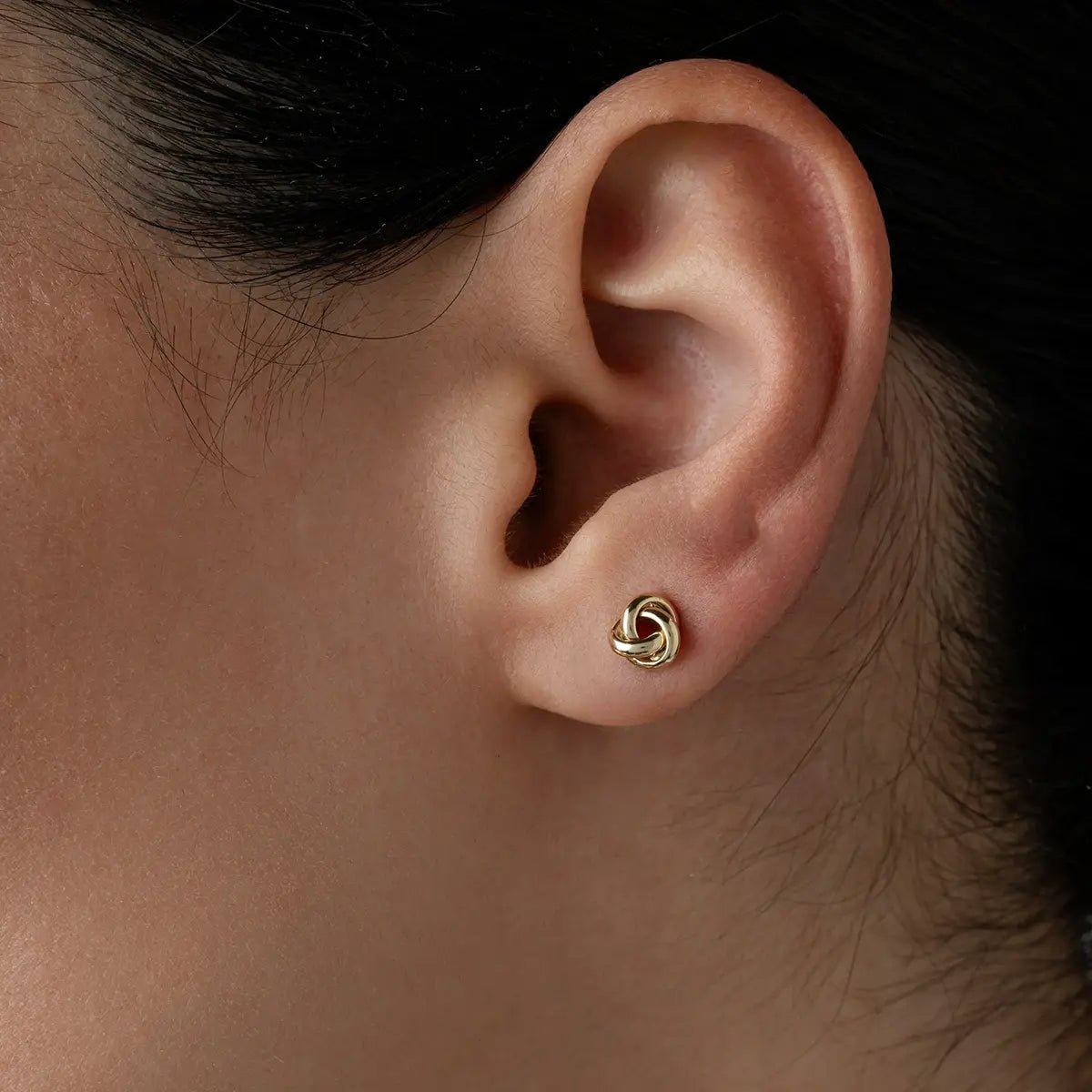




It is August in New Jersey, and on the table in front of me is a parcel that left our Athens workshop earlier this week: the finished pairs, each in its paper sleeve, waiting for the last check they get before reaching the women who ordered them. I live between the two places now. My brother keeps the benches running in Athens; I open every hinge one more time on this side of the ocean, because a piece is not finished when it is made, it is finished when it is checked. The earring in my hand this morning is one of the smallest things we produce, a hoop of 14k gold twelve millimeters across, drawn from wire not much thicker than a matchstick. People assume small hoops are the simplest earring in the case. I held that assumption too, at fourteen, until my father handed me a mandrel and a length of wire and let me discover otherwise over the course of an afternoon. At this scale nothing forgives. The gauge of the wire, the trueness of the circle, the closure, the weight of one earring against its twin: every choice is visible, because there is nowhere on a circle the size of a fingernail for a mistake to hide.
Customers write to us asking for "small gold hoops" and they mean, without knowing it, two different earrings. Some want a true small hoop, an open circle that hangs from the piercing and moves when she moves. Others are describing a huggie, a hinged band that closes around the lobe itself and does not move at all. The two styles sit side by side in our small gold hoop earrings collection and photograph almost identically. On the ear they part ways completely. Most guides never explain the difference. It is the whole decision.
What counts as a small hoop
In this workshop, small means ten to twenty millimeters across. Below ten the earring stops reading as a hoop at all and becomes a ring around the lobe, which is huggie territory, a different mechanism and a different chapter of this guide. Above twenty it starts to swing, catches light from across a room, and belongs with the statement sizes in the wider hoop earrings collection.
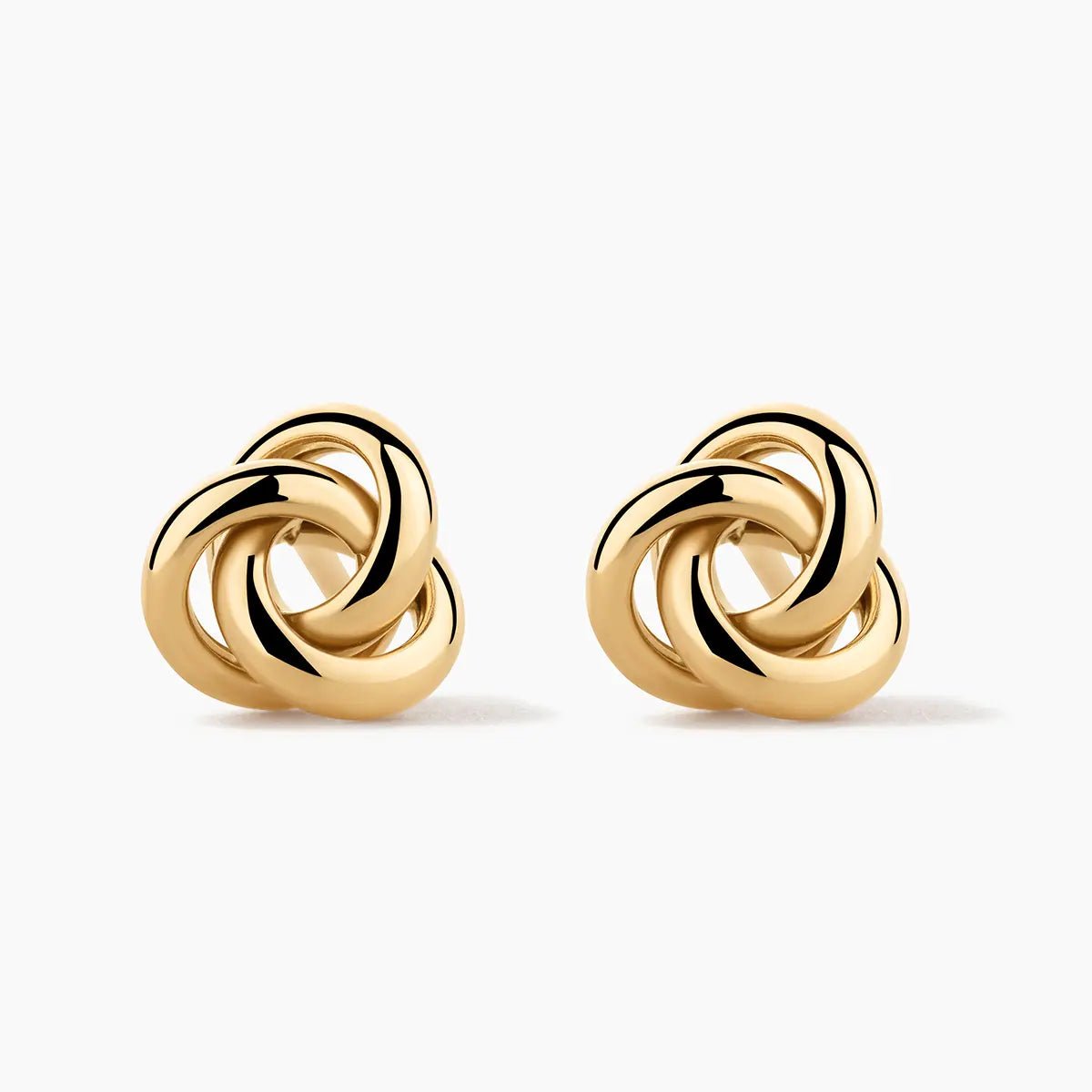
A true small hoop passes through the piercing on a post or a hinged wire and hangs with a little air between metal and skin. That air is the point of the style. The circle turns a few degrees as the head turns; light arrives in motion rather than in stillness. Our Mini Hoop Earrings are the plainest version of the idea, one clean circle of solid gold with nothing on it, and I would argue the hardest to make well for exactly that reason. The Classic Tube Hoop in the medium size works the upper end of the range with a rounded tube profile that reads fuller on the ear while keeping the weight where a daily pair needs it to be.
Weight is where small hoops are won or lost. Too heavy, and over years the piercing stretches into an oval; I have repaired enough inherited earrings to know what three decades of an overweight hoop does to a lobe. Too light and the earring feels like a rumor, then bends the first time it meets a hairbrush. We draw our hoop wire through the plate to a gauge that holds its circle under daily handling, and before any pair leaves the bench both earrings go on the scale twice. If they differ by more than five hundredths of a gram, one goes back to the wheel. Nobody consciously registers a mismatch that small. The ear registers it anyway.
The huggie is its own animal
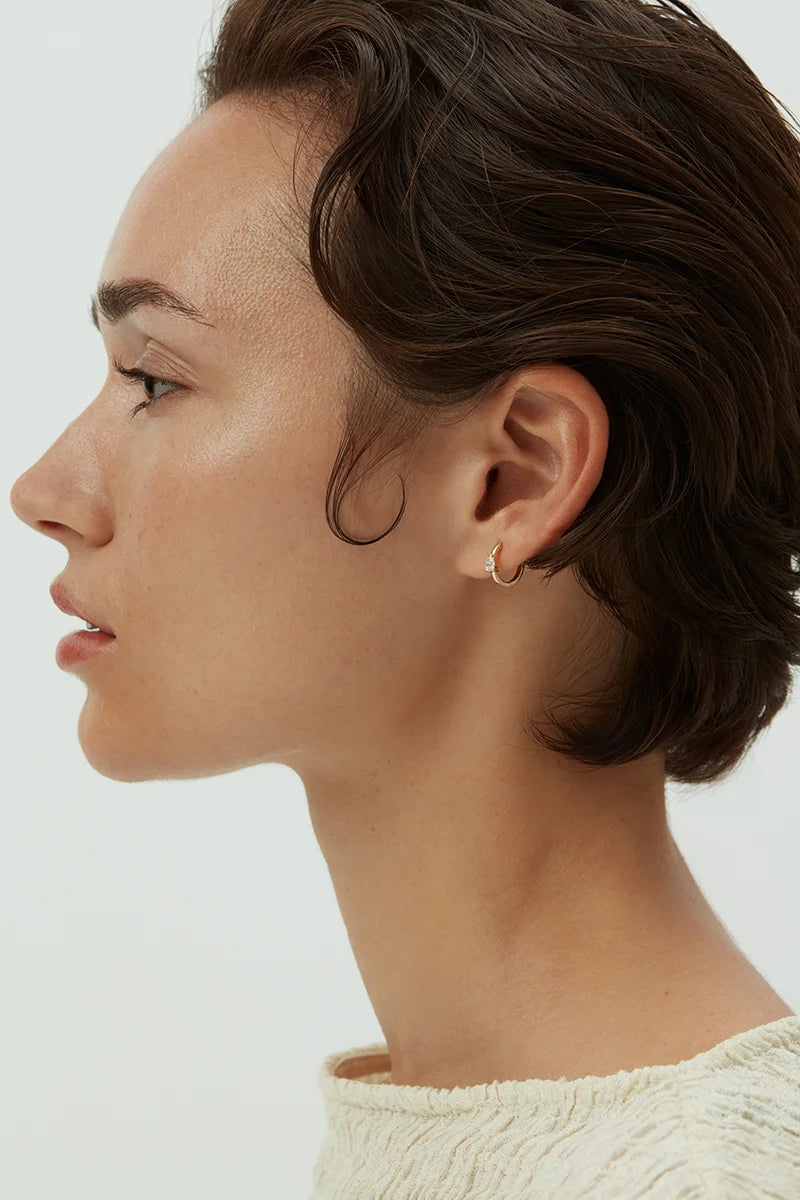
A huggie does not hang. It closes. The band follows the curve of the lobe and clicks shut around it, flush to the skin, and after that the ear simply reads as finished. Nothing swings when she runs. Nothing catches on a sweater collar or flips forward when a shirt comes off over the head. Our whole huggie earrings collection rests on that single promise, and I am fairly sure it is why the style has quietly overtaken the stud as the first earring our customers reach for in the morning.
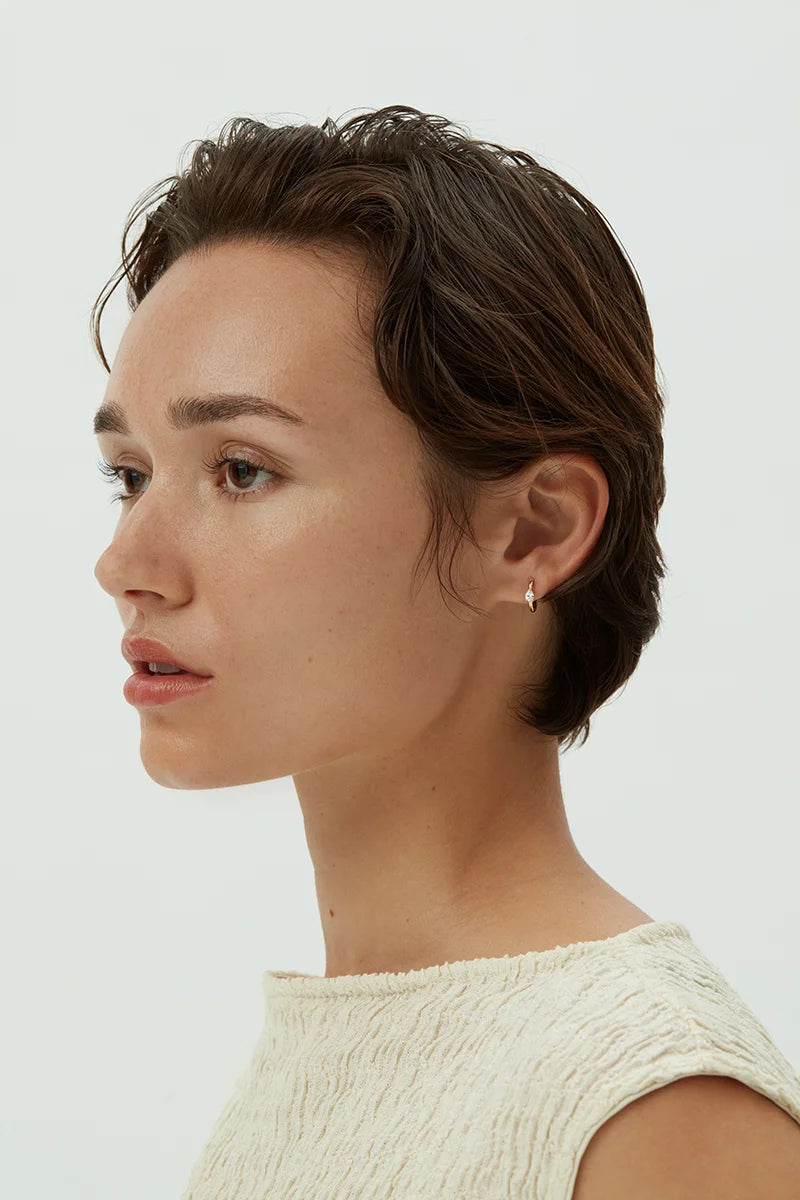
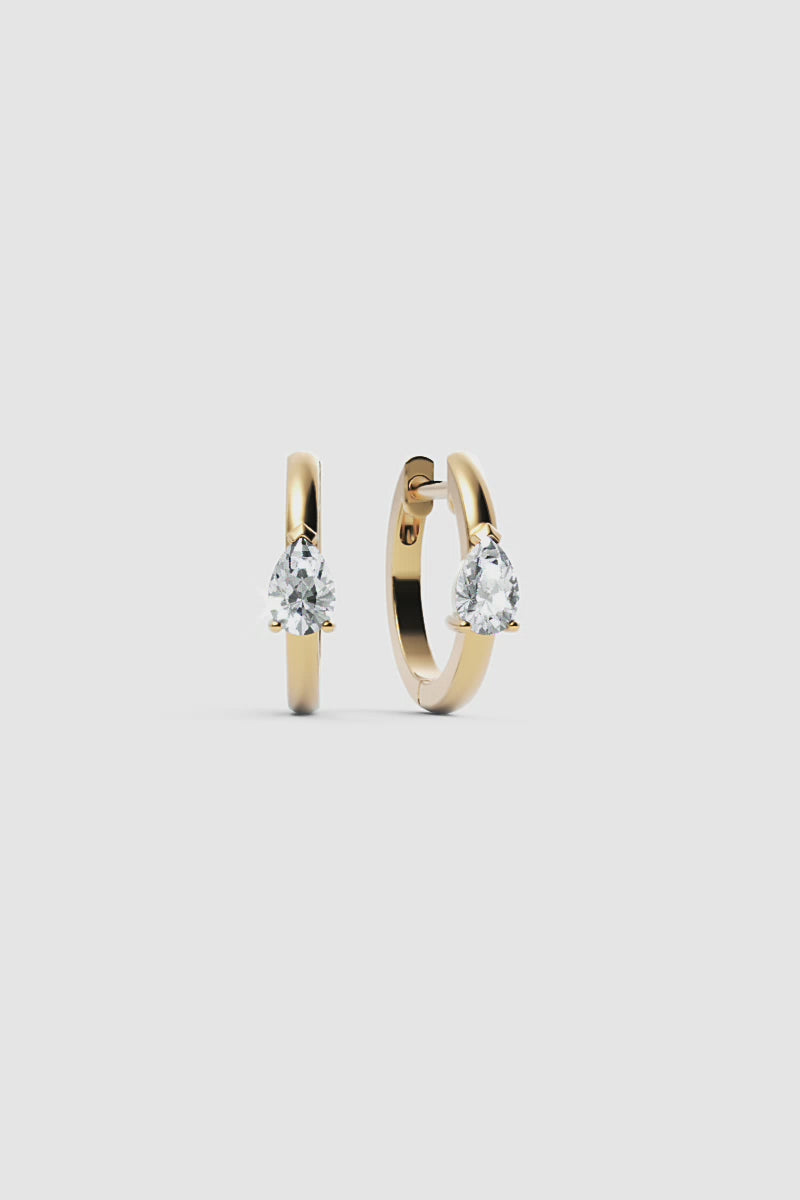
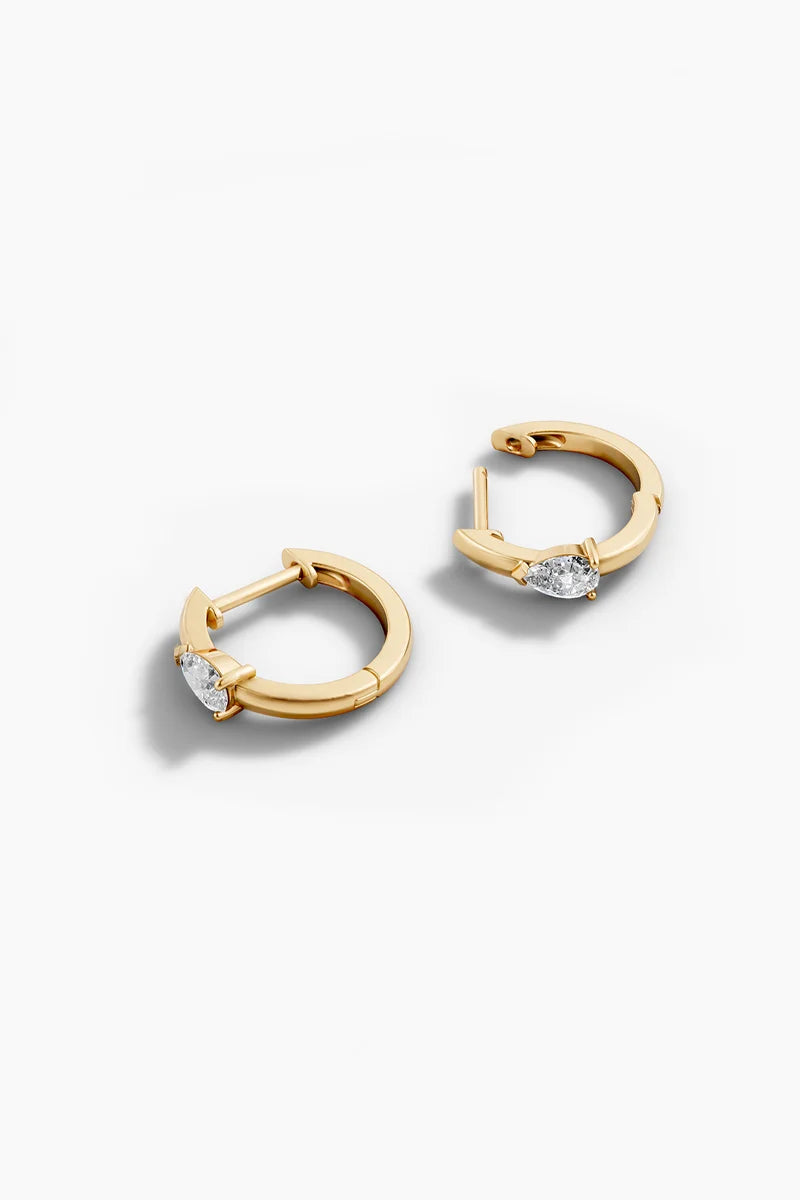
Because a huggie sits still, it carries diamonds differently than a hoop does. A moving hoop flashes. A huggie glows in place, which asks for stones set along the outer face of the band where they stay in the light instead of turning through it. The Diamond Pavé Huggie Earrings take that approach, a continuous line of stones down the face, each one seated by hand under the loupe. The Pear Diamond Huggie Hoops answer the same question the opposite way: the band stays flush and quiet while a single pear cut stone hangs below it and takes all the movement for itself.
Fit is the huggie's one constraint, and it is a real one. A band that closes around the lobe has to match that particular lobe. Thicker lobes want a wider inner diameter, or by evening the earring pinches. A thin lobe inside a wide band looks pierced by a washer. We make huggies in more than one inner diameter for this reason, and when a customer asks about them my first question is never which design she likes. It is how thick the lobe is that will wear it.
The hinge decides everything
Pick up a huggie, or any hinged hoop, and open it a few times before you buy it. My grandfather used to say the same thing about clasps on chains, that the part nobody looks at is the part that decides whether the piece survives, and forty years at this bench have not produced a counterexample. A hinge cut loose develops play within months. Play weakens the click. And a click that has gone soft is how an earring opens against a pillow at two in the morning and is simply gone.
We cut our hinges so the knuckles seat into each other with light friction and the catch shuts with a clean, audible click: a small resistance first, then a definite stop. A huggie that closes silently, or with a vague squeeze, is riding on hope. The Curved Diamond Pavé Huggie Earrings gave us more trouble here than I care to admit, because the curved profile takes the hinge and catch off a flat plane, and the geometry had to be solved at the bench across several failed attempts rather than excused by the design. They close now with the same click as the plain bands. That took most of a winter.
True small hoops without hinges use a click post instead, a straight post that snaps into a notch on the far side of the hoop. The Petite Stud Hoop Earrings carry this closure, which is why they can go in half asleep and stay put through a workday, a workout, and the night after. Good closures of either kind give the same feedback. Metal tells you when it is home.
How to choose between them
The mistake I see most often has nothing to do with style. It is sizing. A customer buys a pair because the hoops looked right on a flat product photo, but a photograph cannot say where the earring will sit on her own ear; lobes differ in length and thickness and in how close the piercing sits to the jaw, so a twelve millimeter hoop that kisses the jawline on one woman hangs well clear of it on another. Solid gold lasts forever. It only fits one body at a time.
So choose by the day you plan to have, not by the picture. If the earring must survive a toddler's fingers, a phone held with the shoulder, a helmet, a stethoscope, take the huggie, because flush metal gives the world nothing to grab. If it is meant to be seen moving, to throw light when she turns her head across a dinner table, take the true hoop and give it those few millimeters of air. Between the two sits the small diamond hoop, which hangs, but barely. The Diamond Accent Hoops Notes put one stone at the front of a slim circle, a single point of light. The Delicate Diamond Hoops line the whole curve, and outsell everything else on this page, which tells you something about how most women resolve the question.
If the pair is a first venture into solid gold, start plain. A plain small hoop or huggie in yellow gold goes with everything the wardrobe will ever hold, and it teaches the difference between solid and plated faster than any paragraph of mine: the weight is honest, the color never turns, and after a month of daily wear it looks the way it looked in the box. Stones can come with the second pair. Most customers who begin with one plain pair are back within the year, not because the first pair failed. Because it did not.
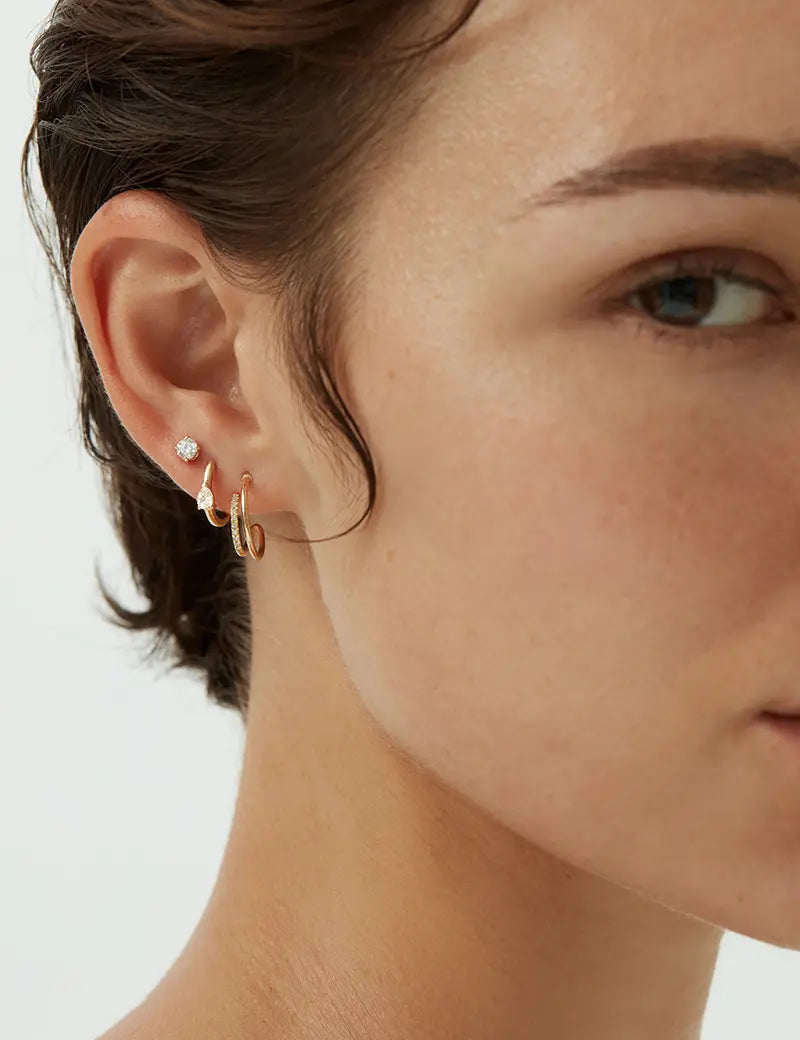
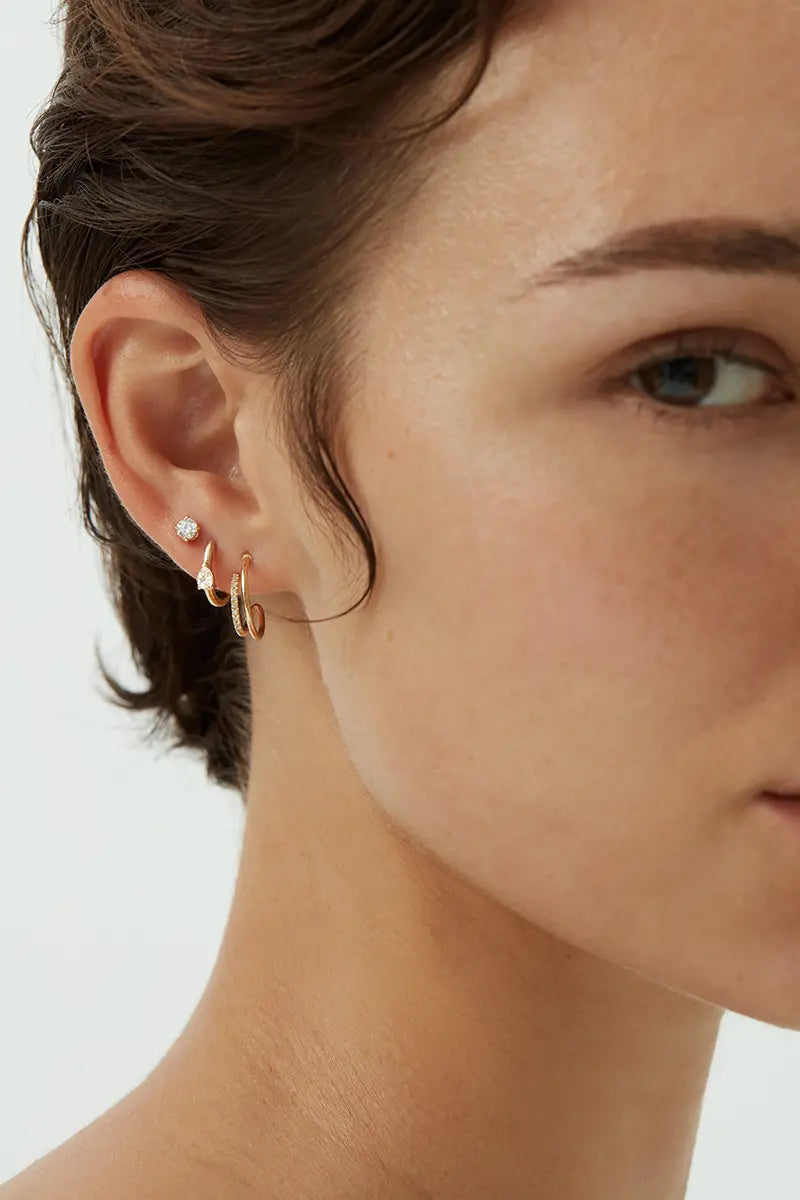
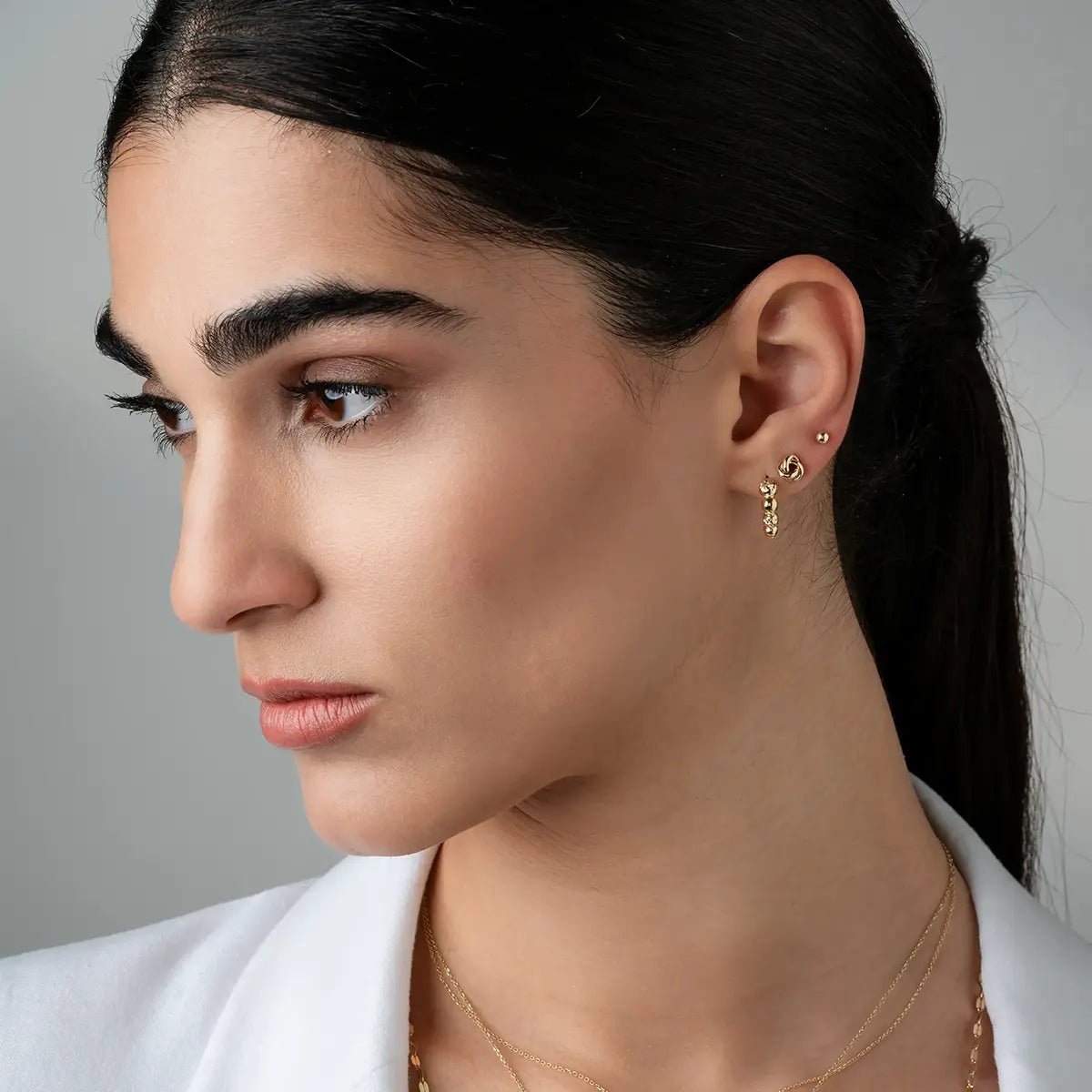
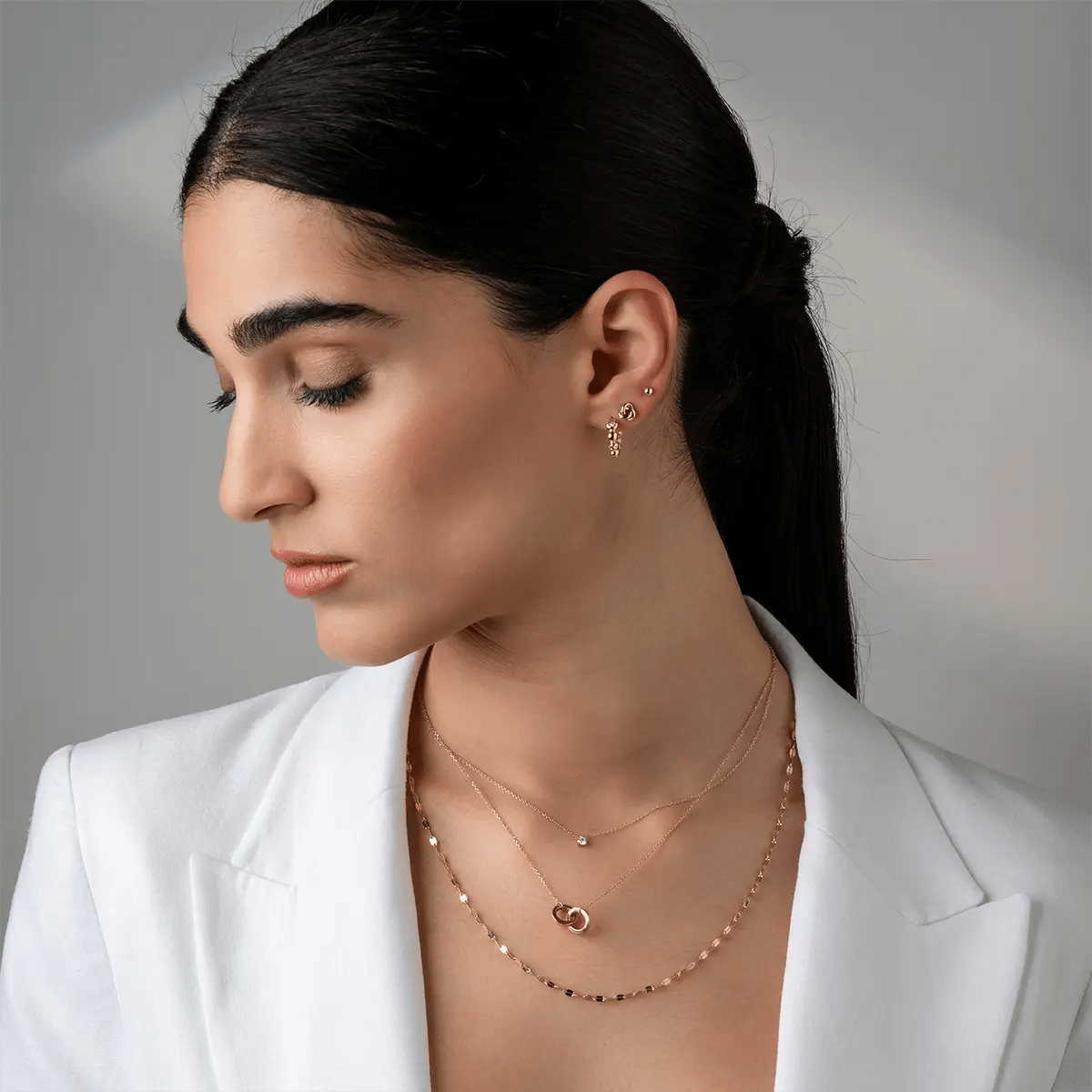
Second piercings simplify the choice considerably. The most reliable pairing we sell is a huggie in the first piercing with a smaller plain hoop or a stud above it; the huggie anchors the ear and the second earring adds the movement. Keep karat and color consistent and the stack reads as one thought. Mixed metals can be handsome. Mixed qualities never are, because plated brass sitting next to solid gold announces itself within the month, the moment the coating starts to go.
Diamonds on a small curve
Setting stones on a small hoop is close work, closer than setting the same stones on a ring. There is no flat surface anywhere on the piece, so each seat is cut into a curve, and each stone has to sit level while its neighbors fall away from it in two directions at once. My father taught me to set a stone by feel, pressure from the fingers rather than force from a machine, and I did not understand what that training was for until the first time I put six stones down a twelve millimeter curve and all six stayed level. That is the difference between a stone that sits for decades and one that leaves in the second year.
Done properly, the reward is an earring that behaves like lit jewelry rather than worn metal. The Núde Diamond Hoop Earrings suspend open set stones from the hoop so that light enters from behind as well as in front, a setting we build entirely by hand because no jig understands it. The Pavé Diamond Teardrop Hoop Earrings stretch the small hoop into a falling line of pavé. The Diamond Accent Hoops take a middle path, one bezel set stone riding a longer curve. All of it lives in the wider diamond earrings collection, and all of it is lab grown diamond in solid gold. Same crystal, same hardness, same fire as a mined stone. The origin differs and nothing else does.
One practical note on pavé at this scale, since nobody else seems to offer it. Stones along the outer face of a huggie sit exactly where the world touches them: towels, hat brims, the edge of a phone screen. Good pavé here means seats cut deep enough that the gold shoulders protect the girdles, which costs a little brilliance on paper and saves the stones in practice. Run a fingertip along a well set huggie and it feels smooth in both directions. If it feels like a zipper the stones are standing proud, and the first winter scarf will find them.
Wearing them every day
Both styles are made to be forgotten. Solid 14k gold does not tarnish and does not rub off at the post, and it does not leave the green ring that plated earrings leave once the coating wears through inside the piercing, which is the one place you cannot inspect. Shower in them. Sleep in them. Swim in them, wherever the summer puts you. Water does not change solid gold and time barely does. Everything in our 14k gold earrings collection is solid at the post and the catch as well as the face, because the post is where lesser earrings fail first, and the post is inside the body.
Sleeping is where the huggie and the click post hoop earn their keep; a flush fit and a positive catch leave nothing for the pillow to lever against. The Entwined Hoop Earrings, two crossing bands that read as one from the front, and the Kion Gold Hoop Earrings with their squared profile were both drawn for the woman who removes her earrings twice a year, not twice a day. Close them until they click and stop thinking about them.
Care amounts to almost nothing. Warm water, a drop of dish soap, a soft brush behind the stones once a month or so. Skip polishing cloths with embedded compound; on pieces this small they take gold with them, slowly, and the loss compounds the way interest does. The one habit worth keeping is a glance at the hinge whenever the pair goes in. A loosening hinge announces itself early, while the remedy is still a five minute adjustment at a bench and not a search of the bedroom floor.
What fails in lesser pairs
When a pair of small hoops disappoints, the cause is nearly always invisible in the product photo. Plating, a coating measured in microns over brass, gone from the friction points within months. Hollow construction, a thin walled tube that dents against a headboard and creases where a solid hoop would shrug. Or the silent hinge, the catch that closes without conviction and opens the same way. One remedy covers all three: buy the construction, not the picture. Every pair in our earrings collection is solid gold through the full section, because at this scale a shortcut has no place to hide, and neither does the maker who took it.
Hold a solid gold huggie in one hand and its plated copy in the other. The weight differs, the temperature differs, the way each warms to the skin differs, and none of it needs explaining once the hands have felt it. Women who make that comparison once do not make it twice.
Made to be closed, opened, and closed again
Small hoops and huggies are the most handled earrings we make. Opened and closed daily, or never; slept in, showered in, worn through years without a conscious thought. Metal that lives that way eventually asks for attention. A hinge wears. A catch softens. A stone wants reseating.
We repair every piece we make. Forever. Send a huggie back to us twenty years from now with a tired hinge and we cut a new one, on the same benches, quite possibly with the same hands. That is not a marketing promise; it is how my grandfather operated, how my father operated, and how my brother and I operate now. A piece worth making is a piece worth keeping alive, and an earring small enough to forget should be built well enough to be remembered by your daughter.