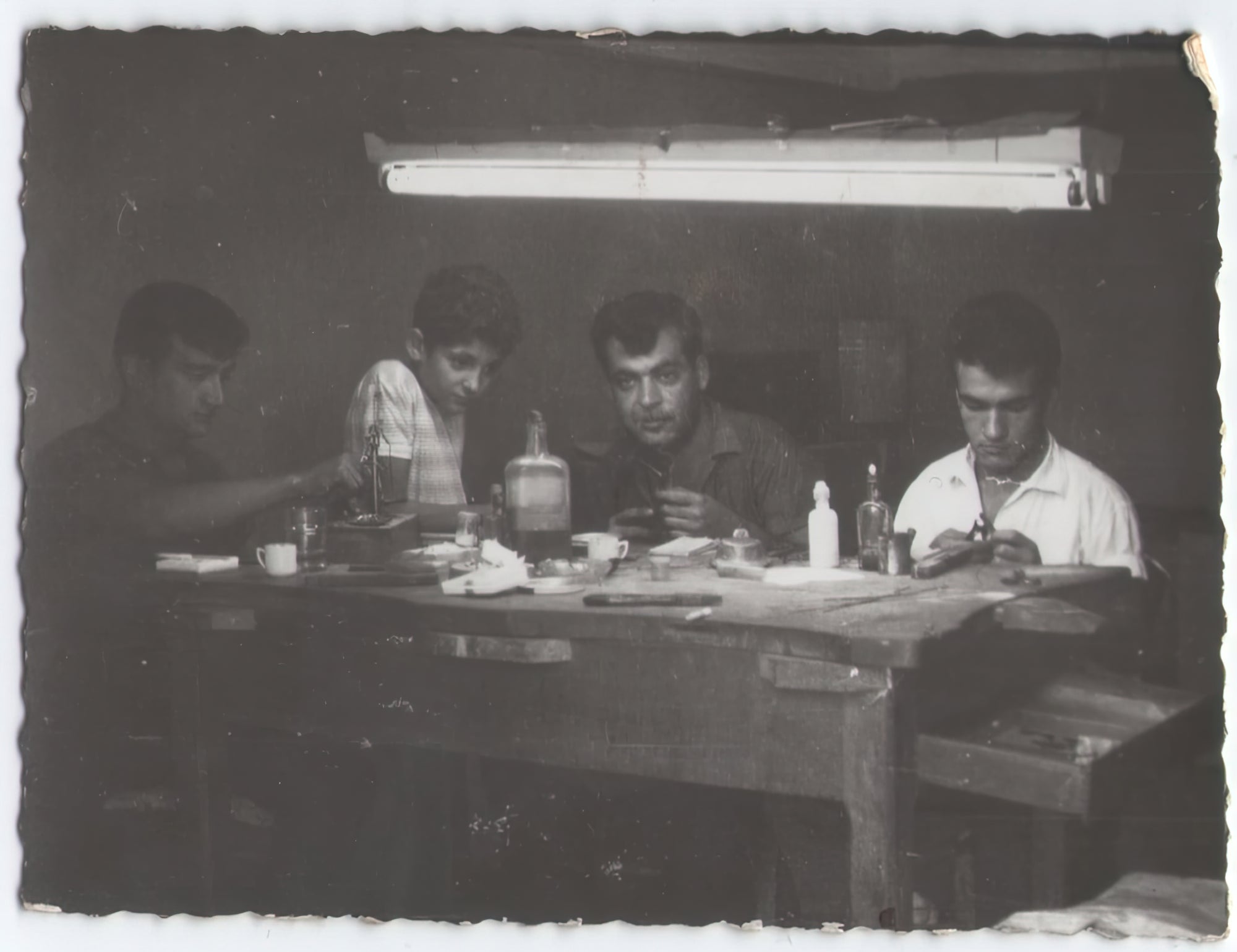






So this is a piece I keep getting asked about. The hand chain bracelet. Where it came from, why we make it the way we do, and what makes ours different from the ones people buy on Amazon and send back to us asking if we can fix.
Quick history because it matters. The first hand chain anyone has actual evidence of came out of the dirt at Akrotiri, on Santorini, buried under volcanic ash since 1620 BCE. A linked gold ornament. Bracelet at the wrist, ring at the finger, chain across the back of the hand. Same exact form we make in our Athens workshop today. Three thousand years.
What changed in three thousand years? The hands holding the tools. The piece itself, almost nothing.
If you want to skip ahead and look at the pieces, our hand chain bracelet collection is here, and our bestselling Lien collection with the double-sided diamond piece is here. The rest of this is the goldsmith's view.
A Three Thousand Year Lineage
The form shows up independently in three places. Egypt, around 1500 BCE, on women of high status. Tomb finds. They got buried with theirs. India, called hath phool, hand flower, on brides since the Gupta period around 400 CE, still part of bridal traditions today. And Greece, where my workshop is, going back further than both. The Akrotiri pieces predate everything.
So when someone tells me the hand chain is a trendy piece they saw on TikTok, I want to laugh. The piece is older than my country. We have just been making it the same way for the last seventy years specifically, but the form is much older than us.
Three Main Types We Make
First, the plain gold one. No diamonds. A flat curb chain in 14k or 10k, soldered link by link, anchored at the wrist on one end and the ring on the other. The light comes off the gold itself. Nothing to set, nothing to catch on, the cleanest version of the piece you can wear. Browse the plain gold options inside our hand chain bracelet collection.
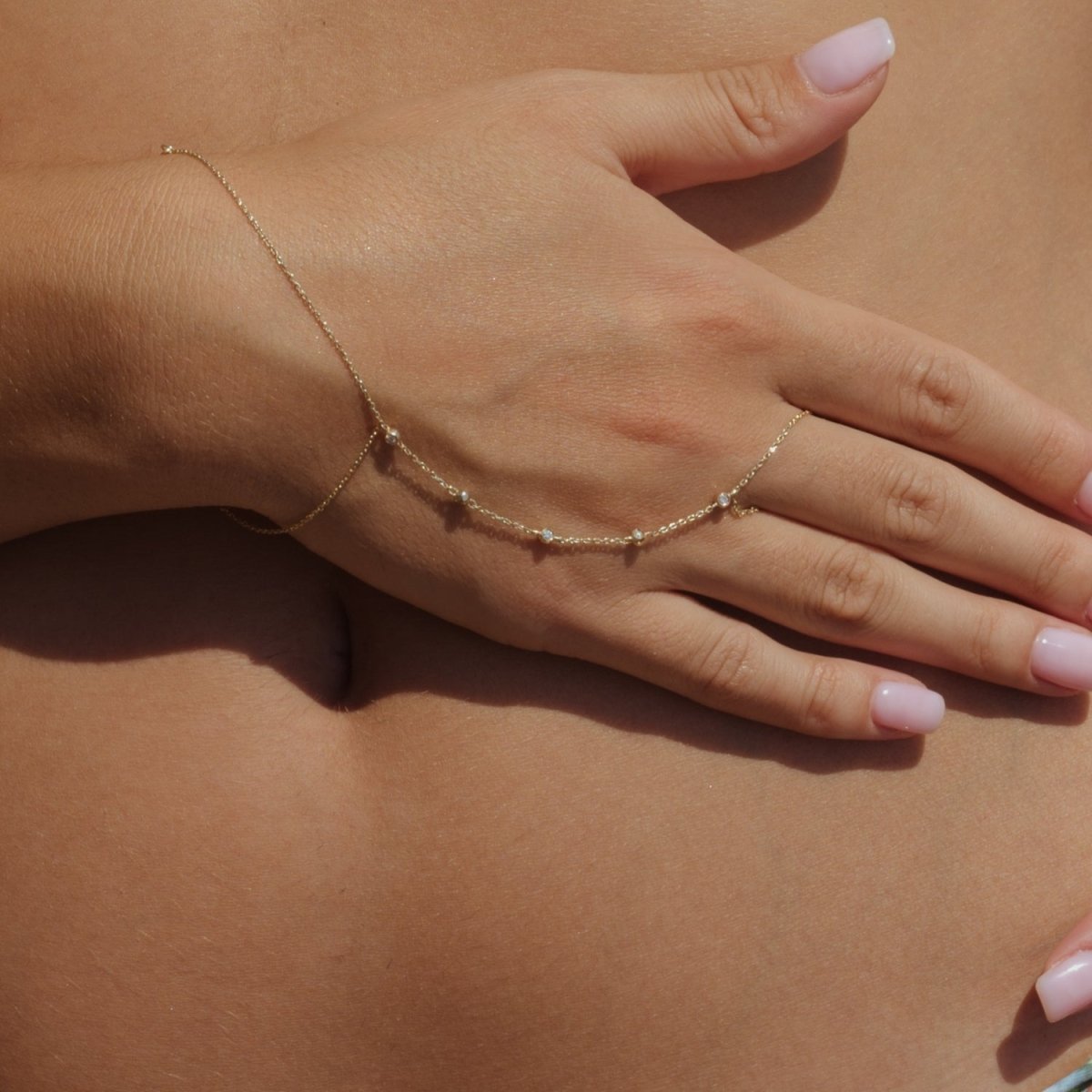
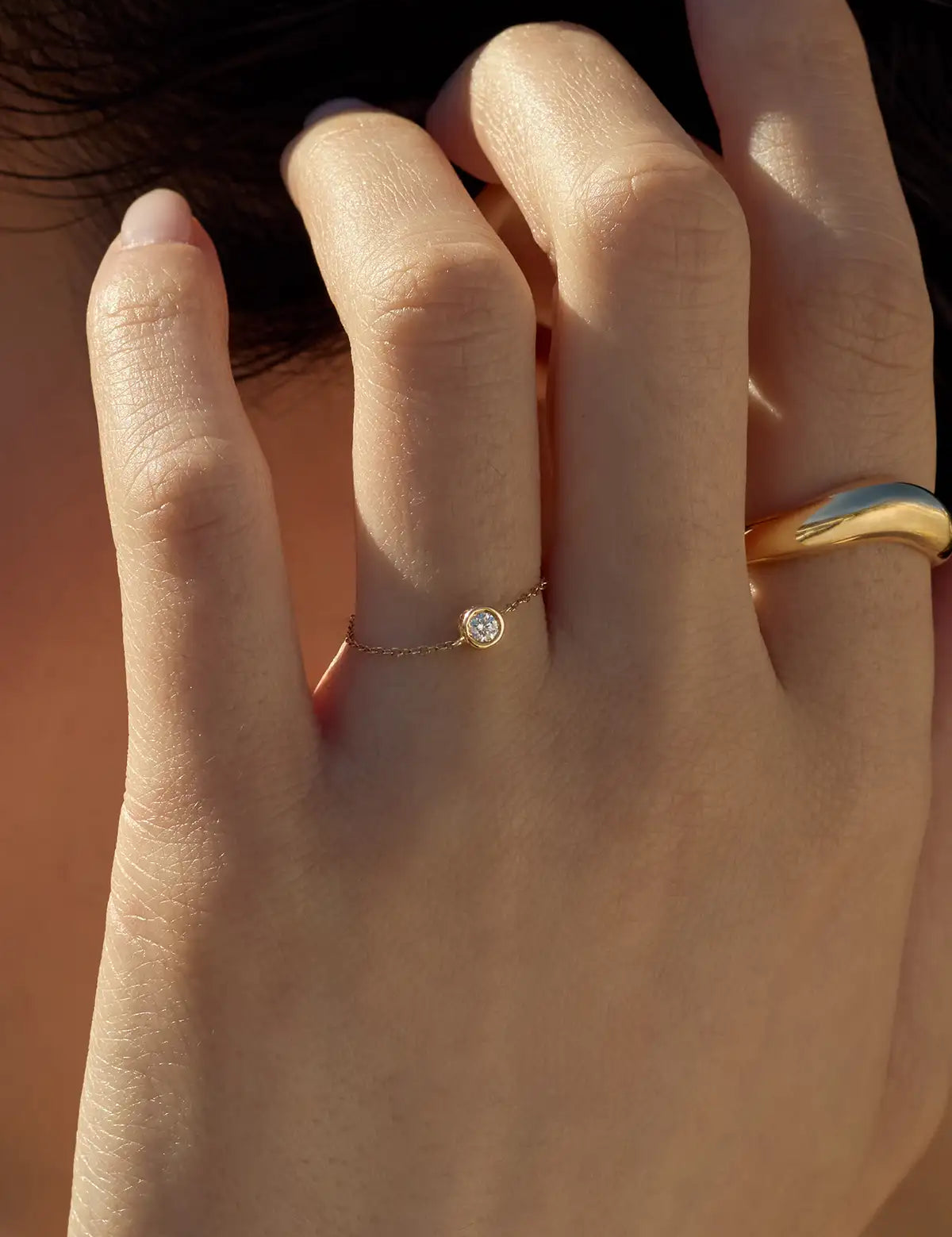
Second, diamonds along the chain. Bezel or prong settings. The diamonds catch light when the hand moves. Subtle from across a room, more rewarding up close. We use lab grown diamonds, real diamonds, same chemical structure and brilliance, just made in a controlled environment instead of pulled out of the earth. They cost about a third of natural for reasons that have nothing to do with quality. If you want the deeper version, our natural vs lab grown diamonds guide covers it.
Third, our bestseller. The Lien Bezel Diamond Hand Chain. The bezels are open and polished on both sides of the chain, so the diamond shows from above and from below. All diamond hand chains hide the underside, the back of the bezel sits flat and dark on the hand. Ours does not. When the wrist turns, when the hand moves, the diamond keeps catching light from whichever angle. Took me a while to figure out how to set them this way without making the bezel weak. We solder, polish, check, polish again. Every Lien is hand set under a loupe.
The Lien is available in 14k yellow gold, 14k white gold, 14k rose gold, and 10k yellow gold. Browse the full Lien collection here.
How a Hand Chain Is Actually Made
A hand chain is harder than a regular bracelet because three things have to align. The bracelet sits on the wrist without rotating. The ring sits on the finger without rotating. The chain between them lays flat on the back of the hand without bunching or twisting. If any of those three is off, the whole thing is wrong.
Chain part is the easier piece. Flat curb in solid gold, soldered link to link. Thickness somewhere between 1.4 and 2.2 millimeters depending on what we are going for. Thinner is more delicate. Thicker is more of a statement. Both lay correctly if the curb shape is right.
Real work is the joining. Where the chain meets the bracelet on one side and the ring on the other. Those two points carry every bit of tension every time someone moves her hand. If the solder is weak, the chain breaks at the join. Piece falls in the sink. Diamond rolls into the drain trap. Customer is upset and never wears another one. So we solder twice. First pass to join, second pass to fill any gap and reinforce. Then I clamp the chain and pull on it before the piece leaves the bench. If it survives my hand, it will survive hers.
Sizing is custom. We need three numbers. Ring size for the middle finger. Wrist circumference at the narrowest point just below the wrist bone. And hand length, from the wrist bone bump on the pinky side to the base of the middle finger when the hand is open and laid flat on a table. Those three numbers tell us where to put the chain ends and how long to make the chain itself. Without all three, the piece does not fit right.
For the metal choice, see our 14k gold bracelets or 10k gold bracelets ranges. Both work for hand chains. 14k is what most customers pick. 10k is harder, makes sense if you work with your hands all day.
Care, Because People Break Their Pieces
Two rules above all others, please read these.
One. Be gentle when you put it on and take it off. The chain is the most delicate part of the whole piece. Pulling on it to widen the bracelet end is what eventually snaps a link. Slip the ring on first, then the bracelet, that order. To take it off, do the reverse. Never yank.
Two. Keep your hand out of tight pockets. This is the single most common reason a hand chain breaks. Tight jeans, fitted blazer pockets, structured handbag interiors, jacket sleeves that are snug at the cuff. The chain catches inside the fabric. You pull your hand out automatically. The chain catches and snaps at the weakest link. Most of the broken pieces sent back to us were broken by a pocket. If you are reaching into a tight space, take the hand chain off, or use the other hand. Just do that.
Cleaning is simple. Warm water, mild dish soap, a soft brush around the links once a month, pat dry. That is all. Solid 10k and 14k do not tarnish. They do not need polishing compounds, ultrasonic cleaners, or any of the jewelry sprays sold for this. The simplest routine is the right one.
Take it off before perfume. Take it off before chlorinated pools. Take it off before any task that needs grip strength on that hand, weight lifting, gardening, opening tight jars, moving boxes. The chain is the limit, not the bracelet or ring.
If a link breaks, send it back. We repair our pieces for life. Most repairs are a chain replacement plus two solder joints plus a polish, after which the piece is the same piece you owned the day before. The customer who started us on hand chains in 2019 is on her fourth chain length. She still wears the same ring and bracelet from the first one. The chain wears out before everything else because it gets the most movement, that is just physics. We replace the chain. Piece stays.
Frequently Asked Questions
How much does a real gold hand chain bracelet cost?
A solid 14k gold hand chain without diamonds typically runs between three hundred and seven hundred dollars depending on chain weight and size. With diamonds, between five hundred and twelve hundred. Plated versions cost less but are not the same product.
Can I shower with a gold hand chain?
Yes. Solid 10k and 14k gold are not affected by water. Plated jewelry is. If your piece is solid gold, you can wear it in the shower, the ocean, the pool. The polish stays the same.
Will a hand chain catch on things during daily wear?
A properly made hand chain has the chain laying flat against the back of the hand, anchored at both ends. It does not catch on most fabrics. The exception is loose knit sweaters with large yarn loops, and tight pockets. Avoid both.
What if my finger swells in the heat?
The ring portion of a hand chain is sized snug. Slight swelling makes it tight but does not lock it on. If you have severely swelling fingers in summer, request a ring size half a size up from your standard.
Can I wear a hand chain to formal events?
Yes. A clean 14k gold hand chain is one of the few pieces that reads as both casual daily and elevated formal. The Lien Bezel Diamond Hand Chain in particular has been worn by customers to weddings, gallery openings, and dinners.
Does the chain ever stretch out over time?
A soldered solid gold chain made correctly does not stretch. The links are fixed. If your hand chain is stretching, the chain was stamped not soldered, which means it is not the construction we use.
The point of a piece made to last is exactly this. The parts that wear are the parts you replace. The piece itself is the same piece you bought ten years ago.
Browse our hand chain bracelet collection, or jump straight to the Lien collection where the bestselling double-sided diamond piece sits. Compare it against our other diamond bracelets and gold bracelets collections to see how it sits next to more traditional pieces.