





In our Athens workshop the torch runs from morning to night. Even in summer the bench radiates heat. My brother Dimitris is finishing a stack of three gold bracelets a customer ordered together. A cable chain, a paperclip link, and a thin hand chain. All 14k solid gold. They will ship as a set.
A bracelet stack is the form Greek women have worn for three thousand years. Not a fashion-week invention. Not a Pinterest aesthetic. The continuous layering of gold around the wrist appears on Minoan frescoes from the Bronze Age, on classical Greek vase paintings, on Cycladic island women in nineteenth century photographs, and on every woman who stepped into our workshop in the last seventy years to add one more piece to what her mother already gave her.
This post is what I want every customer to read before they build their first stack. Our stacking bracelets collection is here if you want to skip to the pieces. The rest of this is the workshop view, gathered from three generations of building stacks that women still wear thirty years later. This is the bracelet companion to our layering gold necklaces guide, which covers the same Mediterranean principles applied to the neckline. For the broader bracelet vertical, our gold bracelet for women guide walks through every style we make.
Greek Women Have Stacked Their Gold for Three Thousand Years
Layered bracelets are one of the oldest continuously worn forms of jewelry on the Mediterranean. The Minoans wore them. The classical Greeks wore them. Greek island women wore them through the twentieth century, often passing the entire stack from mother to daughter as a coming of age set.
The Greek stack has rules. It is not the chaotic American "more is more" stack that dominates current US fashion. The Greek stack is restrained. Three to five pieces, mostly solid gold, mostly thin, with one statement piece (a diamond station, a hand chain, a wider link) as the anchor. The pieces are different in width and texture but consistent in tone. They sit on the wrist as a quiet line, not a noisy collage.
This is the form we make in our Greek gold jewelry collection and the tradition we still build around. When a customer asks us to design a stack for her, we start with the Mediterranean rules. Then we adapt to her wrist and her life.
What Makes a Stack Work
A bracelet stack is not just multiple bracelets on the same wrist. It is a composed line. The rules my father taught me, the same ones his father taught him:
Rule one: an odd number. Three bracelets read intentional. Five read intentional. Four read like one piece is missing. Two read tentative. Stick to three or five. The eye picks up odd numbers as composed and even numbers as accidental.
Rule two: one anchor. One piece in the stack should be slightly heavier, wider, or more textured than the others. It anchors the line and gives the eye somewhere to land. A hand chain bracelet works as an anchor because the chain extends over the back of the hand. A diamond station bracelet works as an anchor because the diamonds catch light. A tennis bracelet is the most formal anchor option. A wider 14k gold link bracelet works as an anchor through pure weight. Our diamond bracelet guide covers each anchor style in more depth.
Rule three: mix widths, not weights. All three or five bracelets should be roughly the same gauge so they sit naturally against each other and do not pinch. But the widths can vary: a 1mm cable next to a 2mm paperclip next to a 3mm link reads as composed variation. Three 2mm cables in a row read as repetition.
Rule four: same alloy. A 14k gold stack and a 10k gold stack each have their own slightly different gold tone (the 14k slightly warmer, the 10k slightly cooler). Mixing them in the same stack creates a visible color break. Stay within one karat for visual consistency. If you want to mix, do it intentionally, not by accident. Our 14k gold earrings guide goes deeper on why the same karat can feel different depending on the alloy recipe.
Rule five: same skin position. A bracelet that sits high on the wrist (snug) and a bracelet that sits low on the wrist (loose) read as two separate stacks. The whole stack should sit within the same one inch of wrist. Get your sizing right and the stack reads as one piece, not three.
How Many Bracelets Belong in a Stack
The honest answer is three is the sweet spot. Three solid gold bracelets sized for the same wrist position read as a composed, complete look. They do not crowd, they do not slip, and they cost less than five.
Five bracelets is the maximum. Beyond five, the stack starts to dominate the wrist visually. The pieces lose their individual character and become a wrist cuff effect. That is fine if you want a wrist cuff effect. It is not fine if you want individual pieces to read.
One bracelet is also a valid choice. A single statement bracelet (a hand chain, a tennis, a diamond station) on a bare wrist is its own composition. It does not need company.
Two bracelets is the only number I steer customers away from. It almost always reads accidental, like one piece fell off and you forgot. If you only own two solid gold bracelets, wear them on opposite wrists, not together.
Mixing Widths and Textures
The pieces I recommend for a starter Mediterranean stack:
Bracelet one (foundation): A thin cable chain, around 1.0 to 1.5mm wide, in 14k gold. The cable is the workhorse of Greek goldsmithing. Round flat links that wear smoothly against the skin.
Bracelet two (texture): A paperclip link or curb chain, around 2.0 to 2.5mm wide. The flatter, elongated links of a paperclip catch the eye differently from a round cable.
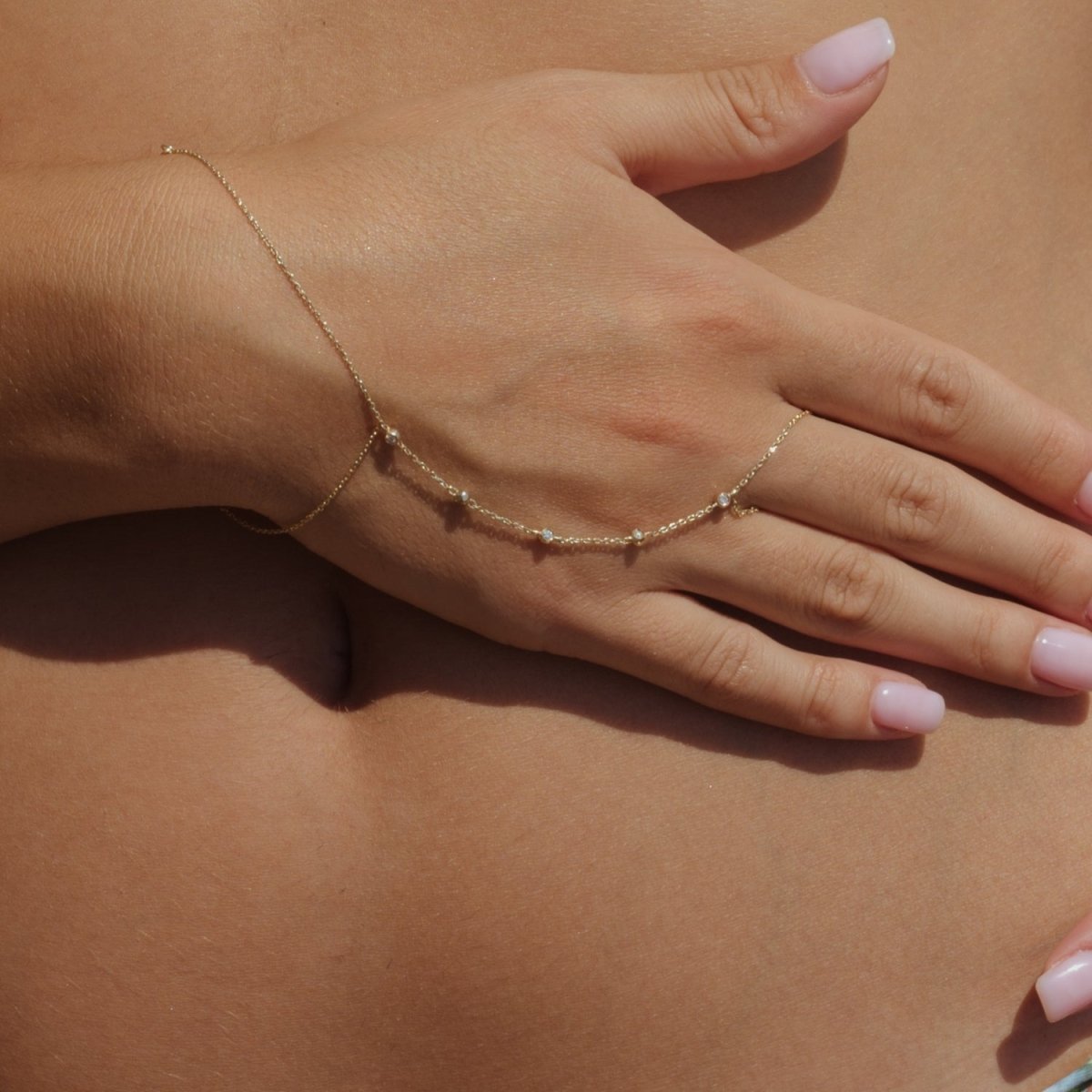
Bracelet three (anchor): Either a hand chain bracelet (chain plus a ring that hooks over the middle finger), or a diamond station bracelet (cable with three or four small bezeled diamonds along its length), or a wider 3mm link.
These three sit comfortably together on most adult women's wrists. The total weight is around 8 to 12 grams of solid 14k gold. The look is restrained, Mediterranean, and built to be worn every day without fuss.
For a five piece stack, I would add a dainty gold bracelet as the thinnest line and a slightly textured chain (a Figaro or a herringbone) for additional pattern variation. But five is for someone who already owns a stack of three and wants to expand. Do not start with five.
The Diamond Element
A bracelet stack does not require a diamond piece. But one diamond piece in a five-piece stack changes the entire register. The stack becomes evening-appropriate without losing its everyday character.
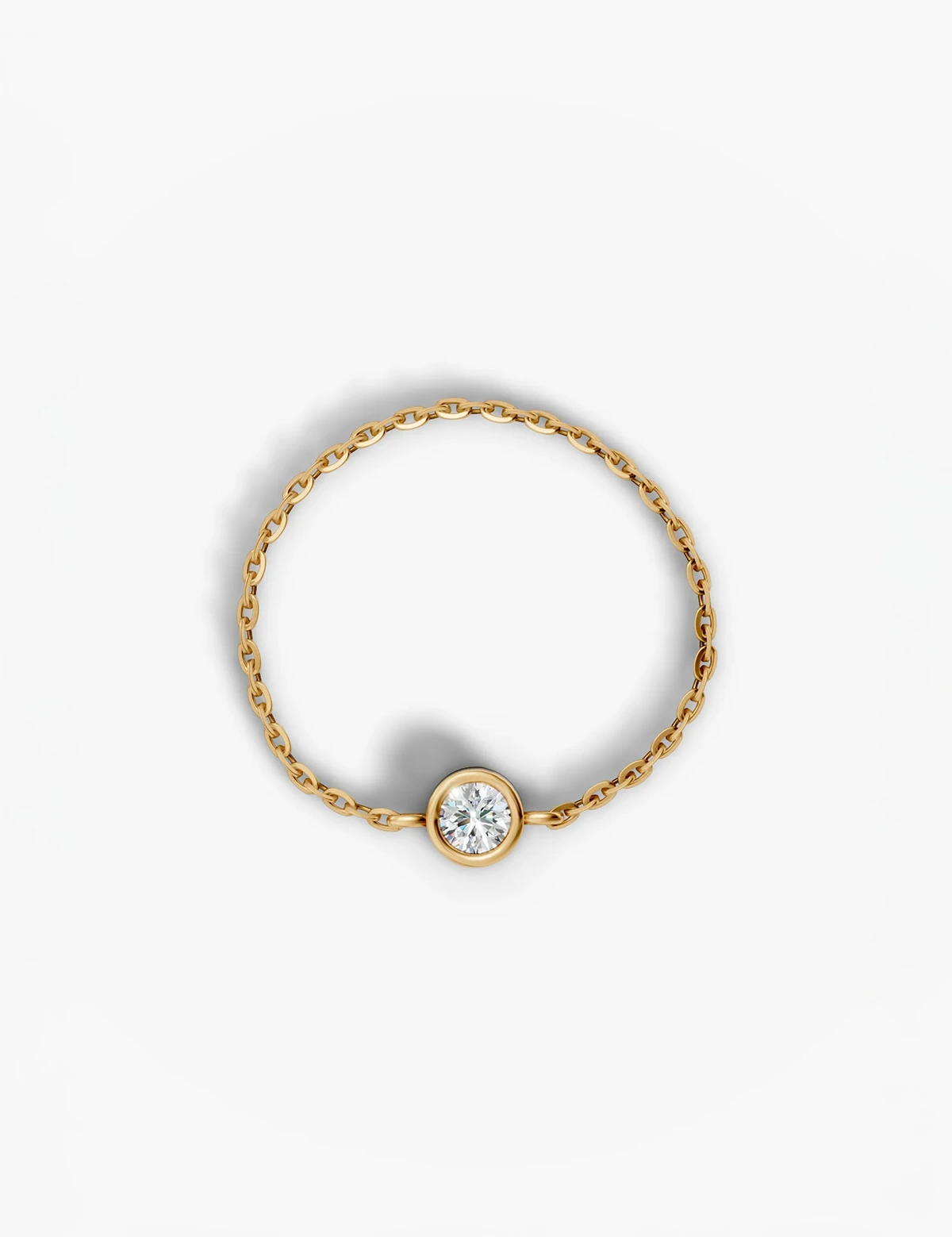
We make several lab grown diamond bracelets designed to live in a stack. The diamonds are set as small bezels along a cable chain (a station bracelet), or as a single floating stone on a delicate chain. Bezel set diamonds are the right choice for a stack because the bezel protects the stone from catching on the other bracelets in the line. Prong set diamonds work alone but catch on cable links and tear themselves out of place inside a stack.
The lab grown diamonds we use are real diamonds, just grown in a lab instead of mined. Same chemical structure, same hardness, same brilliance. They cost about a third of mined diamonds for reasons that have nothing to do with quality. If you want the deeper take, our natural vs lab grown diamonds guide has the goldsmith's view.
For a stack with one diamond piece, I recommend a 0.10 to 0.20 TCW station bracelet with three to five small bezels along its length. Less than 0.10 TCW gets lost against the gold around it. More than 0.20 TCW pulls the eye too aggressively and the rest of the stack disappears.
The Hand Chain Bracelet as Anchor
The most distinctly Greek piece in a Mediterranean stack is the hand chain. It is a bracelet with a chain that runs from the wrist over the back of the hand to a small ring worn on the middle finger. The hand chain has been worn in our region since the Bronze Age. The Minoans wore them on the island of Santorini. Greek women in coastal villages wore them daily through the twentieth century.
A hand chain in a stack of three works as the anchor because the chain extends the visual line up the back of the hand. The wrist no longer reads as a flat plane: it reads as a continuous sweep from forearm to fingers. This is the look that distinguishes a Mediterranean stack from an American stack.
We wrote about hand chains in more depth here if you want the full goldsmith's view. For a stack, I recommend the thinnest version of our hand chain (a cable chain with a small ring), worn as one of three bracelets with two thinner cables on the same wrist. The hand chain does the heavy lifting and the other two pieces support.
Sizing a Stack (The Most Common Buyer Mistake)
The single most common mistake I see customers make with a bracelet stack is buying three bracelets of three different lengths. The fit is wrong, the stack falls apart visually, and the customer blames the design when the problem is the sizing.
Every bracelet in a stack should be sized to sit at the same position on the wrist. For most adult women, that is the narrowest point of the wrist, just above the wrist bone. The standard length for that position is 6.75 to 7.25 inches, depending on the customer.
If you order three bracelets from us as a stack, we size them as a set. They arrive ready to wear together. If you order them one at a time, give us the measurement of where you want them to sit. Half an inch makes the difference between a stack that reads composed and a stack where one piece slides toward the elbow while another grips the wrist bone.
The other thing nobody tells you about a stack: wrist circumference changes through the day. Heat, salt, and movement can swell the wrist by up to a quarter inch in the afternoon compared to the morning. A stack sized tight at 7am pinches by 4pm. Size for late afternoon. The stack will read slightly loose in the morning, perfect at midday, and comfortable at night.
If you are between sizes, go up. A slightly loose stack reads as composed. A tight stack reads as squeezed.
Caring for a Stack, Which Is Almost Nothing
Solid gold does not tarnish. A stack of three solid 14k or 10k gold bracelets needs almost no maintenance beyond an occasional wash.
Once a month, soak the entire stack in warm water with a drop of dish soap for five minutes. Wipe gently with a soft cloth. Rinse under tap water. Pat dry. The stack looks new.
Things to avoid:
- Sleeping in the stack. The bracelets twist around each other during the night and can catch on hair, sheets, or another bracelet's clasp. Take the stack off at night.
- Heavy gym use with the stack on. The pieces clang against each other and can wear at the links over years.
- Storing the stack tangled. Each bracelet should go into its own cloth pouch or a separate slot in a jewelry tray.
If a clasp loosens or a link breaks, send the piece back to us. We repair every piece we make. Forever. Send your stack back twenty years from now with a worn clasp on one of the three pieces and we fix it. That is how my grandfather operated, how my father operated, and how my brother and I operate now. A piece worth making is a piece worth keeping alive.
What to Look For When You Buy
If you are buying a stack from any maker, these are the questions that separate a stack worth keeping from one that ends up tangled in a drawer:
- Is every piece solid gold? A stack with one plated piece in it is a stack with one bracelet that will fail in eighteen months. Confirm every piece is solid 14k or solid 10k gold and stamped accordingly.
- Are the pieces sized as a set? A real maker sizes the stack together so the three or five bracelets sit at the same wrist position. A maker who sells three identical-length bracelets and calls it a stack is not building a stack.
- Is there an anchor piece? The stack should have one slightly heavier or more textured piece. Three identical thin cables is not a stack, it is the same bracelet three times.
- What is the alloy mix? Mixing 14k and 10k in a stack creates a visible color break unless the maker matched the alloy recipes intentionally. Ask. If the answer is "we just put pieces together," walk away.
- What is the repair policy? Stacks get worn together for decades. Clasps loosen. Links break. The maker who repairs the piece for life is the maker whose stack you can build on for thirty years.
A solid gold Mediterranean stack made correctly is a piece you can wear for thirty years and pass to your daughter. We have customers wearing pieces from 1998 daily. The stack has not changed. Only the wrist on which it sits has changed.
Frequently Asked Questions
How much does a real Mediterranean gold stack cost?
A starter three-piece stack in solid 14k gold (one cable, one paperclip, one anchor piece) typically runs between $700 and $1,400 depending on the weight and the anchor choice. A five-piece stack runs between $1,200 and $2,400. Plated versions cost less but they are a different product entirely and will not last.
Can I wear my stack in the shower or at the beach?
Yes, if every piece is solid 14k or solid 10k gold. Solid gold is not affected by water, soap, shampoo, or chlorine. The only summer activity I recommend removing a stack for is rock climbing or heavy sand exposure, where the bracelets can catch on something hard enough to break a link.
How many bracelets should I have in my stack?
Three is the sweet spot for most adult women. Five is the maximum. One bracelet alone is also valid as a single statement piece. The only number I steer away from is two, which almost always reads accidental.
Should I mix gold colors in a stack?
Generally no. A 14k yellow stack reads consistent. A 14k yellow plus 14k rose plus 14k white reads chaotic unless the maker explicitly designed the three-tone effect (rare). For a first stack, stay in one gold color.
What if I want to add a fourth bracelet later?
Send us the existing three. We will design and size the fourth to match them in width, weight, and skin position. Adding a piece is something we do regularly for customers who want to build their stack over years instead of buying all at once.
Can I sleep in my stack?
I recommend taking it off at night. The pieces twist around each other in sleep and can catch on hair, sheets, or a clasp. A stack that lives on a soft cloth tray at night lasts longer than a stack that sleeps on a wrist.
The Mediterranean gold stack is one of the oldest continuously worn forms of jewelry in human history. We have been making them in our Athens workshop for three generations. Every stack we ship is sized as a set, in solid 14k or 10k gold (front and back, anchor and chain), and built to be worn daily for decades.
Browse our stacking bracelets collection, see the broader gold bracelet selection, explore 10k gold bracelets for the practical alloy choice, or read about our family workshop on our About page.
The stack your daughter inherits should be made by a workshop that has done this for three generations.